
Box Chain Guide: Everything You Need to Know
When it comes to chain types that balance strength, versatility, and refined aesthetics, the box chain stands in a category of its own. Unlike the bold interlocking patterns of a Cuban link chain or the twisted brilliance of a rope chain, the box chain earns its reputation through geometric precision. Each square or rectangular link is soldered at a 90-degree angle to the next, forming a smooth, continuous structure that catches light from every direction. At GOLDZENN, our workshop with 50+ years of combined experience crafts box chains that deliver on both durability and elegance.
Whether you are searching for the ideal pendant chain, a minimalist statement piece, or a layering accent that complements heavier styles, this guide covers everything: construction, width options, karat choices, styling strategies, and care instructions.
What Is a Box Chain?
A box chain consists of small, square or rectangular metal links that are connected at 90-degree angles. Unlike round-link chains such as the curb chain, each box chain link forms a tiny cube or rectangular prism. When assembled, these geometric links create a smooth, uniform surface with no twist or curve. The result is a chain that looks clean from every angle and lays flat against the skin without tangling.
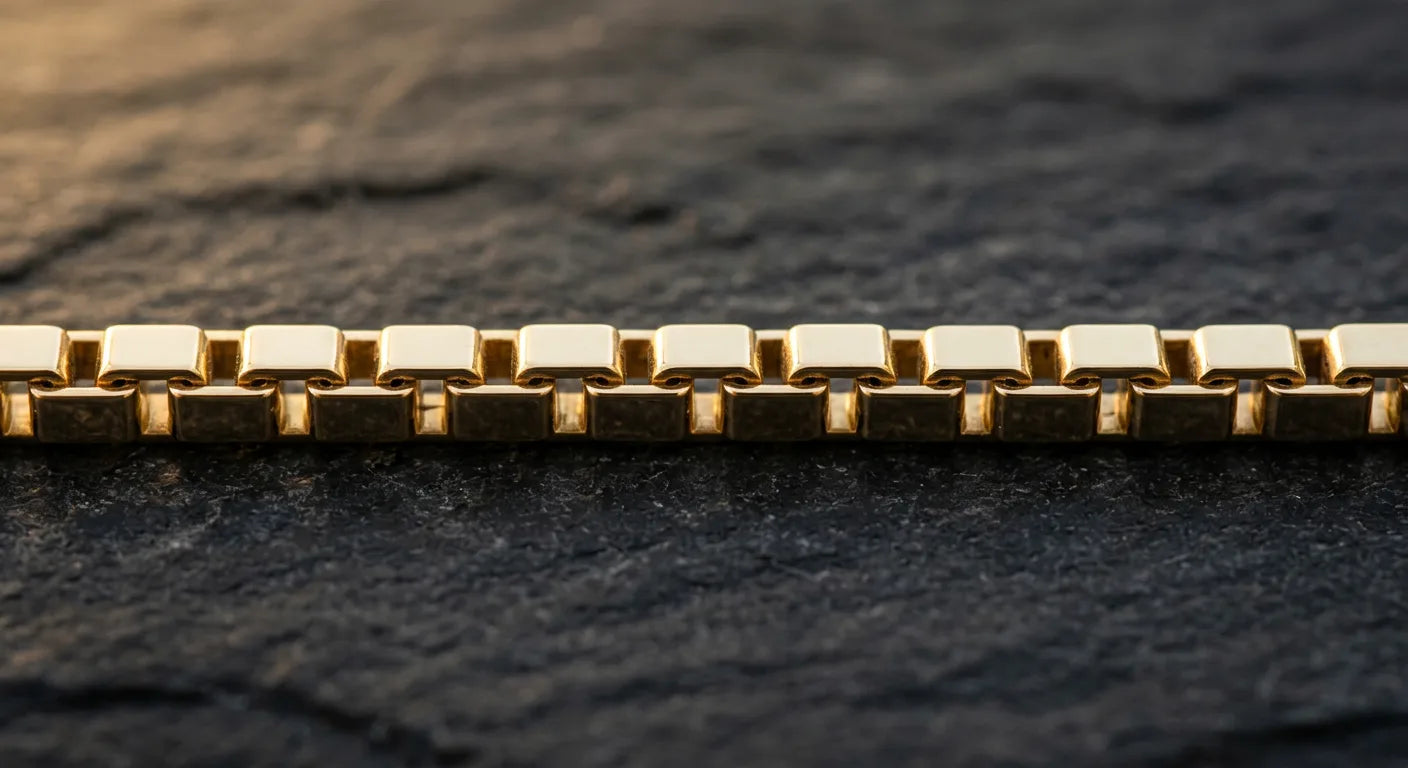
The construction technique involves soldering each individual link closed before connecting it to the next. This meticulous process gives the box chain its signature characteristics: exceptional strength relative to its weight, a smooth gliding surface, and that distinctive geometric silhouette that separates it from every other chain type.
Box chains are sometimes referred to as Venetian chains, a nod to their Italian jewelry-making heritage. The terms are often used interchangeably, though some jewelers distinguish between square box chains and slightly rounded Venetian variations.
History and Origins of the Box Chain
The box chain traces its roots to Italian jewelry artisans, particularly those in the Veneto region. Italian chain-making has produced some of the most iconic designs in jewelry history, including the Figaro chain and the Byzantine chain. The box chain emerged as Italian craftsmen experimented with geometric link shapes, moving beyond the traditional round and oval links that had dominated chain design for centuries.
The name "Venetian chain" reflects this Italian provenance. As machine manufacturing advanced in the 20th century, box chains became more widely available, but the finest examples still rely on precise soldering techniques that echo their artisan origins. The design's mathematical precision appealed to modernist sensibilities, making box chains particularly popular from the mid-20th century onward as jewelry trends shifted toward cleaner, more minimalist aesthetics.
Today, the box chain remains a cornerstone of fine jewelry, valued by jewelers and collectors for its mechanical reliability and visual sophistication. Its popularity has grown alongside the pendant jewelry market, as buyers increasingly seek chains strong enough to support gold pendants without sacrificing elegance.
Box Chain Construction: How It Is Made
Understanding box chain construction reveals why this chain type outperforms many alternatives in strength-to-weight ratio.
Link Formation
Each link begins as a small piece of gold wire that is bent into a square or rectangular shape. The precision of this bend determines the uniformity of the finished chain. In handcrafted versions, jewelers use specialized mandrels and pliers to form each link to exact dimensions. Machine-made box chains use automated wire-forming equipment that maintains consistency across thousands of links.
Soldering Process
Every individual link is soldered closed before assembly. This is a critical distinction from some chain types where links may be simply crimped or pressed shut. Soldered links distribute stress evenly and resist opening under tension. The solder joint, when executed properly, is nearly as strong as the surrounding gold itself.
Assembly
Links are threaded through each other at perpendicular angles, creating the characteristic box pattern. Each link sits at a 90-degree rotation from its neighbors, which is what gives the chain its square cross-section. This perpendicular assembly creates a structure where force applied to the chain is distributed across multiple link connections simultaneously, rather than concentrating stress on a single point.
Finishing
After assembly, box chains undergo polishing and quality inspection. Higher-quality box chains may receive diamond-cutting treatment, where small facets are machined into the link surfaces to increase light reflection. This diamond-cut variation catches more light than standard polished versions and adds visual depth to the geometric pattern.
Box Chain Variations
Not all box chains are identical. Several variations exist, each offering distinct visual and structural characteristics.
| Variation | Description | Best For |
|---|---|---|
| Standard Box | Square links, uniform width, smooth surface | Pendant chains, everyday wear |
| Round Box (Venetian) | Slightly rounded link edges, softer appearance | Delicate pendants, women's jewelry |
| Diamond-Cut Box | Faceted surfaces for increased brilliance | Statement pieces, special occasions |
| Double Box | Two parallel rows of box links side by side | Wider profile without heaviness |
| Mirror Box | Highly polished flat surfaces, maximum reflection | Formal wear, luxury styling |
The standard box chain remains the most popular variation, particularly for pendant use. Diamond-cut versions offer added sparkle that rivals more ornate chain types like tennis chains while maintaining the box chain's clean lines.
Width Options: Finding the Right Size
Box chains are typically available in widths ranging from 0.5mm to 4mm, though some jewelers offer wider options. Width selection significantly impacts both appearance and functionality.
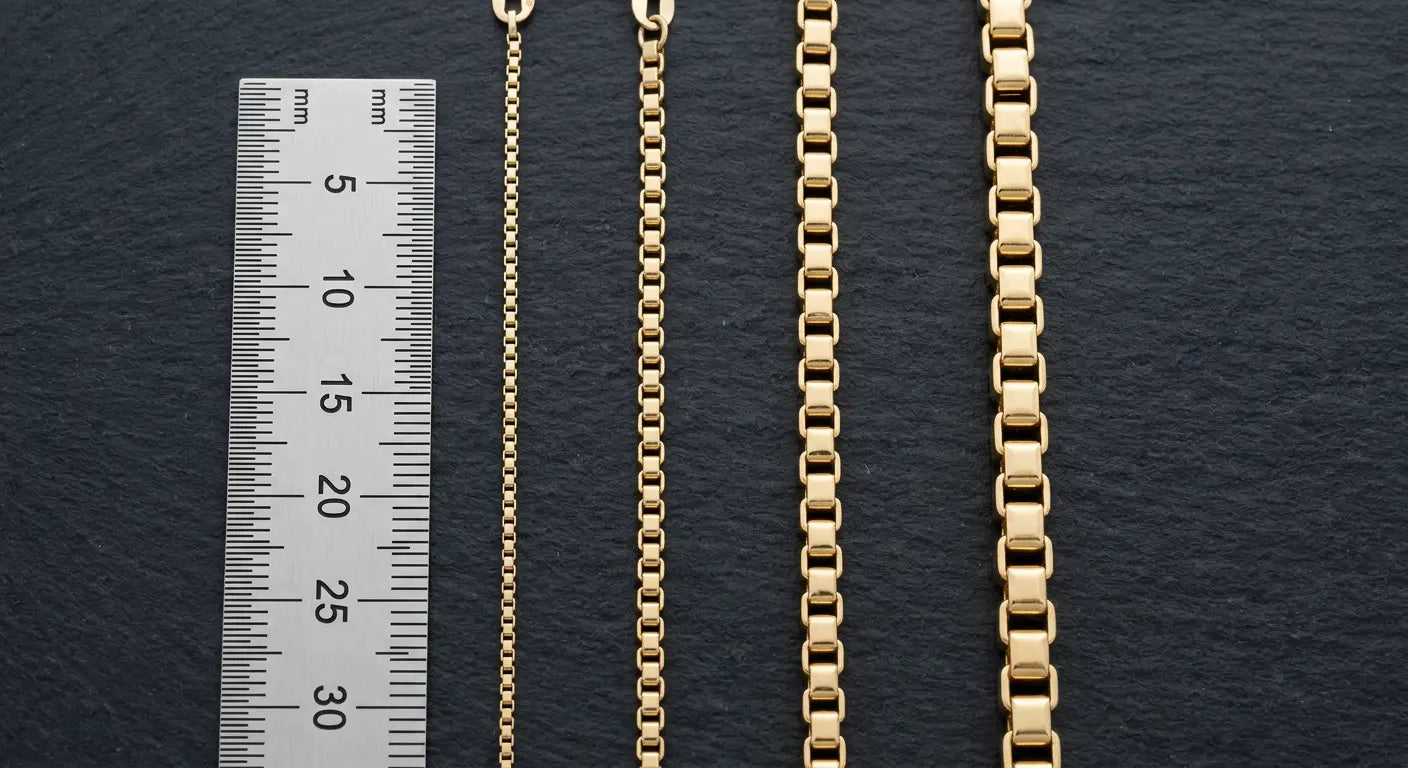
| Width | Weight (14K, 20") | Character | Pendant Capacity |
|---|---|---|---|
| 0.5mm - 1mm | 1-3 grams | Ultra-delicate, barely visible | Lightweight charms only |
| 1mm - 1.5mm | 3-6 grams | Subtle elegance, popular for women | Small to medium pendants |
| 1.5mm - 2mm | 6-12 grams | Versatile, visible but not bulky | Medium pendants up to 15g |
| 2mm - 3mm | 12-22 grams | Noticeable presence, unisex | Most pendants including heavy styles |
| 3mm - 4mm | 22-35 grams | Bold statement, distinctly masculine | Heavy pendants, dog tags |
For pendant pairing, the general rule is that the chain should weigh at least as much as the pendant it supports. A 10-gram pendant pairs well with a 2mm box chain. Heavier pendants like Italian horn pendants or larger religious medallions may require 2.5mm or wider. For detailed width considerations across chain types, see our chain width guide.
Why Box Chains Are the Best Pendant Chains
Box chains have earned the title of the ultimate pendant chain, and the reasons go beyond marketing. The structural properties of box chain links create specific advantages for pendant wear that other chain types cannot match.
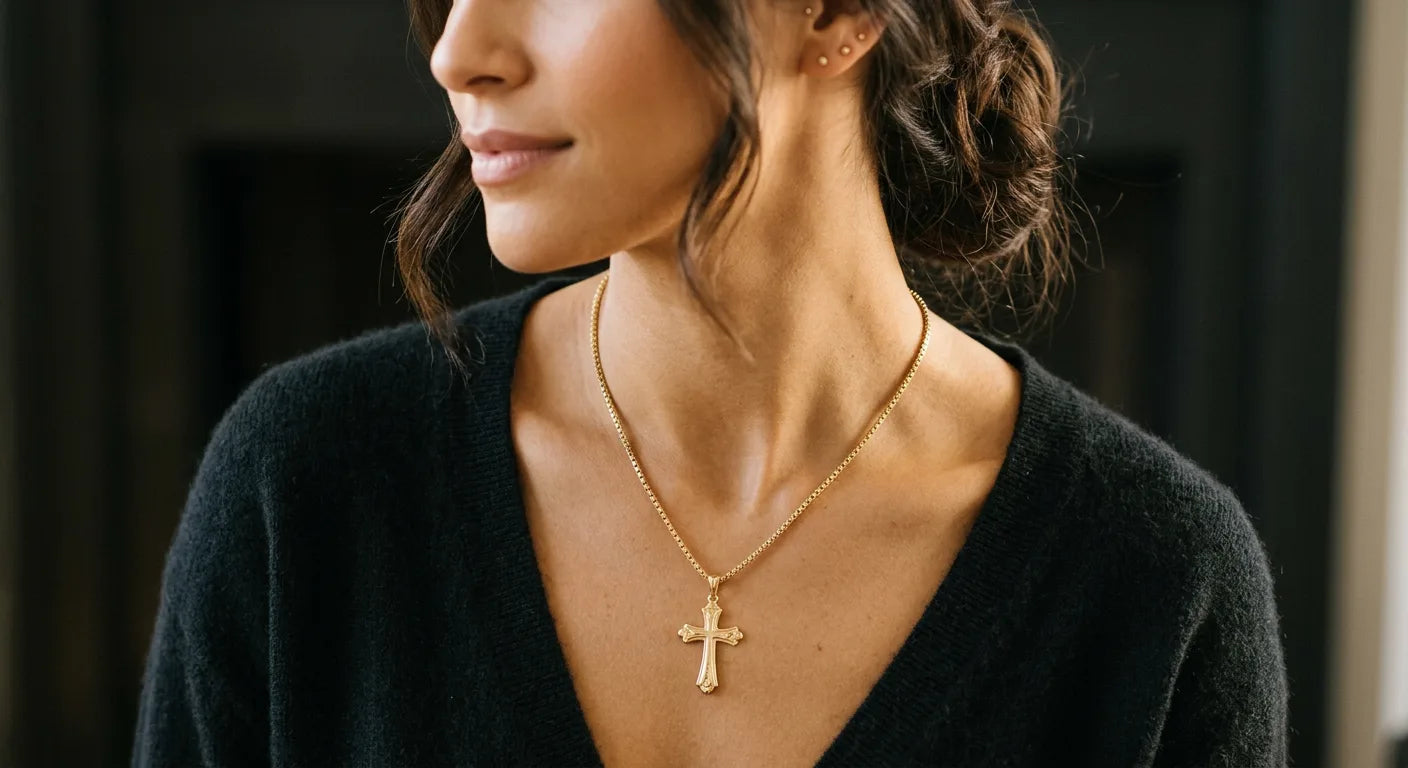
Smooth Glide Surface
The perpendicular link arrangement creates a channel through the chain's center that allows pendant bails to slide freely. Unlike rope chains, which can catch and grip pendant bails due to their twisted structure, box chains let pendants move naturally and self-center at the front of the neck.
Strength-to-Weight Ratio
The soldered, perpendicular link structure distributes weight and tension across multiple contact points simultaneously. A 2mm box chain can support pendants that would stress a same-width cable chain. This means you can wear a thinner, more elegant chain while still safely suspending substantial pendants.
No Kinking
Box chains resist kinking and tangling better than most chain types. The rigid geometric links maintain their shape under normal wear conditions, meaning the chain hangs true even with a pendant attached. Chains that kink easily can cause pendants to hang off-center or twist awkwardly.
Visual Balance
The clean, understated profile of a box chain lets the pendant remain the focal point. Busier chain styles can compete visually with the pendant, but a box chain provides a sophisticated frame without distraction.
Karat Options and Durability
Choosing the right gold karat for a box chain involves balancing purity, color, durability, and budget. Each karat level brings specific advantages.
| Karat | Gold Purity | Durability | Color Tone | Best For |
|---|---|---|---|---|
| 10K | 41.7% | Highest (hardest alloy) | Lighter yellow | Daily wear, active lifestyles |
| 14K | 58.3% | Excellent | Classic warm yellow | Best all-around choice |
| 18K | 75.0% | Good (softer) | Rich, deep yellow | Luxury, special occasions |
| 22K | 91.7% | Moderate (very soft) | Intense yellow | Investment, traditional styles |
For box chains specifically, 14K gold strikes the optimal balance. The 58.3% gold content provides a warm, rich color while the alloyed metals add hardness that protects the soldered joints from wear. 10K offers maximum durability at a more accessible price point, while 18K delivers deeper color for those who prioritize aesthetics.
Box chains are also available in white gold and rose gold. White gold box chains benefit from rhodium plating for enhanced brightness, and their geometric profile showcases the silver-white tone beautifully. For silver options, a sterling silver box chain provides the same geometric appeal at a lower price point.
Box Chain vs Other Chain Types
Understanding how box chains compare to other popular styles helps you make an informed decision. For detailed guides on specific alternatives, see our Franco chain guide and mariner chain guide.
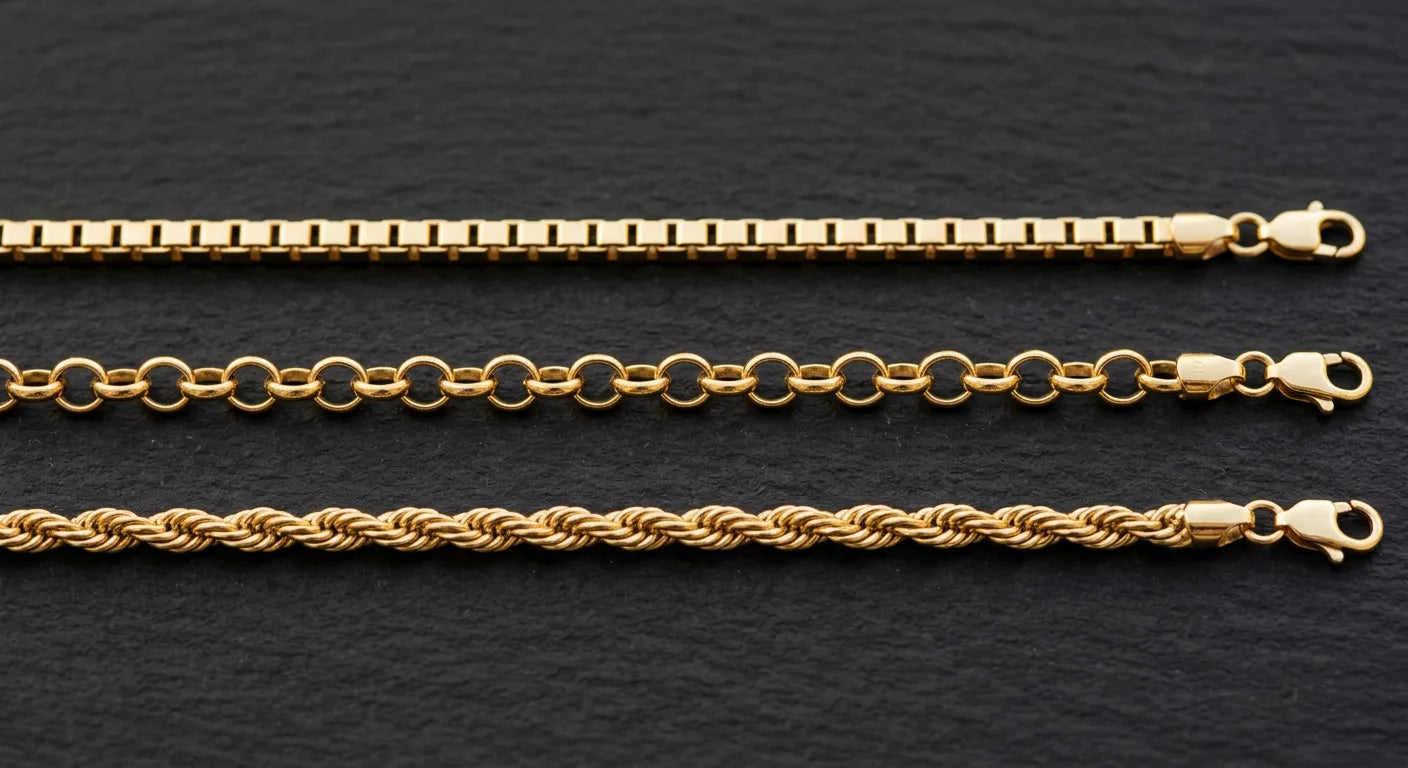
| Feature | Box Chain | Cable Chain | Snake Chain | Rope Chain |
|---|---|---|---|---|
| Link Shape | Square/rectangular | Round/oval | Flat, interlocking plates | Twisted spiral |
| Strength | High | Medium | Low (fragile) | High |
| Kink Resistance | Excellent | Good | Poor | Good |
| Pendant Suitability | Excellent | Good | Poor (bends easily) | Moderate (can grip bail) |
| Flexibility | Moderate | High | High | High |
| Repairability | Easy | Easy | Difficult | Moderate |
| Profile | Geometric, clean | Classic, simple | Sleek, tubular | Textured, dynamic |
The box chain's combination of high strength, excellent kink resistance, and pendant suitability makes it uniquely positioned in the chain market. While Cuban links offer superior raw strength, they are typically much heavier and wider. The box chain provides impressive structural integrity in a more refined package.
Styling a Box Chain: Tips from GOLDZENN
The box chain's versatility makes it one of the most adaptable chain styles in any jewelry collection.
Minimalist Wear
A 1mm to 1.5mm box chain worn alone makes a subtle but sophisticated statement. The geometric links catch light differently than round-link chains, creating a quiet shimmer that elevates business attire, formal wear, and casual outfits alike. This is the chain for those who prefer their jewelry to whisper rather than shout.
Pendant Showcase
This is where the box chain truly excels. Pair a 2mm box chain with a gold pendant and the chain becomes a perfectly balanced vehicle for your statement piece. The smooth surface ensures the pendant always hangs centered, and the clean profile prevents visual competition between chain and pendant.
Layering Accent
Box chains work exceptionally well as part of a layered chain setup. Their slim profile and smooth texture provide contrast when worn alongside bulkier chains like Cubans, Francos, or ropes. A classic layering combination: 18" box chain with pendant, 22" curb chain, and 24" rope chain. For more layering strategies, see our stacking guide.
Men's vs Women's Styling
Box chains are genuinely unisex. For men, widths of 2mm to 4mm provide visible presence without the weight of a Cuban or Figaro chain. For women, 0.8mm to 2mm widths deliver elegance and work beautifully with both casual and formal wardrobes. The men's chain style guide covers additional pairing options across chain types.
Occasion-Based Styling
Box chains transition seamlessly between settings. A 1.5mm 14K box chain works equally well under a dress shirt collar, with a weekend t-shirt, or paired with a suit at a formal event. This versatility means a single box chain can serve as a daily-wear piece that never needs to come off, unlike bulkier chain types that may feel out of place in certain settings.
Solid vs Hollow Box Chains
Like most chain types, box chains are available in both solid and hollow constructions. Understanding the difference is critical for making the right purchase.
Solid box chains are made from solid gold wire throughout. Each link has no hollow interior. These chains are heavier, more durable, and hold their value better over time. A solid 2mm 14K box chain at 20 inches will typically weigh 12-16 grams. If the chain is damaged, a jeweler can repair solid links with standard soldering techniques.
Hollow box chains use tubular gold wire, creating links that are hollow inside. This reduces weight significantly (often 50-70% lighter than solid equivalents) and lowers the price. However, hollow links are more susceptible to denting, crushing, and irreparable damage. Once a hollow link collapses, repair is extremely difficult and may compromise the chain's integrity.
For pendant use, we strongly recommend solid construction. The additional stress of supporting a pendant's weight over extended periods demands the structural reliability that only solid gold provides. If you are considering hollow chains for cost savings, explore gold plated options as an alternative that provides surface gold appearance at an even lower investment point.
How to Choose the Right Box Chain Length
Chain length dramatically affects how a box chain sits and the overall look it creates.
| Length | Sits At | Style Effect | Best Pendant Type |
|---|---|---|---|
| 16" | Base of neck (choker) | Snug, modern, feminine | Small charms |
| 18" | Collarbone | Classic, most versatile | Medium pendants |
| 20" | Below collarbone | Standard men's length | All pendant sizes |
| 22" | Above sternum | Relaxed, visible over clothing | Larger pendants, crosses |
| 24" | Sternum | Statement length, layering base | Heavy medallions, dog tags |
For pendant wear, 20" to 22" lengths work best for most men, allowing the pendant to sit at a natural, visible position. Women typically prefer 16" to 18" for pendant chains. For detailed sizing advice, consult our sizing guide which covers measurement techniques that apply to both chains and bracelets.
Box Chain Care and Maintenance
Proper care extends the life of any gold chain, and box chains have some specific considerations due to their construction.
Daily Care
Remove your box chain before showering, swimming, or exercising. While solid gold will not tarnish, exposure to chlorine, saltwater, and sweat can affect the alloy metals in 10K and 14K gold over time. For detailed guidance on water exposure, see our shower guide.
Cleaning
Box chains are relatively easy to clean. Soak in warm water with mild dish soap for 10-15 minutes, then gently brush with a soft-bristle toothbrush. Pay attention to the spaces between links where oils and residue can accumulate. Rinse thoroughly with clean water and pat dry with a lint-free cloth.
Storage
Store box chains individually, either hanging or laid flat in a jewelry box compartment. Do not store multiple chains together — while box chains resist tangling better than most styles, prolonged contact with other jewelry can cause surface scratching.
Professional Inspection
Have a jeweler inspect your box chain annually. They will check soldered joints for wear, look for stretched or weakened links, and verify clasp function. Early detection of weak points prevents unexpected breakage. GOLDZENN covers box chains with a 1-year limited warranty against manufacturing defects (handmade Cuban links carry a limited lifetime craftsmanship warranty).
Tarnish Prevention
Higher karat box chains (18K and above) resist tarnishing better than lower karats because they contain more pure gold. If you notice any discoloration on 10K or 14K pieces, it is typically surface-level and can be removed with gentle cleaning. For deeper information on gold tarnish, our dedicated guide covers causes and prevention in detail.
Is a Box Chain Worth the Investment?
Gold jewelry is both a personal accessory and a store of value. Box chains, particularly in solid gold construction, hold their material value based on gold content and weight. A solid 14K box chain contains 58.3% pure gold by weight, meaning the intrinsic metal value provides a floor on the chain's worth regardless of market conditions.
From a cost-per-wear perspective, a quality box chain worn daily over several years often represents a lower daily cost than most fashion accessories. A $500 solid 14K box chain worn 365 days a year costs approximately $1.37 per day in the first year, declining further each subsequent year.
The box chain's durability also contributes to its investment case. Chains that break or require frequent repair cost more in the long run than paying for quality construction upfront. Box chains rank among the most repairable chain types, further extending their useful life.
To protect your purchase, learn how to verify gold authenticity and buy from reputable jewelers who provide documentation of karat purity and weight. GOLDZENN provides detailed specifications for every piece, backed by 347+ Google reviews at 4.9 stars and 3,920+ product reviews on Judge.me.
Shopping for a Box Chain: What to Look For
When evaluating box chains, consider these quality indicators:
Weight consistency: A quality box chain should feel substantial for its width. Compare the stated weight against expected ranges. If a "solid" 2mm 20" 14K box chain weighs under 8 grams, it is likely hollow.
Link uniformity: Inspect the chain under magnification. Links should be uniform in size and shape, with no visible gaps at solder joints. Irregular links indicate poor manufacturing.
Clasp quality: The clasp is the chain's most vulnerable point. Look for a lobster claw clasp that opens and closes smoothly, with a solid spring mechanism. The clasp should match the chain's karat purity.
Hallmarks: Legitimate gold box chains carry karat stamps (10K, 14K, 18K, or 22K). The stamp should be clear and legible. Read our guide on avoiding jewelry scams for additional purchasing protection strategies.
Finish quality: Run the chain through your fingers. It should glide smoothly without catching. A well-finished box chain feels almost like a metal ribbon — continuous, seamless, and uniform.
Frequently Asked Questions About Box Chains
What makes a box chain different from a cable chain?
A box chain uses square or rectangular links connected at 90-degree angles, while a cable chain uses round or oval links in a simple alternating pattern. Box chains are generally stronger and more kink-resistant than cable chains of the same width, and they provide a smoother surface for pendant bails to glide along.
Are box chains good for everyday wear?
Yes. Solid gold box chains are among the most durable chain types for daily wear. Their soldered links resist stretching and breaking under normal conditions, and they maintain their shape well over time. A 14K solid box chain in 1.5mm to 2mm width handles everyday activities without issue.
Can a box chain hold a heavy pendant?
Box chains are considered the gold standard for pendant chains. Their perpendicular link structure distributes pendant weight across multiple connection points, making them stronger per gram than many other chain types. Match the chain width to pendant weight: 2mm for pendants up to 15 grams, 3mm+ for heavier pieces.
What width box chain should I get?
For subtle elegance, 1mm to 1.5mm. For versatile everyday wear with or without pendants, 2mm. For a visible statement piece, 2.5mm to 3mm. For bold masculine styling, 3mm to 4mm. When in doubt, 2mm is the most versatile width for both men and women.
How do I clean a box chain?
Soak in warm water with mild dish soap for 10-15 minutes, then gently brush between links with a soft toothbrush. Rinse with clean water and dry with a lint-free cloth. Avoid ultrasonic cleaners for hollow box chains, as the vibrations can weaken the link structure.
Is a solid or hollow box chain better?
Solid box chains are more durable, heavier, easier to repair, and hold their value better. Hollow chains are lighter and less expensive but more prone to denting and crushing. For pendant use or daily wear, solid construction is strongly recommended.
Do box chains kink easily?
No. Box chains are among the most kink-resistant chain types. The rigid, geometric links maintain their perpendicular alignment and resist the twisting forces that cause kinking in more flexible chains like snake chains or thin cable chains. If a box chain does develop a bend, a jeweler can straighten it without damage.
What is the difference between a box chain and a Venetian chain?
The terms are often used interchangeably. Some jewelers use "Venetian" to describe box chains with slightly rounded edges, while "box" refers to sharper, more distinctly square links. Both describe the same fundamental construction of perpendicular, squared links. The name "Venetian" references the chain's Italian origins.
What karat gold is best for a box chain?
14K gold offers the best balance of color, durability, and value for box chains. The alloy hardness protects solder joints from wear while delivering a warm yellow tone. 10K maximizes durability at a lower price, while 18K provides richer color for those prioritizing aesthetics over hardness.
Can I layer a box chain with other chain types?
Absolutely. Box chains are excellent layering pieces because their clean profile contrasts beautifully with textured chains like Cubans, ropes, or Figaro chains. Use the box chain as either the thinnest layer (closest to neck, often with a pendant) or as a mid-layer accent. Vary lengths by 2 to 4 inches between layers for best visual separation.
The GOLDZENN Standard
At GOLDZENN, every chain we craft reflects our commitment to quality, honesty, and craftsmanship. Our Miami workshop has 50+ years of combined jewelry-making experience, and we apply that expertise to every piece — from our signature Cuban link chains to refined styles like the box chain.
We believe in transparency: every chain is sold with accurate karat and weight specifications, and we stand behind our work with a written warranty — limited lifetime craftsmanship coverage on handmade Cubans, 1-year limited on all other chains. With 347+ Google reviews at 4.9 stars and 3,920+ product reviews on Judge.me, our reputation speaks for itself.
Have questions about box chains or need help choosing the right piece? Contact us at contact@goldzenn.com or call 321-521-4651. Follow our craftsmanship journey on YouTube at @GOLDZENNJWL.
Browse our full collection at goldzenn.com and discover chains crafted to last a lifetime.
