

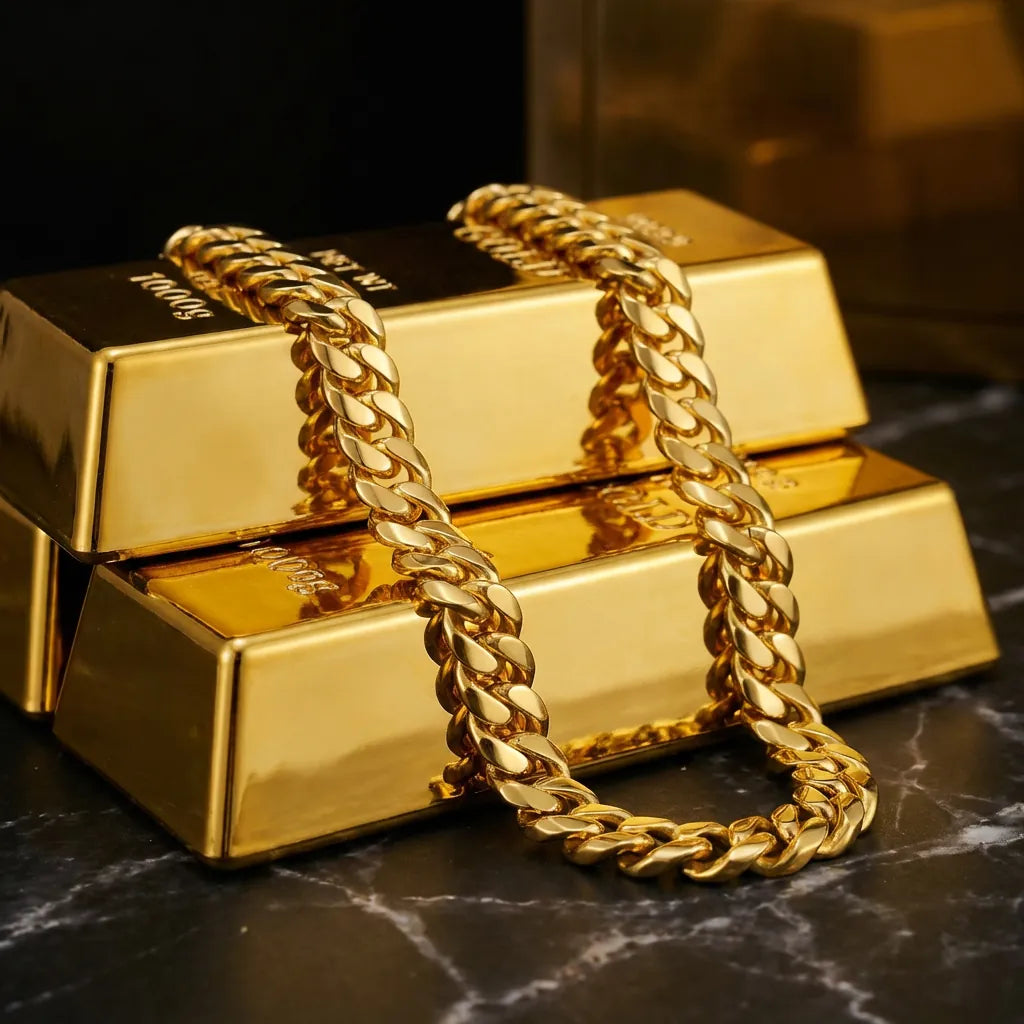
Gold's value per gram depends on the current spot price and the karat purity. At a spot price of $4,340.06 per troy ounce ($139.40 per gram), here is what each karat is worth per gram of gold content:
- 10K Gold: $58.19/gram (41.7% pure)
- 14K Gold: $81.35/gram (58.3% pure)
- 18K Gold: $104.65/gram (75.0% pure)
- 22K Gold: $127.95/gram (91.7% pure)
- 24K Gold: $139.40/gram (99.9% pure)
Prices update automatically with live market data. Spot gold: $4,340.06/oz. Last updated: . Gold prices change daily — enter today's spot price in our calculator below for current values.
Use our gold value calculator below to find the exact worth of your piece by weight and karat.
- 10K Gold Price Guide → Budget-friendly solid gold, everyday durability
- 14K Gold Price Guide → America's most popular karat, best value
- 18K Gold Buyers Guide → The luxury standard, premium investment
How Gold Prices Work: What Every Buyer Needs to Know
Whether you are buying your first gold chain or evaluating a collection, understanding how gold is priced gives you the information to make confident decisions. Gold pricing operates on three layers: the global spot price, the karat purity system, and the craftsmanship premium that transforms raw metal into wearable art. Discover more in our gold nugget pricing.
How the Spot Price Is Set
The gold spot price is the current market value of one troy ounce of pure gold. It is set twice daily by the London Bullion Market Association (LBMA) through an electronic auction process and fluctuates continuously during trading hours based on futures markets, institutional trading, and global supply and demand dynamics.
If the spot price is $4,340.06 per troy ounce, that translates to $139.40 per gram (since one troy ounce equals 31.1035 grams). This is the price of pure, 24-karat gold — the baseline from which all karat values are derived. Enter today's spot price into the calculator below to see current values for every karat.
What Karat Means for Price
Karat measures gold purity in parts per 24. A 14K piece contains 14 parts pure gold and 10 parts alloy metals (silver, copper, zinc), making it 58.3% pure gold. The remaining alloy adds structural strength, hardness, and in some cases, color — rose gold gets its warm hue from a higher copper ratio.
This purity ratio directly determines the gold content value: a gram of 14K gold contains 0.583 grams of pure gold, worth $81.35 per gram at the current spot price. For a deep breakdown of how different karats compare in durability, color, and price, see our 10K vs 14K vs 18K gold comparison guide.
Why Gold Jewelry Costs More Than Melt Value
The spot price tells you what the raw gold in a piece is worth if melted down. But jewelry is not bullion — it carries a craftsmanship premium that accounts for expert labor, design engineering, quality control, finishing, and warranty coverage. This premium is the subject of Section 8 below, where we show the exact breakdown using real GOLDZENN product data.
Watch: Gold Pricing Explained by GOLDZENN
In this video, the GOLDZENN team breaks down how gold market prices work, how to calculate the value of 10K and 14K gold jewelry, and what drives price changes in the gold market. Watch the full breakdown, then use the calculator and reference tables below to find the value of your own gold.
Subscribe to @GOLDZENNJWL on YouTube for more gold market analysis, craftsmanship videos, and Miami Gold Rush episodes.
Today's Gold Price by Karat: 10K, 14K, 18K, 22K, and 24K
The table below is your master reference for gold value by karat. These values update automatically when you change the spot price in the calculator above. Bookmark this page — enter today's spot price and every number recalculates instantly.
Price Per Gram, Pennyweight, and Troy Ounce
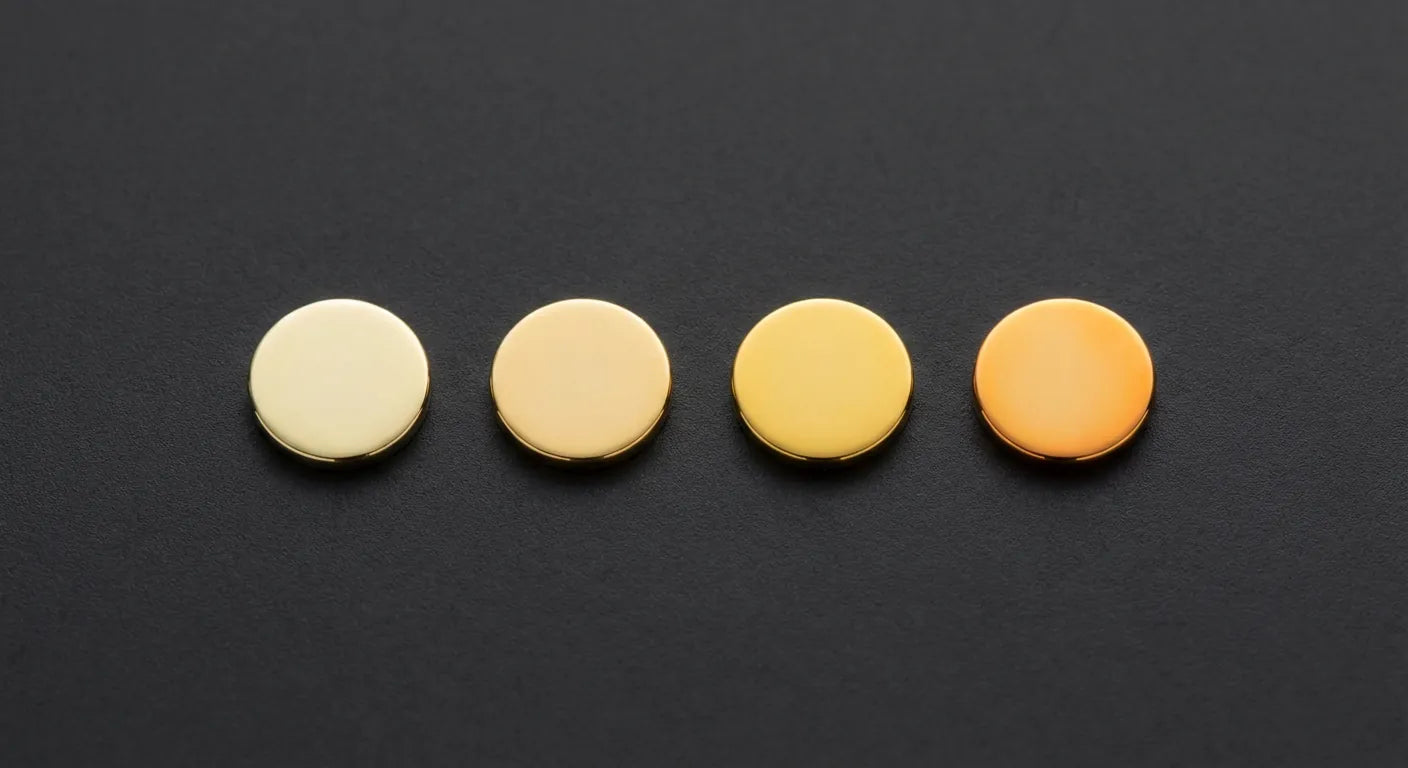
| Karat | Purity % | Hallmark | $/Gram | $/Pennyweight (dwt) | $/Troy Ounce |
|---|---|---|---|---|---|
| 10K | 41.7% | 417 | $69.05 | $107.37 | $2,147.55 |
| 14K | 58.3% | 585 | $96.54 | $150.12 | $3,002.47 |
| 18K | 75.0% | 750 | $124.19 | $193.12 | $3,862.50 |
| 22K | 91.7% | 917 | $151.85 | $236.13 | $4,722.55 |
| 24K | 99.9% | 999 | $165.42 | $257.23 | $5,144.85 |
Calculations: karat value = (live spot price ÷ 31.1035) × purity %. Pennyweight: 1 dwt = 1.555g. Troy ounce: 1 ozt = 31.1035g.
What the Numbers Mean
The table tells you the gold content value of each karat — the intrinsic worth of the pure gold contained in one unit of weight. A gram of 14K gold is not worth $139.40 (that is pure gold). It is worth $81.35 because only 58.3% of that gram is actual gold. The remainder is alloy metal with negligible precious metal value.
Notice the hallmark column: when you see "585" stamped on your jewelry, that is the manufacturer confirming the 14K standard. Mathematically, 14/24 = 58.33%, but manufacturers round up to 585 (58.5%) to ensure compliance with minimum purity requirements. These hallmarks (417, 585, 750, 917, 999) are your first verification point when checking if gold is real. For more on the science behind gold alloys and why they exist, read what makes gold unique.
How to Calculate What Your Gold Is Worth
The Gold Value Formula
Every gold valuation — from a pawn shop assessment to an insurance appraisal — uses the same fundamental formula:
Weight (grams) × Karat Purity (%) × Spot Price Per Gram = Gold Content Value
This formula gives you the melt value — the amount a refiner would pay to convert your jewelry back into raw gold. It is the floor price. Retail jewelry sells above this because it includes craftsmanship, finishing, and warranty, but melt value is the baseline every buyer and seller should know.
Worked Example with a Real GOLDZENN Chain
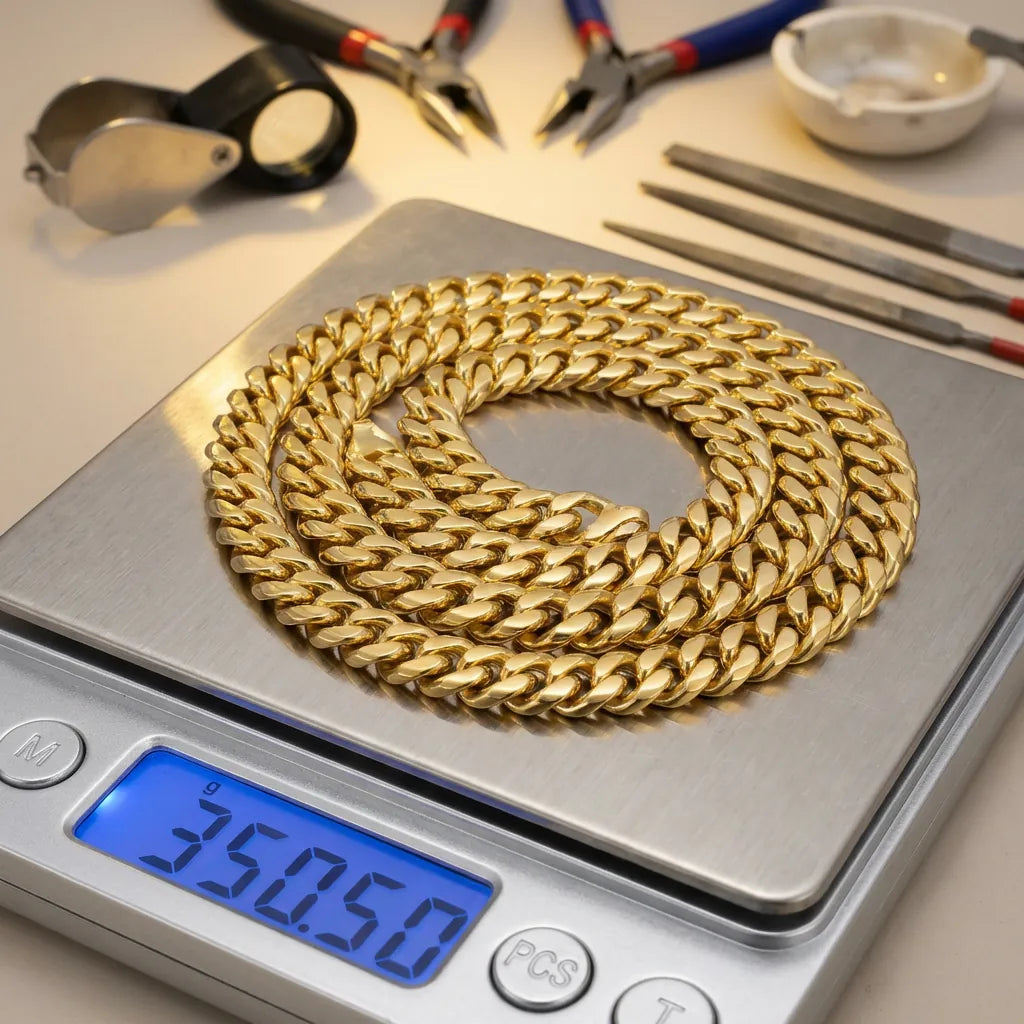
Take the GOLDZENN 7mm 14K Solid Gold Cuban Link Chain at 22 inches. It weighs 85 grams. Here is the math:
Step 1: Weight = 85 grams
Step 2: 14K purity = 0.583 (58.3% pure gold)
Step 3: Spot price per gram = $139.40 (at $4,340.06/oz)
Calculation: 85g × 0.583 × $139.40 = $7,450.72 melt value
That chain contains 49.6 grams of pure gold. The retail price of $10,199.99 includes expert hand-soldering, polishing, clasp engineering, quality control, and our written warranty (limited lifetime craftsmanship on handmade Cubans; 1-year on other pieces).
Now use the calculator below to run the same formula for your gold. If you want to understand how to verify karat purity on your piece before calculating, start there.
GOLDZENN Gold Value Calculator
GOLDZENN Gold Value Calculator
Default: $4,340.06/oz (updates via live feed). Check kitco.com for today's spot price.
Enter today's spot price above for accurate results. The karat reference table below also updates automatically.
Unit Conversions for Gold
Gold is weighed in troy units, which differ from the standard (avoirdupois) units most people know. Here are the conversions you need:
- 1 Troy Ounce (ozt) = 31.1035 grams (NOT 28.35g — that is a standard ounce)
- 1 Pennyweight (dwt) = 1.555 grams (a traditional jeweler's unit, 20 dwt = 1 troy ounce)
- 1 Standard Ounce (oz) = 28.3495 grams (used for food, postage — NOT gold)
When a jeweler quotes you a price "per ounce," they always mean troy ounce. If you see a gold price quoted in standard ounces, something is wrong. The calculator above handles all three conversions automatically.
Shop GOLDZENN Cuban Link Chains
What Drives Gold Prices Up and Down
Gold does not move randomly. Five primary forces push the spot price higher or lower, and understanding them helps you time purchases and assess long-term value.

Federal Reserve Interest Rates
Gold and interest rates have an inverse relationship. When the Federal Reserve lowers rates, holding non-yielding assets like gold becomes more attractive relative to bonds and savings accounts. The rate-cutting cycle that began in late 2024 contributed to gold's rally to record highs. Conversely, the aggressive rate hikes of 2022-2023 temporarily pressured gold below $1,800.
Inflation and the U.S. Dollar
Gold is denominated in U.S. dollars. When the dollar weakens — often driven by inflation — gold becomes more accessible to international buyers, increasing demand and pushing prices higher. Bureau of Labor Statistics CPI data shows that gold has significantly outpaced inflation over most 20-year periods, and has dramatically outperformed since the early 2000s. While gold underperformed inflation during certain 10-year windows in the 1980s and 1990s, its long-term track record as an inflation hedge remains strong. For more on gold as an investment, see our dedicated guide.
Geopolitical Uncertainty
Wars, sanctions, trade tensions, and political instability drive safe-haven demand. The COVID-19 pandemic pushed gold above $2,000 for the first time in August 2020. Sustained geopolitical tensions from 2022 onward — including trade policy shifts, regional conflicts, and sanctions programs — have maintained elevated demand.
Central Bank Buying
Central banks are among the largest gold buyers in the world. According to the World Gold Council, central banks purchased 1,037 tonnes of gold in 2023 alone — the second-highest annual total on record. China, India, and Turkey have been the leading buyers, adding to reserves as a hedge against dollar-denominated asset risk. When central banks buy at this scale, the price floor rises for everyone.
Mining Supply
Global gold production stands at approximately 3,600 tonnes per year, and new large-scale discoveries have become increasingly rare. Unlike fiat currency, gold cannot be printed. This supply constraint is a fundamental driver of long-term price appreciation — demand grows while supply remains relatively fixed. For context on recycled gold and sustainable sourcing, see our guide to ethical gold practices.
The interplay of these five forces is why gold rarely moves in a straight line, but has consistently trended upward over decade-long periods. Understanding these dynamics helps you evaluate whether current prices represent an opportunity or whether waiting makes more sense for your specific purchase. For data on how gold has performed historically across these cycles, the next section breaks down the actual numbers.
Gold Price History: 5-Year, 10-Year, and 20-Year Performance
Numbers tell the story better than speculation. Here is what gold has actually done over the last quarter century.
Historical Gold Price Milestones
| Year | Price/oz | Event |
|---|---|---|
| 2000 | ~$273 | Post-bear market low |
| 2004 | ~$435 | Early bull run begins |
| 2008 | ~$870 | Financial crisis flight-to-safety |
| 2011 | ~$1,920 | European debt crisis peak (intraday high) |
| 2016 | ~$1,150 | Bear market bottom |
| 2019 | ~$1,520 | Trade war uncertainty |
| 2020 | ~$2,067 | COVID-19 pandemic record |
| 2022 | ~$1,800 | Federal Reserve rate hike pressure |
| 2024 | ~$2,390 | Central bank buying surge |
| 2025 | ~$4,000+ | Record-breaking rally continues |
| 2026 | ~$4,340 | Record-breaking rally continues |
Gold Returns vs. Traditional Assets
Returns calculated through 2026 at current market prices. Historical data is fixed; current spot updates live.
| Period | Start Price | End Price | $ Gain | % Appreciation |
|---|---|---|---|---|
| 5-Year (2021-2026) | ~$1,830 | ~$4,340 | +$3,320 | +181.4% |
| 10-Year (2016-2026) | ~$1,150 | ~$4,340 | +$4,000 | +347.8% |
| 20-Year (2006-2026) | ~$635 | ~$4,340 | +$4,515 | +710.9% |
| 25-Year (2000-2026) | ~$273 | ~$4,340 | +$4,877 | +1,786.4% |
What This Means for Gold Jewelry Owners
Those percentages are not abstract — they apply directly to the gold in your chain, ring, or bracelet. Here is the real math on a 22-inch 14K Cuban link chain weighing 85 grams:
2016 melt value: 85g × 0.583 × ($1,150 ÷ 31.1035) = $1,833
2020 melt value: 85g × 0.583 × ($2,067 ÷ 31.1035) = $3,294
2026 melt value (at current spot): 85g × 0.583 × ($4,340 ÷ 31.1035) = $6,915
Gold content appreciation from 2016 to 2026: +277%
That chain did not sit in a drawer losing value — its gold content more than quadrupled. A solid gold piece is a wearable asset. For more on the investment thesis behind gold chains specifically, read our analysis: are Cuban link chains a good investment? You can also explore the art of creating 24K Cuban links and the gold chains for men style guide for context on why solid gold chains hold lasting value.
Explore GOLDZENN's Solid Gold Collection
How Gold Prices Affect Jewelry Retail Pricing
The Spot-to-Retail Relationship
When the spot price of gold moves, jewelry prices follow — but not at a 1:1 ratio. That is because a significant portion of a jewelry item's retail price consists of fixed costs: labor (the master jewelers who hand-solder links), finishing (polishing, quality control), clasp engineering, packaging, warranty coverage, and business overhead. These costs do not change when gold moves $50.
As a result, a 10% increase in gold spot price might translate to a 5-7% increase in retail jewelry pricing, depending on the item's gold weight relative to its total cost. Heavier, higher-karat pieces track closer to spot because gold content represents a larger share of their total value.
GOLDZENN's Pricing Transparency
At GOLDZENN, we show you the gold content, the weight, and the math. You see exactly what you are paying for. Every product listing includes the total weight in grams and the karat purity, so you can run the formula yourself using the calculator above and know precisely how much of the retail price is gold content and how much is craftsmanship. This transparency is why we have earned 347+ Google reviews at 4.9 stars and 3,920+ product reviews — customers trust the numbers. Learn more about our approach on the GOLDZENN story page, or see the craftsmanship process firsthand in our custom jewelry workshop tour.
Why Heavier Chains Offer Better Per-Gram Value
Fixed costs (clasp, finishing, packaging, quality control) are spread across more grams in a heavier chain. A 3mm 10K Cuban at 18 grams and a 7mm 14K Cuban at 85 grams both require one clasp, one polishing pass, and one box — but the 7mm chain has nearly five times the gold content absorbing those fixed costs. The result: the per-gram premium on heavier chains is proportionally lower, making them more efficient from a pure gold-to-dollar ratio.
Questions about pricing? Call us at (321) 521-4651 or email contact@goldzenn.com.
Spot Price vs. Retail: Understanding the Craftsmanship Premium
What Makes Up the Retail Price
When you buy a solid gold chain, you are paying for two things: the gold content (measurable, calculable) and the craftsmanship (the labor, engineering, and warranty that transform raw gold into a wearable piece). The gap between melt value and retail price is the craftsmanship premium, and it covers:
- Expert labor — hand-soldering individual links (7mm+ Cuban chains), shaping, and assembling
- Polishing and finishing — achieving the mirror-grade surface that defines luxury
- Clasp engineering — precision box locks and safety catches
- Quality control — weight verification, hallmark stamping, structural integrity testing
- Written warranty — limited lifetime craftsmanship on handmade Cubans; 1-year on all other pieces
- Business overhead — Miami workshop, packaging, insured shipping, customer service
Premium Breakdown: Real GOLDZENN Products
Below is the actual gold content analysis for the 7mm Cuban Link Chain at 22 inches across four karats. Every number is from the GOLDZENN catalog and verified against current spot price.
| Karat | Retail Price | Weight | Pure Gold | Melt Value | Premium |
|---|---|---|---|---|---|
| 10K | $6,202.99 | 72g | 30.0g | $4,971 | 24.8% |
| 14K | $10,199.99 | 85g | 49.6g | $6,915 | 24.3% |
| 18K | $15,537.99 | 101g | 75.8g | $12,543 | 23.9% |
| 22K | $26,348.99 | 112g | 102.7g | $17,007 | 54.9% |
Melt values based on current gold spot price. Premium = (Retail − Melt) ÷ Melt × 100. Retail prices from GOLDZENN catalog. Verify current pricing at goldzenn.com.
What the premium represents: Expert hand-soldering by master jewelers with 50+ years combined experience, precision polishing, clasp engineering, quality control, warranty coverage, and the structural integrity that mass-produced chains lack. See how Cuban link chains are constructed and review our width sizing guide to understand why wider chains require more skilled labor.
Why Handmade Chains Command Higher Premiums
At GOLDZENN, chains 7mm and wider are hand-soldered in our Miami workshop — each link individually joined by a master jeweler. Chains under 7mm (3mm-6mm) are precision machine-made with Italian box locks. Both are solid gold, but the handmade process commands a higher premium because of the skilled labor involved. The 22K chain above shows a 54.9% premium because 22K gold is softer and requires even more care during assembly — each link must be soldered without damaging the high-purity gold. For the full story on what separates handcrafted from machine-made, read gold plated vs. solid gold.
10K vs 14K vs 18K vs 24K: Which Karat Is the Best Value?
Same Chain, Different Karats
The most direct way to compare karats is to look at the same chain in every available purity. Below is the complete 7mm Cuban Link Chain price matrix across all lengths and karats from the GOLDZENN catalog.
| Length | 10K Price | 10K Wt. | 14K Price | 14K Wt. | 18K Price | 18K Wt. | 22K Price | 22K Wt. |
|---|---|---|---|---|---|---|---|---|
| 18in | $5,074.99 | 59g | $8,279.99 | 69g | $12,768.99 | 83g | $21,408.99 | 91g |
| 20in | $5,638.99 | 65g | $9,239.99 | 77g | $14,153.99 | 92g | $23,760.99 | 101g |
| 22in | $6,202.99 | 72g | $10,199.99 | 85g | $15,537.99 | 101g | $26,348.99 | 112g |
| 24in | $6,765.99 | 78g | $11,039.99 | 92g | $16,922.99 | 110g | $28,701.99 | 122g |
| 26in | $7,329.99 | 85g | $11,998.99 | 100g | $18,460.99 | 120g | $31,053.99 | 132g |
Prices from GOLDZENN catalog. Verify current pricing at goldzenn.com. Weights are approximate and may vary slightly by chain.
When Each Karat Makes Financial Sense
- 10K — The most accessible entry point for solid gold. Best for everyday wear where durability matters most. 41.7% pure gold provides excellent scratch and dent resistance. Compare options in our karat comparison guide.
- 14K — The most popular choice in the United States. Balances gold content (58.3%) with structural integrity. The best ratio of value, durability, and color richness for most buyers. See the 14K vs 18K breakdown for a direct comparison.
- 18K — A step into luxury-grade gold. 75% purity delivers a deeper, more saturated yellow with a noticeably richer appearance. Preferred by collectors and those who prioritize aesthetics alongside value. Compare the visual difference in our rose gold vs. yellow gold guide.
- 22K — Investment-grade gold jewelry. 91.7% pure gold means the vast majority of your chain's value is in the metal itself. Softer than lower karats, so it requires more careful handling. Explore the full Cuban link guide and the 24K gold ring collection for the highest purities GOLDZENN offers. Also see our gold Cuban link bracelets for matching pieces.
If you plan to wear multiple chains together, our chain layering guide covers how to pair different karats and widths. For alternative chain styles to pair with a Cuban, explore Byzantine chains and moissanite Cuban links.
Compare karats in person. Call (321) 521-4651 to schedule a consultation.
How to Buy Gold Jewelry at the Best Price
Compare Weight, Not Sticker Price
A common mistake is comparing two chains by their sticker price alone. A 10K chain at 85 grams may actually contain more pure gold than a 14K chain at 45 grams:
- 85g × 0.417 (10K) = 35.4g pure gold
- 45g × 0.583 (14K) = 26.2g pure gold
The 10K chain has 35% more gold content even though it is a lower karat. Always calculate the actual gold weight before comparing prices. The calculator above makes this easy.
Understand What You Are Paying For
Three things make up a jewelry purchase: gold content (the calculable melt value), craftsmanship (the labor and skill to create the piece), and warranty (the guarantee that stands behind it). All three matter. A chain that costs 20% less but has no warranty and breaks in six months is not a better deal — it is a more expensive lesson. GOLDZENN covers handmade Cuban chains and bracelets with a limited lifetime craftsmanship warranty and all other pieces with a 1-year limited warranty.
Buy from a Jeweler Who Shows the Math
If a jeweler will not tell you the exact weight and karat of a chain, that is a red flag. At GOLDZENN, every product listing shows the weight in grams and karat purity. You can run the formula yourself — Weight × Purity × Spot Price — and see exactly what percentage of the retail price is gold content vs. craftsmanship premium. That transparency is how trust is built. Read more in our guide on how to purchase gold without getting scammed.
Consider Total Cost of Ownership
A solid gold chain backed by a written warranty does not need to be replaced. A lower-quality chain that tarnishes, breaks, or needs repeated repair costs more over time. Factor in replacement cost, repair frequency, and resale value when evaluating your options. For protecting larger purchases, read our jewelry insurance guide. 347+ Google reviews at 4.9 stars and 3,920+ product reviews reflect the durability and satisfaction that come with investing in quality.
Browse Our Solid Gold Chain Collection
Or email contact@goldzenn.com for custom orders.
Selling Gold: What Your Jewelry Is Worth at Melt Value
How Melt Value Is Calculated
The melt value formula is identical to what we covered above — Weight × Purity × Spot Price Per Gram — but when selling, you will not receive 100% of that number. Gold buyers operate on a margin. The percentage they pay depends on the buyer type, the current market, and the volume of gold being sold.
Where to Sell Gold Jewelry
- Pawn shops: Typically offer 50-70% of melt value. Quick cash, lowest payout.
- "We buy gold" stores: Usually 60-80% of melt. Better than pawn, but still below market.
- Online marketplaces: 80-95% of melt value possible, but transactions are slow and carry fraud risk.
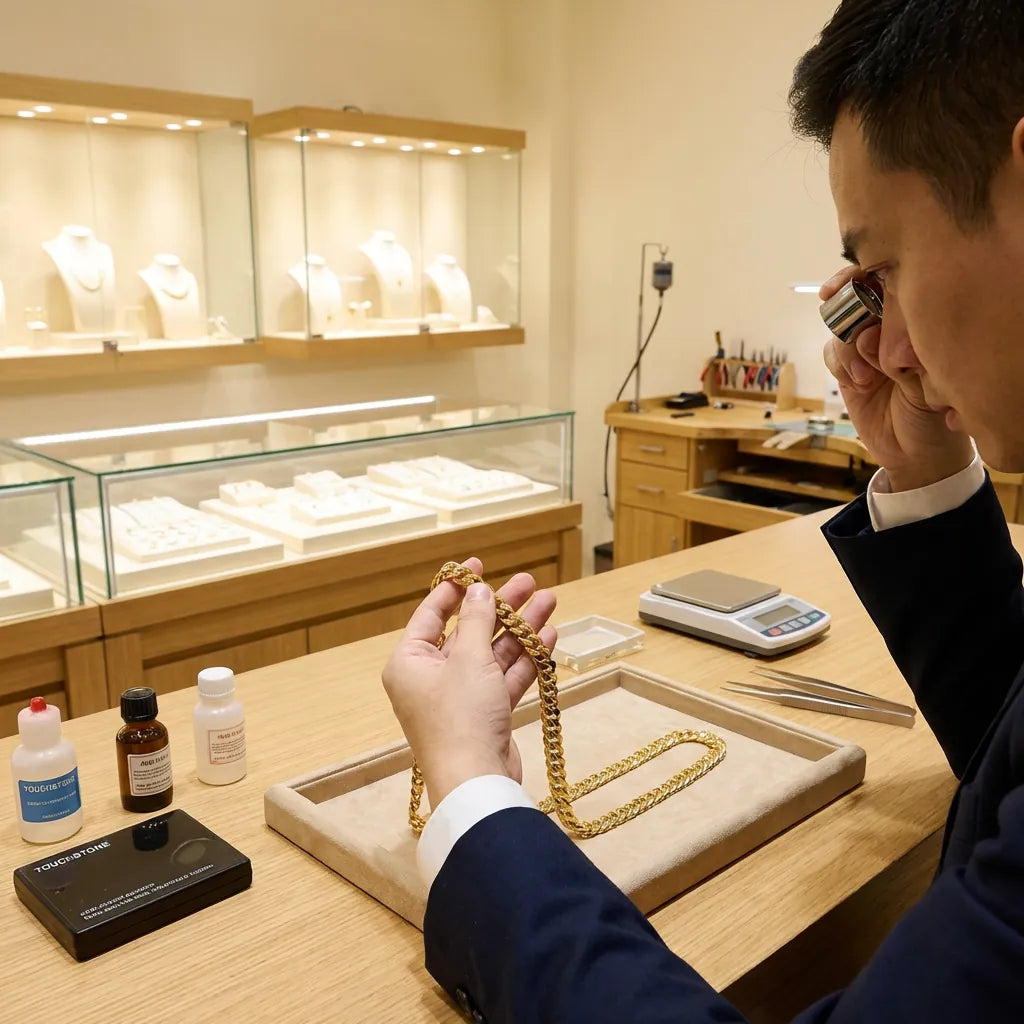
- Reputable jewelers: 80-90% of melt value with a fair, transparent assessment. A jeweler who shows you the weight, karat test, and spot calculation gives you the highest confidence in a face-to-face transaction.
Before selling anywhere, know your piece's exact weight and karat. Use the calculator above to establish a baseline melt value, then compare offers against that number. For a comprehensive overview of protecting your gold's value, read our guide on why jewelry appraisals are essential. Also understand the difference between gold-plated and gold-filled jewelry before selling — these have minimal precious metal value despite their gold appearance.
When to Sell vs. Hold
With gold appreciating approximately 277% from 2016 to 2026, holding solid gold jewelry has historically been more profitable than selling. The exception: damaged or broken pieces where the repair cost exceeds the potential value gain. In those cases, selling for melt value is the rational move. For undamaged pieces, consider that the gold in your chain, ring, or bracelet is likely worth more next year than it is today — it has been true for most of the period since 2000. If you are evaluating gold as an asset class, see our Cuban link investment analysis and our gold vs. silver comparison. You can also browse our silver Cuban link collection as a more accessible entry point.
Sell Gold in Miami
GOLDZENN offers transparent gold buying in Miami. We weigh your piece in front of you, test the karat purity, and show you the exact spot price calculation. No pressure, no hidden deductions. Reach out at contact@goldzenn.com or visit us at our Miami workshop.
Sell Your Gold in Miami
Call (321) 521-4651 to schedule a gold assessment.
Frequently Asked Questions About Gold Prices
Dollar amounts in the FAQs below are approximate and based on recent spot prices. For current values, enter today's spot price in our calculator above.
How much is 14K gold per gram?
14K gold is 58.3% pure. At the current spot price, 14K gold is worth approximately $81.35 per gram (formula: spot per gram × 0.583). Use our gold calculator with today's spot price to calculate the current value of any weight.
How do you calculate gold price per gram?
Divide the spot price per troy ounce by 31.1035 to get the price per gram of pure gold. Then multiply by the karat purity: 10K = 0.417, 14K = 0.583, 18K = 0.750, 22K = 0.917, 24K = 0.999. Example: spot price ÷ 31.1035 = spot/g × 0.583 (14K) = 14K per gram value.
How much is 10K gold worth?
10K gold contains 41.7% pure gold. At the current spot price, 10K gold is worth approximately $58.19 per gram (formula: spot per gram × 0.417). A 72-gram 10K Cuban link chain contains about 30g of pure gold. Use our calculator with today's spot price for current melt values. See our full karat comparison guide for more.
What is 10K gold worth per ounce?
A troy ounce (31.1g) of 10K gold contains 12.97g of pure gold. At the current spot price, that is worth approximately $1,809.81. Multiply the current spot price per ounce by 0.417 for today's 10K troy ounce value. Note: gold is always measured in troy ounces (31.1g), not standard ounces (28.35g).
How much is 18K gold per gram?
18K gold is 75% pure gold. At the current spot price, 18K gold is worth approximately $104.65 per gram (formula: spot per gram × 0.750). 18K offers a deeper yellow color and richer appearance than 14K while maintaining reasonable durability for daily wear.
Why is gold so expensive?
Gold is priced by global supply and demand. It is rare (only ~3,600 tonnes mined annually worldwide), virtually indestructible, universally recognized as a store of value, and used as a hedge against inflation by both individuals and central banks. Central banks hold over 36,000 tonnes in reserves. Unlike currency, gold cannot be printed or inflated — its supply is constrained by nature.
Is 14K gold a good investment?
14K gold jewelry holds intrinsic value because 58.3% of its weight is pure gold, which appreciated approximately 277% from 2016 to 2026. A well-crafted 14K chain serves as both a wearable luxury and a tangible asset. Unlike stocks or crypto, you can wear your gold investment daily while it appreciates. Read our full gold investment analysis.
What is the difference between spot price and retail price?
Spot price is the raw material cost of gold per troy ounce on the global market. Retail jewelry price includes the gold content plus craftsmanship labor, finishing, quality control, warranty, and business overhead. This "craftsmanship premium" typically ranges from 20-55% above melt value depending on the complexity of the piece. See our full premium breakdown with real GOLDZENN product data.
How much does a solid gold Cuban link chain cost?
Solid gold Cuban link chain prices range from approximately $1,347.99 (3mm 10K, 16-inch) to over $139,740.99 (14mm 22K, 30-inch). The price depends on width, length, karat, and whether the chain is machine-made or handcrafted. Browse the full Cuban link collection to compare options. For different chain styles, see our guides on tennis chains, gold rope chains, Figaro chains, curb chains, and diamond Cuban links. For a full overview of every style, read our types of gold chains guide.
How much gold is in a 14K chain?
A 14K gold chain is 58.3% pure gold by weight. Multiply the chain's total weight in grams by 0.583 to find the pure gold content. For example, an 85g 14K chain contains 49.6g of pure gold, worth approximately $7,450.72 at current spot price. The remaining 41.7% is alloy (silver, copper, zinc) that provides structural strength. Visit our gold care guide to keep your chain in pristine condition. You can also explore rope chains, Figaro chains, franco chains, herringbone chains, and tennis chains in our collection.
Still have questions? Contact the GOLDZENN team: (321) 521-4651 or contact@goldzenn.com. We are available to help you understand gold pricing, compare karats, or get a transparent assessment on your existing gold jewelry.
Why Thousands Trust GOLDZENN
347+ Google reviews at 4.9 stars • 3,920+ product reviews • Miami workshop with 50+ years combined experience
Limited lifetime craftsmanship warranty on handmade Cubans (1-year on other pieces) • Every piece weighed and karat-verified • Transparent pricing with visible math
