You are standing in front of a jewelry display. Two chains catch your eye -- one marked $89, the other $6,500. They look nearly identical from behind the glass. But one will last a lifetime. The other might not survive the summer. The difference is not just price. It is what is underneath the gold.
Understanding the difference between gold plated, gold filled, gold vermeil, gold bonded, and solid gold jewelry is one of the most important things you can learn before spending your money. This guide breaks down every type -- what it is, how it is made, how long it lasts, and which one is right for you. Learn more in our complete gold vermeil guide.
At GOLDZENN, we have been crafting gold jewelry in Miami for over 50 years combined. We work with every tier -- from our 10K, 14K, and 18K solid gold pieces to our 14K gold bonded collection. We believe in honest education, so you always know exactly what you are wearing.
What Is Gold Plated Jewelry?
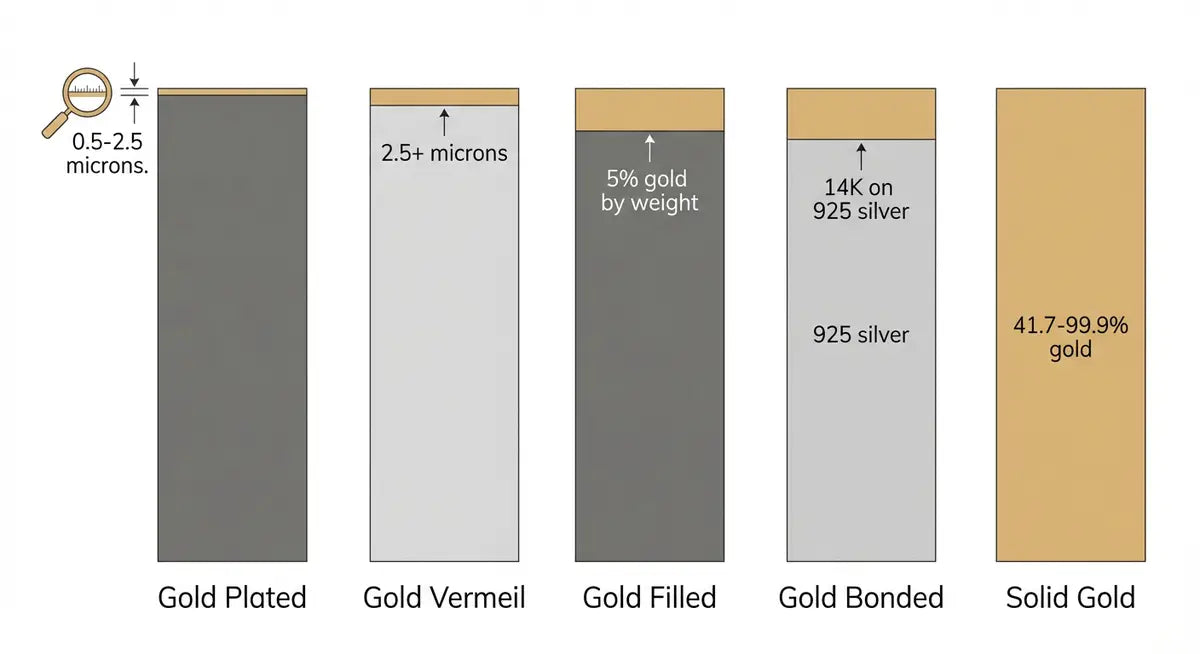
Gold plated jewelry is made by applying an extremely thin layer of gold onto a base metal through an electrical process called electroplating. The gold layer typically measures between 0.5 and 2.5 microns in thickness -- for reference, a single human hair is about 70 microns thick. That means the gold layer on plated jewelry is roughly 1/30th the thickness of a hair.
The base metal underneath is usually brass, copper, nickel, or stainless steel. This base metal makes up more than 99% of the piece by weight. The gold on the surface is real gold (typically 10K-18K), but there is so little of it that gold plated jewelry contains less than 1% actual gold by total weight.
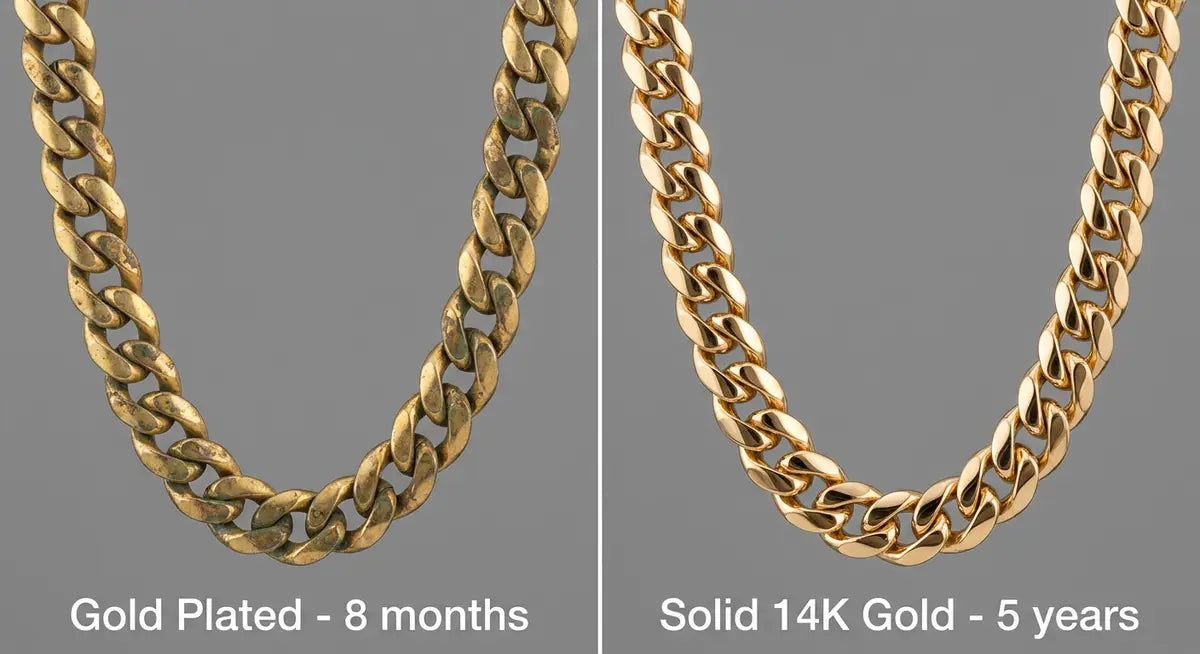
Gold plated jewelry is the most affordable way to get the look of gold. But that thin layer wears down with friction, sweat, water exposure, and daily handling. Most gold plated pieces show visible wear within 6-12 months of regular use.
How Gold Plating Works
The electroplating process involves three key steps:
- Surface Preparation: The base metal piece is thoroughly cleaned and polished to remove any oils, dirt, or oxidation. Any imperfections on the surface will show through the plating, so this step is critical.
- Electroplating Bath: The piece is submerged in a chemical solution containing dissolved gold ions. An electrical current is passed through the solution, causing the gold ions to bond to the surface of the base metal at a molecular level.
- Finishing: The plated piece is rinsed, inspected for even coverage, and polished. Some manufacturers apply a thin clear lacquer coat to extend the life of the plating.
The thickness of the gold layer depends on how long the piece stays in the electroplating bath and the strength of the electrical current. Cheaper pieces spend less time in the bath, resulting in thinner (and less durable) plating.
What Is Gold Filled Jewelry?
Gold filled jewelry is significantly different from gold plated -- and significantly more durable. By U.S. federal law, gold filled jewelry must contain at least 5% gold by total weight. That is roughly 50-100 times more gold than a typical plated piece.
Instead of electroplating a microscopic layer onto a base metal, gold filled jewelry uses a thick sheet of solid gold that is mechanically bonded to a brass or copper core under extreme heat and pressure. The result is a gold layer that is hundreds of times thicker than plating, which is why gold filled jewelry can last 10-30 years with proper care.
How Gold Filling Works
The manufacturing process for gold filled jewelry involves four distinct stages:
- Core Selection: A base metal core is chosen, typically brass or jeweler's bronze. The core provides structure and weight to the finished piece.
- Gold Layer Application: A sheet of solid gold (usually 12K or 14K) is cut to precise dimensions. This sheet is thick enough to see and handle -- far thicker than any electroplated layer.
- Bonding Through Heat and Pressure: The gold sheet is placed over the base metal core and subjected to intense heat and mechanical pressure. This permanently fuses the two metals together at a molecular level, creating a bond that will not peel or flake like plating can.
- Shaping and Finishing: The bonded metal sheet is then drawn through dies, shaped, cut, soldered, and polished into the final jewelry piece.
Because the gold layer is bonded through pressure rather than electricity, it is far more resistant to wear. Gold filled jewelry can handle daily wear, light moisture, and years of use without exposing the base metal underneath.
What Is Gold Vermeil?
Gold vermeil (pronounced "ver-MAY") sits between gold plated and gold filled in terms of quality. By definition, vermeil must meet two specific requirements:
- The base metal must be sterling silver (92.5% pure silver)
- The gold layer must be at least 2.5 microns thick
Because the base is sterling silver rather than brass or copper, vermeil jewelry is considered hypoallergenic for most people. The thicker gold layer (at least 2.5 microns vs. the 0.5 micron minimum for standard plating) also means vermeil lasts longer than basic gold plated jewelry -- typically 2-5 years with careful wear.
How Vermeil Differs from Regular Plating
The two main distinctions are base metal quality and gold thickness. Standard gold plated jewelry can use any base metal (including nickel, which causes allergic reactions in many people) and has no minimum gold thickness requirement. Vermeil guarantees a silver base and a minimum 2.5 microns of gold.
However, vermeil is still electroplated gold. It will eventually wear through to the silver beneath, especially on high-friction areas like chain links and clasps. When it does wear through, you see silver underneath -- which is far less noticeable than the green or dark tarnish of exposed brass or copper.
What Is Gold Bonded Jewelry?
Gold bonded jewelry represents a step above standard plating and vermeil. At GOLDZENN, our gold bonded collection uses 14K solid gold mechanically bonded to 925 sterling silver. This process creates a thicker, more durable gold layer than electroplating, while using a precious metal base rather than cheap brass or copper.
Gold bonded pieces offer the look and weight of solid gold at a fraction of the cost. Because the base is sterling silver, they are hypoallergenic and will not cause the green skin discoloration that brass-based plated jewelry can.
Gold Bonded vs Gold Plated
The key differences between gold bonded and gold plated jewelry:
- Base Metal: Gold bonded uses 925 sterling silver. Gold plated typically uses brass, copper, or nickel.
- Gold Layer: Gold bonded features a mechanically bonded gold layer that is significantly thicker than electroplating.
- Durability: Gold bonded pieces last years longer than standard plated jewelry with proper care.
- Skin Safety: Sterling silver base means no nickel reactions or green discoloration.
- Value: When the gold eventually wears, you still have a sterling silver piece underneath -- not worthless base metal.
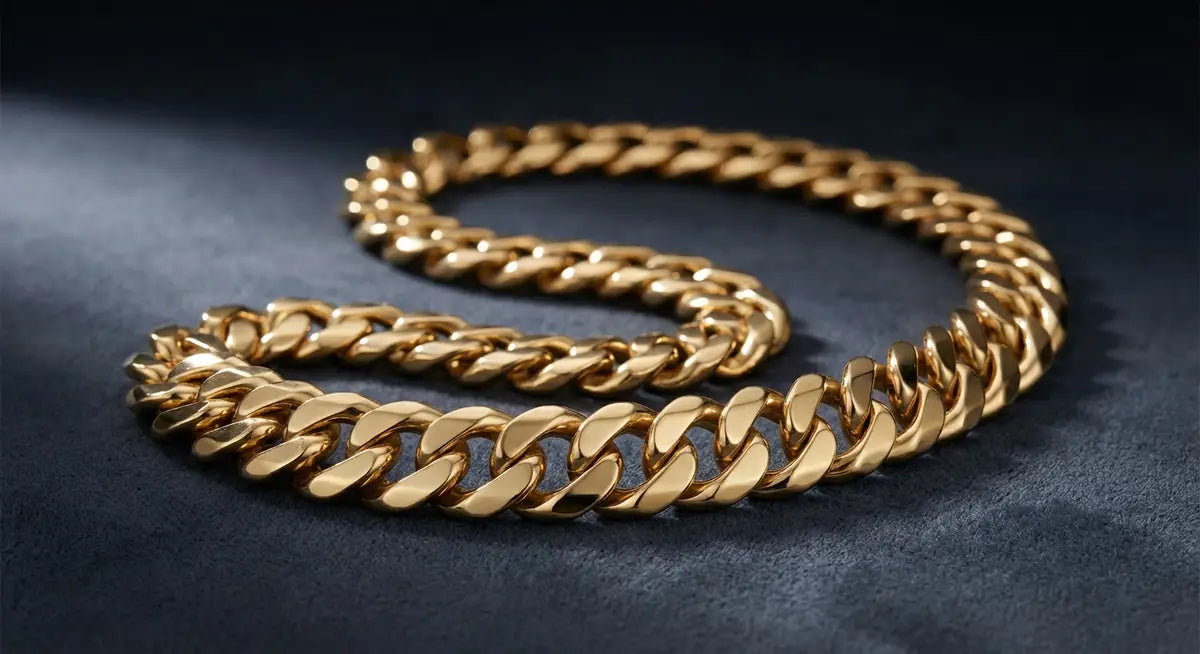
GOLDZENN Gold Bonded Collection
Our 14K gold bonded pieces give you the Miami gold look at accessible prices:
- 10mm Cuban Link Chain - 14K Gold Bonded -- $677.11
- 5.5mm Figaro Chain - 14K Gold Bonded -- $128.07
- 3mm Barrel Crystal Chain - 14K Gold Bonded -- $76.91
- 12mm Cuban Link Chain - 14K Gold Bonded -- $1,006.69
Questions about our gold bonded collection? Call us at 321-521-4651 or email contact@goldzenn.com.
What Is Solid Gold Jewelry?
Solid gold jewelry is made entirely of a gold alloy -- there is no base metal underneath a thin gold layer. The term "solid gold" does not mean 100% pure gold (which is 24K and too soft for most jewelry). Instead, solid gold refers to pieces made from a gold alloy throughout, where the gold content is consistent from surface to core.
The gold content is measured in karats:
- 10K Gold: 41.7% pure gold. The most durable and affordable solid gold option. Excellent scratch resistance for everyday chain wear.
- 14K Gold: 58.3% pure gold. The most popular choice in the United States. Balances durability, color richness, and value. Ideal for Cuban link chains and daily wear.
- 18K Gold: 75% pure gold. Richer, deeper gold color with a more luxurious feel. Best for premium pieces and special occasions.
- 22K Gold: 91.7% pure gold. Extremely rich color, very soft. Mostly used for specialty and ceremonial jewelry.
- 24K Gold: 99.9% pure gold. Too soft for chains and bracelets but valued as an investment metal.
Solid gold jewelry maintains its value over time. Unlike plated or filled pieces, solid gold can be melted down and sold for its gold content, making it both jewelry and a tangible asset. A solid gold chain you buy today will still have real value decades from now -- a gold plated chain will not.
Which Karat Is Best for Everyday Wear?
For daily wear, 14K gold is the gold standard (literally). It is hard enough to resist scratching, contains enough gold for a warm, rich color, and holds its value well. If you want maximum durability at the lowest solid gold price point, 10K is excellent. If you want the richest color and do not mind being a bit more careful, 18K offers unmatched luster.
For a deep dive into the differences, read our complete 10K vs 14K vs 18K comparison guide.
Complete Comparison: Plated vs Filled vs Vermeil vs Bonded vs Solid
Here is how every type of gold jewelry stacks up across the factors that matter most:
| Feature | Gold Plated | Gold Vermeil | Gold Filled | Gold Bonded | Solid Gold |
|---|---|---|---|---|---|
| Gold Content | <1% | ~1-2% | 5%+ by law | Varies (thick layer) | 41.7-99.9% |
| Base Metal | Brass / Copper / Nickel | Sterling Silver | Brass / Bronze | 925 Sterling Silver | Gold Alloy Throughout |
| Price Range | $10-$80 | $40-$200 | $30-$300 | $77-$1,007 | $500-$50,000+ |
| Lifespan | 6-12 months | 2-5 years | 10-30 years | 5-15 years | Lifetime+ |
| Tarnish Resistance | Low | Moderate | High | High | Very High |
| Skin Safety | May cause reactions (nickel base) | Hypoallergenic | Generally safe | Hypoallergenic | Hypoallergenic (14K+) |
| Resale Value | None | Minimal (silver base) | Minimal | Low (silver base) | High (gold melt value) |
| Best For | Fashion / Occasional Wear | Everyday Casual | Daily Wear (Mid-Budget) | Gold Look + Silver Base | Investment / Lifetime Wear |
Pros and Cons of Each Type
Gold Plated Jewelry
Pros:
- Affordable: The lowest entry point into gold-colored jewelry. You can build a collection of different styles without significant investment.
- Variety: Because production costs are low, gold plated jewelry comes in a wider range of designs, colors, and styles than any other category.
- Lightweight: Base metals like brass are lighter than solid gold, making plated pieces comfortable for large, statement designs.
- Trend-Friendly: If you like switching up your style with current trends, gold plated pieces let you experiment without committing to high-cost pieces.
Cons:
- Short Lifespan: The thin gold layer wears off within months of regular use. Expect visible fading, especially on chains and bracelets that rub against skin and clothing.
- Skin Reactions: When the gold wears through, the exposed base metal (often nickel) can cause green discoloration, itching, or allergic reactions.
- No Resale Value: You cannot sell gold plated jewelry for its gold content -- there is simply not enough gold to recover.
- Cannot Get Wet: Water, sweat, humidity, and chemicals accelerate the breakdown of the plating. Showering, swimming, or working out in gold plated jewelry drastically shortens its life.
Gold Filled Jewelry
Pros:
- Excellent Durability: With 50-100x more gold than plated pieces, gold filled jewelry can last 10-30 years with normal wear.
- Tarnish Resistant: The thick gold layer resists tarnishing far better than plated jewelry. You can wear it daily without worrying about rapid deterioration.
- Hypoallergenic for Most: The thick gold barrier prevents most base metal reactions, making it suitable for sensitive skin.
- Mid-Range Value: More affordable than solid gold, but dramatically more durable than plated.
Cons:
- Limited Designs: The heat-and-pressure bonding process limits the complexity of designs compared to cast solid gold.
- No Real Resale Value: Despite containing more gold, gold filled pieces are not accepted by gold buyers for melt value.
- Eventually Wears Through: While far more durable than plated, gold filled is not permanent. The gold layer will eventually wear through on high-friction contact points.
Gold Bonded Jewelry
Pros:
- Precious Metal Base: GOLDZENN's gold bonded pieces use 925 sterling silver -- a precious metal -- as the core. Even if the gold layer eventually wears, you have a quality silver piece underneath.
- Thicker Gold Layer: The mechanical bonding process creates a thicker, more resilient gold layer than standard electroplating.
- Hypoallergenic: Sterling silver base eliminates nickel-related skin reactions.
- Accessible Price Point: Our gold bonded Barrel Crystal chain starts at $76.91 -- real 14K gold appearance with a sterling silver foundation.
Cons:
- Not Solid Gold: Despite the premium process, it is still a layered construction -- not gold through and through.
- Limited Resale: While the silver base has some value, gold bonded pieces do not command solid gold resale prices.
Solid Gold Jewelry
Pros:
- Lifetime Durability: Solid gold does not peel, flake, or wear through because it is gold all the way through. A 14K chain can be worn every single day for decades.
- Investment Value: Solid gold retains and often appreciates in value over time. Your jewelry doubles as a tangible financial asset.
- Hypoallergenic: 14K and above are safe for virtually all skin types.
- Heirloom Quality: Solid gold pieces can be passed down through generations, repaired, resized, and maintained indefinitely.
- Resale Value: You can always sell solid gold jewelry for its melt value, which is directly tied to the current gold spot price.
Cons:
- Higher Price Point: Solid gold jewelry costs significantly more upfront. A solid 14K Cuban link chain can cost 10-50x more than a plated equivalent.
- Weight: Solid gold is denser than base metals, so pieces feel heavier. This is often a positive (it feels luxurious), but some prefer lighter options.
The Cost-Per-Wear Perspective: A $50 gold plated chain that lasts 6 months costs you roughly $0.27 per day. A $5,000 solid 14K gold chain that lasts 30+ years costs about $0.46 per day -- and you still own a valuable asset at the end. When you factor in resale value, solid gold is often the more economical choice over a lifetime.
How to Care for Gold-Plated Jewelry
If you own gold plated, vermeil, or gold bonded pieces, proper care significantly extends their life. These five practices make the biggest difference:
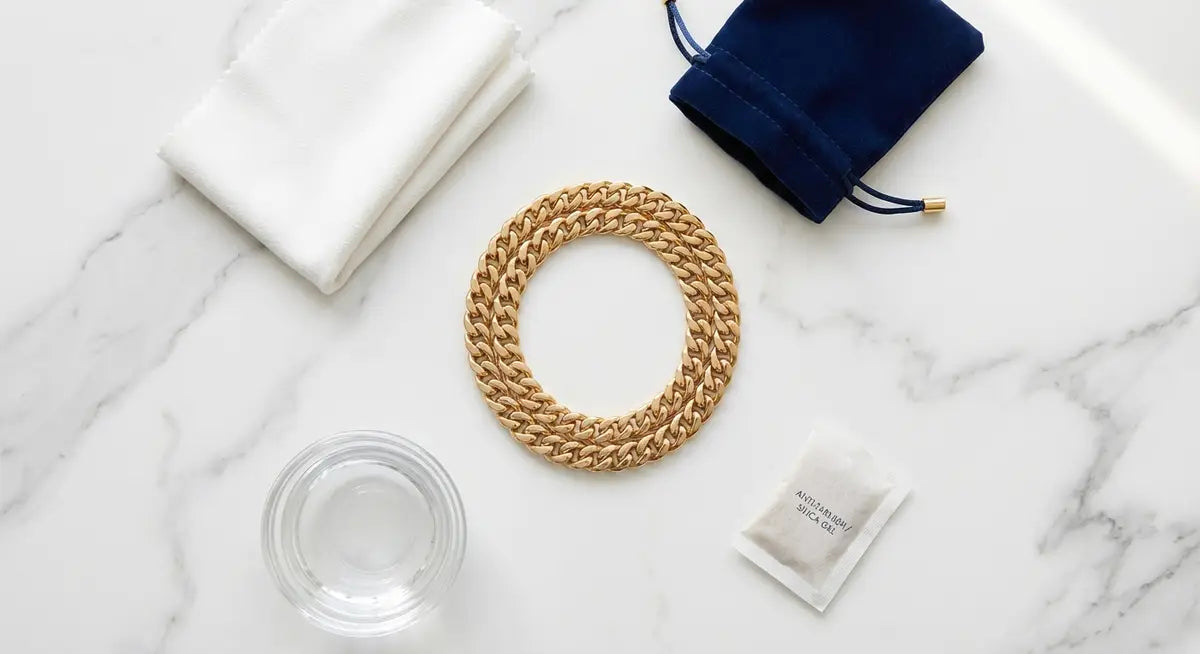
1. Handle With Care
Avoid rubbing, scratching, or dropping your pieces on hard surfaces. The gold layer is thin and vulnerable to abrasion. Put jewelry on last (after clothing, cologne, and lotion) and take it off first when undressing.
2. Avoid Water and Chemicals
Remove gold plated jewelry before showering, swimming, washing dishes, or exercising. Water, chlorine, salt, sweat, and cleaning chemicals all accelerate the breakdown of the gold layer. Perfume, hairspray, and lotions should never contact plated jewelry directly.
3. Clean Gently
Use a soft, dry microfiber cloth to gently wipe your pieces after wearing. If deeper cleaning is needed, dampen the cloth with warm water (no soap) and pat dry immediately. Never use abrasive cleaners, ultrasonic machines, or jewelry dips on plated pieces. For detailed techniques, see our complete gold jewelry cleaning guide.
4. Store Properly
Store each piece separately in a soft pouch or lined jewelry box. Plated pieces rubbing against each other -- or against solid gold and silver -- will wear down faster. Keep storage areas dry and away from humidity.
5. Rotate Your Pieces
If you own multiple gold plated pieces, rotate them instead of wearing the same one every day. This gives the gold layer time to "rest" and dramatically extends the life of each piece. Consider keeping a few gold plated pieces for occasional wear and investing in solid gold for your everyday chain.
How to Tell Gold Plated from Solid Gold
Whether you are evaluating a piece you already own or inspecting something before purchase, these are the most reliable methods to determine if jewelry is gold plated or solid gold:
Stamp and Hallmark Check
Look for markings on the clasp, inside of a ring band, or on the chain tag. Solid gold will be stamped with its karat purity: 10K, 14K, 18K, 750 (18K), or 585 (14K). Gold plated pieces are typically stamped GP (gold plated), GEP (gold electroplated), HGE (heavy gold electroplate), or GF (gold filled). The absence of any stamp is a red flag.
Weight Test
Solid gold is significantly denser than base metals with gold plating. Pick up two chains of similar size -- the solid gold piece will feel noticeably heavier. A 22-inch 10mm solid 14K Cuban link chain weighs roughly 200+ grams. A gold plated version of the same dimensions might weigh 60-80 grams.
Magnet Test
Gold is not magnetic. Hold a strong magnet (neodymium works best) close to the piece. If the jewelry is attracted to the magnet, it contains a ferromagnetic base metal (like iron or nickel) with gold plating on top. Note: this test is not conclusive by itself -- brass and copper are also non-magnetic, so a non-magnetic response does not guarantee solid gold.
Acid Test
Professional jewelers use acid testing kits with solutions calibrated for different karats. A small scratch is made on an inconspicuous area, and acid is applied. The reaction (or lack of reaction) indicates whether the gold is surface-level plating or solid through. This is the most reliable DIY test but should be done carefully.
Professional XRF Testing
The gold standard (no pun intended) is X-ray fluorescence (XRF) testing, which analyzes the metal composition without damaging the piece. Any reputable jeweler can perform this test and tell you exactly what metals are present and in what percentages.
For a deeper dive into authentication methods, read our full guide: How to Spot Real Gold: A Guide to Authentic Jewelry.
Which Should You Buy? A Decision Framework
The right choice depends on your budget, how you plan to wear the piece, and what you value most. Here is a straightforward decision framework:
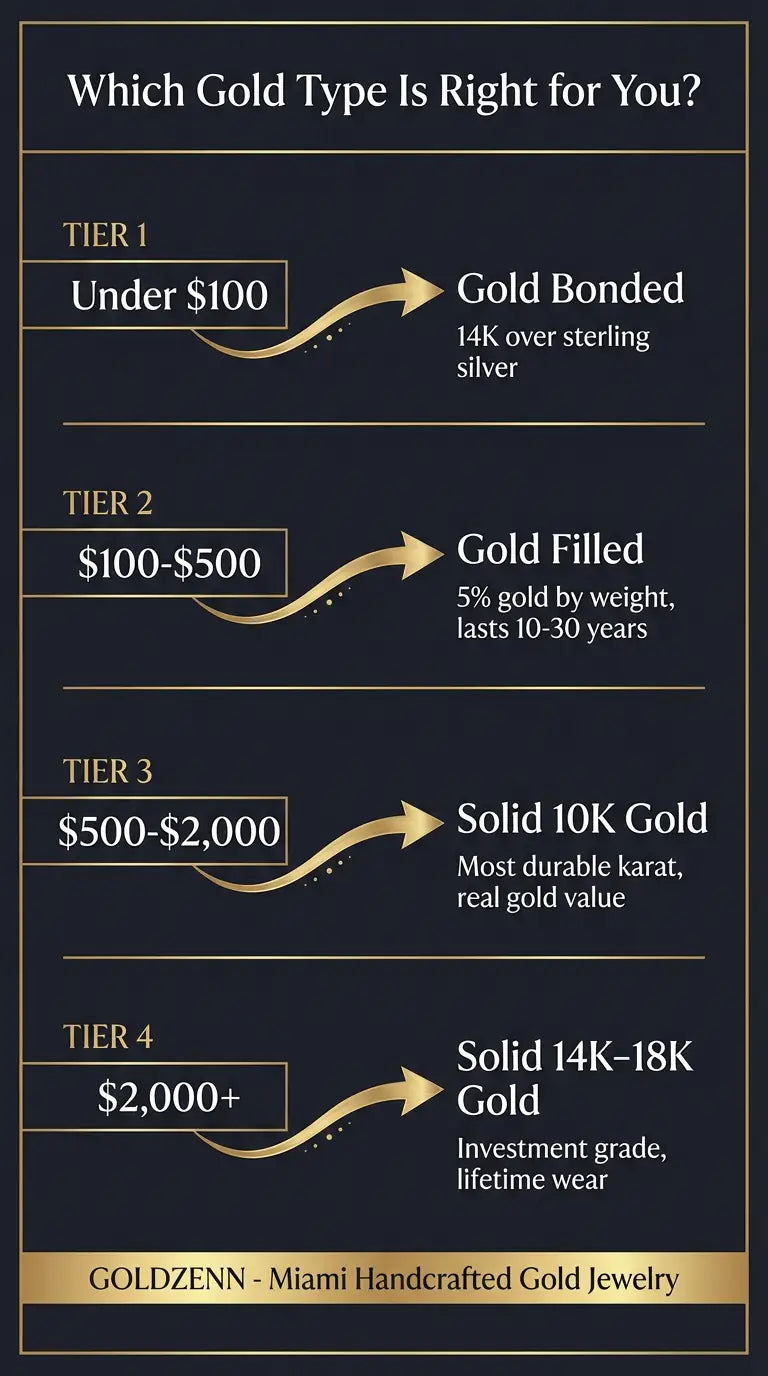
By Budget
- Under $100: Gold bonded gives you the best durability at this price point. GOLDZENN's 3mm Barrel Crystal Chain ($76.91) or 5.5mm Figaro Chain ($128.07) offer 14K gold appearance over sterling silver.
- $100-$500: Gold filled or gold bonded. You get multi-year durability and solid construction.
- $500-$2,000: Entry-level solid gold. Consider 10K solid gold chains -- the most durable karat with genuine gold value. Browse our rope chains and franco chains in this range.
- $2,000+: Solid 14K-18K gold. Investment-grade pieces that hold real value. Our Cuban link chain collection ranges from classic 10K to premium 18K.
By Use Case
- Daily Wear (Every Day, No Removal): Solid gold is the only type that can truly handle this without degradation. A 14K chain is your best choice.
- Regular Wear (Most Days, Removed for Sports/Showering): Gold filled or gold bonded both work well. You get years of life with reasonable care.
- Occasional Wear (Events, Going Out): Gold plated or vermeil are perfectly fine. You get the look without significant investment for pieces worn a few times per month.
- Special Occasions Only: Any type works. If budget is tight, gold plated delivers the visual at the lowest cost.
By Long-Term Value
If you are thinking about jewelry as both an accessory and an asset, solid gold is the clear winner. It is the only type with real resale and investment value. Gold plated, filled, and bonded pieces depreciate the moment you wear them. Solid gold holds and often increases in value alongside gold spot prices.
Consider layering strategies: start with a solid gold chain as your anchor piece, then add gold bonded or filled pieces as secondary layers. This way your most-worn piece is built to last, and your accent pieces can rotate with your style.
Ready to Upgrade?
GOLDZENN specializes in solid gold jewelry crafted by hand in Miami. Whether you are looking for your first solid gold chain or expanding a collection, our team can help you find the right piece for your budget and style.
- Browse: Cuban Link Chains | Rope Chains | Tennis Chains | Franco Chains
- Explore: Pendants | Gold Rings | Wedding Bands
- Custom: Request a Custom Piece
- Call: 321-521-4651 | Email: contact@goldzenn.com
With 347+ Google reviews at 4.9 stars and 3,920+ verified product reviews, GOLDZENN is trusted by collectors and first-time buyers alike. Every handmade Cuban chain and bracelet ships with a limited lifetime craftsmanship warranty; all other pieces carry a 1-year limited warranty.
Frequently Asked Questions
Is gold plated jewelry worth buying?
Gold plated jewelry is worth buying for occasional wear, fashion experimentation, and when budget is the primary concern. It gives you the gold look at the lowest price. However, it is not a long-term investment -- the plating wears off within months of regular use, and the piece has no resale value. If you plan to wear a piece daily, gold filled, gold bonded, or solid gold are better investments.
How long does gold plated jewelry last?
With regular daily wear, most gold plated jewelry shows visible fading within 6-12 months. With careful, occasional wear (a few times per month) and proper storage, it can last 1-3 years. The thicker the plating and the better the care, the longer it lasts. Gold vermeil (2.5+ micron minimum) and gold bonded pieces last significantly longer than standard plating.
Can you shower with gold plated jewelry?
No. Showering with gold plated jewelry is one of the fastest ways to destroy the plating. Hot water, soap, shampoo, and steam all attack the thin gold layer. Even occasional water exposure accelerates wear. Always remove gold plated, vermeil, and gold bonded jewelry before showering, swimming, or working out. Solid gold (10K-18K) is the only type safe for consistent water exposure.
Is gold plated better than gold filled?
Gold filled is significantly better than gold plated in almost every measurable way -- it has 50-100x more gold, lasts 10-30 years versus 6-12 months, resists tarnish far better, and is less likely to cause skin reactions. The only advantage gold plated has is price: it costs less upfront. If your budget allows, gold filled is the superior choice.
What is the difference between gold plated and gold bonded?
Gold bonded jewelry features a thicker gold layer mechanically bonded to a precious metal base (like 925 sterling silver), while gold plated jewelry has a microscopic gold layer electroplated onto a base metal (like brass or nickel). Gold bonded is more durable, hypoallergenic, and retains some base metal value (silver). GOLDZENN's gold bonded collection uses 14K gold over sterling silver.
Does gold plated jewelry turn green?
Yes, gold plated jewelry can cause green skin discoloration once the gold layer wears through. This happens because the exposed copper or brass base reacts with sweat, moisture, and body chemistry. The green color is not harmful -- it is a natural oxidation reaction -- but it is unsightly. Choosing pieces with a sterling silver base (like vermeil or gold bonded) eliminates this issue because silver does not cause green discoloration.
How can you tell if something is gold plated or solid gold?
The most reliable methods are: (1) check the hallmark stamp -- solid gold is stamped 10K/14K/18K while plated is stamped GP/GEP/HGE, (2) compare the weight -- solid gold is significantly heavier than plated, (3) magnet test -- gold is not magnetic, but some plated base metals are, and (4) professional testing with acid or XRF machines for definitive results. Read our full gold authentication guide for step-by-step instructions.
Is gold filled jewelry hypoallergenic?
Gold filled jewelry is generally considered hypoallergenic because the thick gold layer prevents direct skin contact with the base metal underneath. However, if the gold layer wears through (which takes many years), the exposed brass or copper core could cause reactions in people with metal sensitivities. For guaranteed hypoallergenic wear, choose gold bonded with a sterling silver base or solid gold 14K and above.
Can you re-plate gold plated jewelry?
Yes, most jewelers can re-plate gold plated jewelry through the same electroplating process used originally. Re-plating typically costs $30-$80 depending on the piece size and gold thickness requested. However, consider whether re-plating is worthwhile -- if the piece cost $20-$50 originally, spending $50+ to re-plate it may not make economic sense. At that point, upgrading to gold filled, gold bonded, or solid gold is often the smarter move.
What does 14K gold bonded mean?
14K gold bonded means a layer of 14-karat gold (58.3% pure gold) has been mechanically bonded to a base of 925 sterling silver. This is the specific process GOLDZENN uses for our gold bonded collection. The 14K gold layer is bonded through heat and pressure rather than electroplating, creating a thicker, more durable gold surface than standard plating. The sterling silver base provides structural integrity, hypoallergenic properties, and some intrinsic precious metal value.
Still have questions? Our team has been handcrafting gold jewelry in Miami for over 50 years combined. Call 321-521-4651, email contact@goldzenn.com, or visit our workshop at 1056 SW 67th Ave, Miami, FL 33144. Follow our craftsmanship journey on YouTube: @GOLDZENNJWL.
Related reading: Rhodium Plating: What It Is and Why It Matters | Gold Chains for Men: Complete Style Guide | Gold Pendants for Men: Complete Buying Guide | Gold Rope Chains: History and Styles | Figaro Chain Guide | Curb Chain Guide | Tennis Chain Guide | Diamond Cuban Link Chains | Moissanite vs Diamond Cuban Links