

White Gold vs Sterling Silver: The Complete Comparison Guide
Choosing between white gold and sterling silver comes down to how you wear your jewelry, how much upkeep you want, and how far your budget can stretch. Both metals share a cool, silvery-white appearance that works with nearly any outfit or skin tone, but the similarities end at the surface. Underneath, these are fundamentally different materials with different properties, different care requirements, and different long-term value. For a detailed look at gold-over-silver jewelry like vermeil, see our complete gold vermeil guide.
This guide breaks down every factor that matters so you can make the right call for your lifestyle, your taste, and your wallet. Whether you are buying your first chain or building a full collection, understanding the real differences between white gold and sterling silver saves you from regret down the road. Read our silver chain buying guide for comprehensive coverage of sterling options.
What Is White Gold?
White gold is a genuine gold alloy created by mixing pure gold with white-colored metals to achieve a pale, silvery appearance. The most common alloying metals include:
- Palladium — Produces a naturally white alloy, hypoallergenic, and premium priced
- Nickel — The most common whitening agent, less expensive but can trigger allergies in sensitive individuals
- Silver and zinc — Added for hardness and workability
White gold comes in the same karat options as yellow gold. Each karat indicates how much of the alloy is actually gold:
| Karat | Gold Content | Characteristics |
|---|---|---|
| 10K | 41.7% | Most durable, lightest gold color, most affordable |
| 14K | 58.3% | Excellent balance of durability and purity, most popular |
| 18K | 75.0% | Higher gold content, warmer undertone, softer |
Most white gold jewelry is finished with rhodium plating, a thin coating of rhodium (a rare platinum-group metal) that creates the bright, mirror-like white surface people associate with white gold. Without rhodium, white gold has a slightly warm, yellowish-gray tint from its gold content.
For a deep dive into gold karat differences, see our 10K vs 14K vs 18K comparison guide.
What Is Sterling Silver?
Sterling silver is an alloy of 92.5% pure silver and 7.5% copper (or other metals), identified by the hallmark stamp "925." The copper addition is necessary because pure silver is too soft for jewelry, much like pure 24K gold. The resulting alloy is harder, more durable, and suitable for everyday pieces.
Sterling silver has a naturally cool, white tone with a gentle gray undertone. Over time, it develops a patina from exposure to air, humidity, and sulfur compounds in the environment. Some wearers love this aged character, while others prefer to keep their silver polished bright.
There is also 950 silver, which contains 95% pure silver. It is slightly softer than 925 but has a brighter white color and higher silver content. GOLDZENN offers 950 silver in select pieces for buyers who want maximum silver purity.
Head-to-Head Comparison: Every Factor That Matters
Here is the complete breakdown across every dimension that affects your wearing experience, your maintenance routine, and your long-term satisfaction.
| Factor | White Gold | Sterling Silver |
|---|---|---|
| Composition | Gold + palladium/nickel/zinc | 92.5% silver + 7.5% copper |
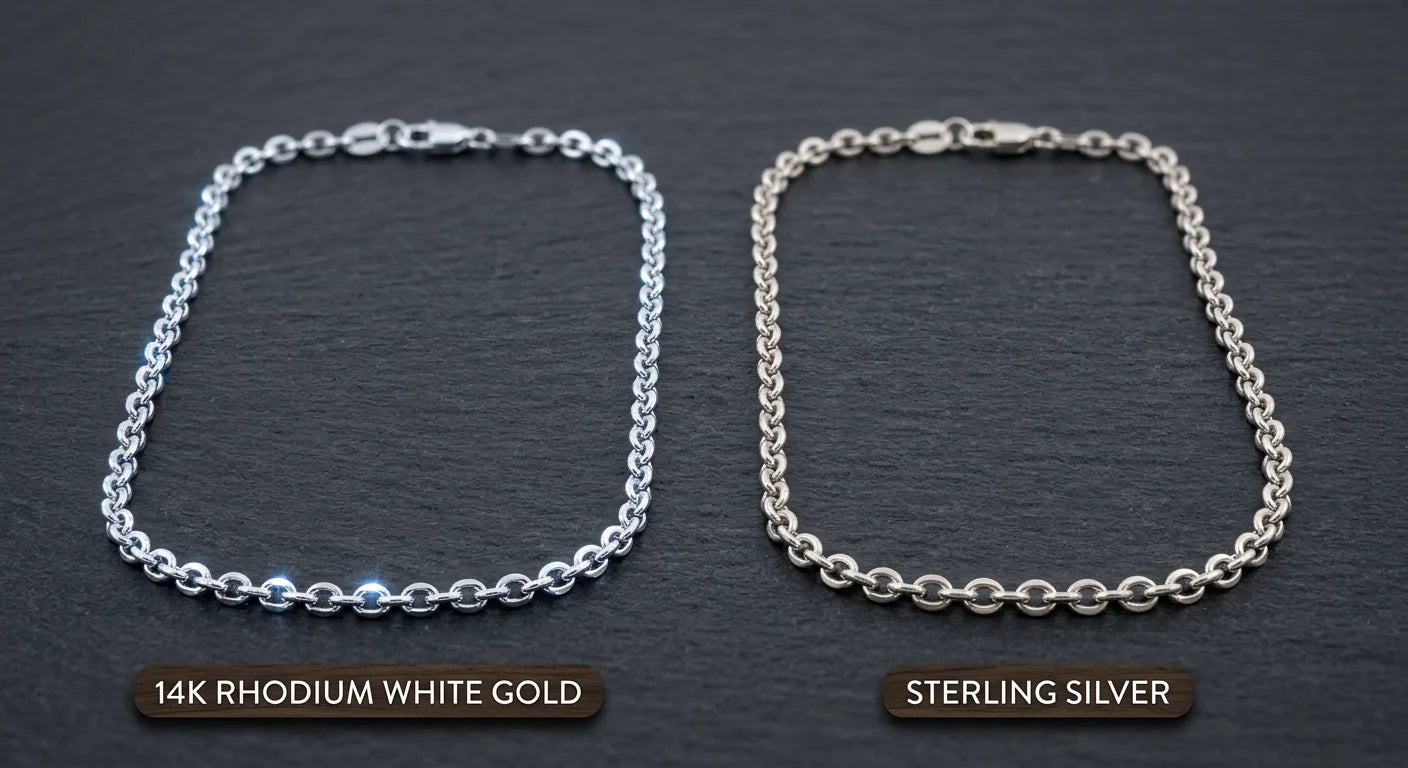
| Color | Bright white (rhodium plated) | Cool white with gray undertone |
| Hardness | Higher (120-200 HV) | Lower (~60-80 HV) |
| Tarnishing | Does not tarnish (rhodium wears) | Tarnishes from air/sulfur exposure |
| Hypoallergenic | Yes (when rhodium plated) | Generally yes (copper reactions possible) |
| Weight/Density | Heavier (denser metal) | Lighter (lower density) |
| Maintenance | Periodic rhodium replating | Regular polishing |
| Price Range | Significantly higher | More affordable |
| Resale Value | Strong (gold content) | Modest (lower metal value) |
| Scratch Resistance | Better | Scratches more easily |
| Lifespan | Generations with minimal care | Years with regular maintenance |
Color and Shine
The visual difference between these metals is subtle but important. Freshly rhodium-plated white gold has a high-gloss, almost reflective brightness that reads crisp and modern under any lighting. It photographs well and holds that clean, bright look for months between replating sessions.
Sterling silver has a softer, slightly warmer white with a gentle gray cast. It does not have the same mirror-like reflectivity as rhodium-plated gold, but its tone is elegant and pairs naturally with casual and semi-formal wardrobes. As silver ages, it develops surface character. Light tarnish can actually enhance textures, engravings, and oxidized design details.
If you want that glassy, camera-ready white, white gold delivers it more consistently. If you appreciate vintage aesthetics and pieces that develop character over time, sterling silver grows into that mood beautifully.
Durability and Scratch Resistance
White gold is measurably harder than sterling silver, which translates directly to real-world performance. White gold chains, rings, and bracelets resist scratching better, hold their shape under daily stress, and maintain structural integrity in thin components like prongs and clasps.
Sterling silver is strong enough for daily wear in chunky designs like Cuban link chains, wide bands, and sturdy bracelets. However, thin silver components (fine chains, wire rings, delicate prongs) are more vulnerable to bending, stretching, and opening under repeated stress.
For jewelry you plan to wear every day without thinking about it, white gold is the safer choice. For statement pieces worn selectively, sterling silver delivers the look and feel without the premium price.
Skin Sensitivity and Allergies
This is a critical consideration for buyers with sensitive skin:
- White gold with nickel — Can trigger contact dermatitis in nickel-sensitive individuals. The rhodium plating provides a barrier, but once it wears through, nickel contact occurs. If you have known nickel sensitivity, request palladium-based white gold or ensure rhodium plating is maintained.
- White gold with palladium — Hypoallergenic and safe for virtually all skin types. More expensive than nickel-based alloys but eliminates allergy risk entirely.
- Sterling silver (925) — Generally well-tolerated. The copper component can react with sweat and body chemistry, occasionally leaving green marks on skin. This is a harmless chemical reaction, not an allergic response. The marks wash off easily.
Always communicate your sensitivities when purchasing jewelry. At GOLDZENN, our team can guide you toward the safest metal choice for your skin. Contact us at 321-521-4651 or contact@goldzenn.com.
Rhodium Plating: What You Need to Know
Rhodium plating is central to the white gold experience. Here is what every buyer should understand:
- What it does: Creates the bright, mirror-white surface and adds a scratch-resistant layer
- How long it lasts: Typically 1-3 years depending on wear frequency, body chemistry, and the areas of the piece that contact skin most
- What happens when it wears: The underlying gold alloy shows through. This is not damage or tarnishing. The piece still contains the same gold content. Replating restores the original appearance.
- Cost to replate: Varies by region and piece complexity, but it is a routine service offered by professional jewelers
- Silver can be rhodium-plated too: Many premium sterling silver pieces receive rhodium plating for added brightness and tarnish resistance. GOLDZENN applies rhodium finishing on select silver pieces.
For a detailed guide on rhodium dipping benefits and timing, read our rhodium plating guide.
Tarnishing: Silver's Biggest Challenge
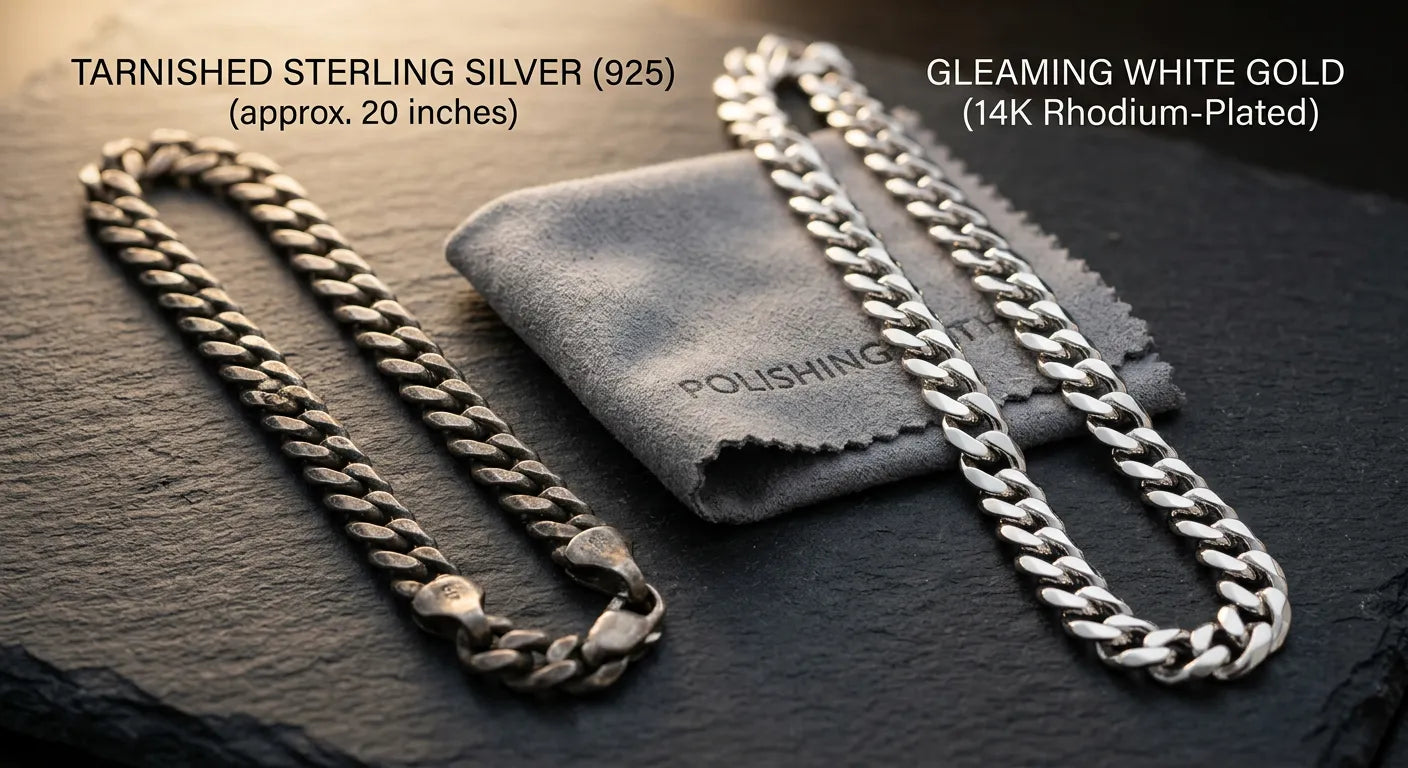
Tarnishing is the primary maintenance difference between these metals. White gold does not tarnish because gold is chemically inert. Sterling silver tarnishes because the copper in the alloy reacts with sulfur compounds in the air, forming a dark silver sulfide layer on the surface.
Factors that accelerate tarnishing:
- High humidity environments
- Exposure to perfume, cologne, or lotions
- Contact with rubber bands, certain foods (eggs, onions), and household chemicals
- Chlorinated water (pools and hot tubs)
- Extended storage without anti-tarnish protection
The good news: tarnish is entirely reversible. A silver polishing cloth removes light tarnish in seconds. For heavier tarnish, a silver cleaning solution or professional cleaning restores the original shine. Anti-tarnish storage bags and strips dramatically slow the process. For complete care instructions, see our jewelry cleaning guide.
Cost and Long-Term Value
The price gap between white gold and sterling silver is substantial and reflects fundamental differences in material value:
- Upfront cost: A sterling silver Cuban link chain can cost a fraction of the equivalent piece in 14K white gold. This makes silver ideal for trend pieces, seasonal rotations, and building a varied collection without a major financial commitment.
- Maintenance cost: Silver requires inexpensive at-home cleaning supplies (polishing cloths, anti-tarnish pouches). White gold may need periodic professional rhodium replating, which adds ongoing cost but is infrequent.
- Resale and intrinsic value: White gold retains strong value because of its gold content. Gold trades at a premium per gram compared to silver. A well-maintained 14K white gold chain retains meaningful resale value indefinitely, while sterling silver's metal value is modest by comparison.
For buyers who want to understand how gold pricing works and what drives long-term value, our gold prices guide provides current market context and a pricing calculator.
Weight and Comfort on the Body
White gold is denser than silver, so a white gold piece of identical dimensions will feel slightly heavier. Many wearers interpret this as a quality indicator, a subtle heft that signals substance. For chains, this extra weight helps the piece lay flat and drape naturally against the chest.
Sterling silver is lighter, which some people prefer for all-day comfort, especially in larger pieces like thick Cuban link or rope chains. Because silver is more affordable, designers often scale up width and thickness to create substantial-looking pieces that feel comfortable over long wearing periods.
When to Choose White Gold
White gold is the stronger choice when:

- You want a piece to wear every single day without removal
- Scratch resistance and structural toughness matter (rings, tennis bracelets, thin chains)
- You are buying an heirloom or milestone piece (engagement, anniversary, graduation)
- Long-term resale value is important to you
- You prefer the brightest, most reflective white surface
- You want to set precious stones that require secure prong settings
When to Choose Sterling Silver
Sterling silver is the smarter choice when:
- You want to rotate styles frequently without a large investment
- You prefer bold, chunky designs where silver's lower cost allows larger scale
- The piece is for fashion, trend, or seasonal wear rather than permanent collection
- You enjoy the aesthetic of patina and vintage character
- You want to experiment with chain layering using multiple pieces
- Budget is a primary consideration
The Best Strategy: Mix Both Metals
The smartest approach for building a versatile jewelry collection is to use both metals strategically. Here is a proven framework:

- Anchor pieces in white gold: Your everyday chain, your go-to ring, or a classic tennis bracelet. These are the pieces you wear most and want to last longest. Invest in 10K or 14K white gold for maximum durability and value.
- Accent pieces in sterling silver: Pendant chains, layering chains, chunky bracelets, and statement rings. These are the pieces that add variety and personality to your rotation without breaking the budget.
- Special occasion flexibility: When you want to dress up, stack your white gold anchor with silver accents. When you are keeping it casual, wear the silver solo. Both metals share the same cool-white color family, so they mix naturally.
Since both white gold and sterling silver share cool, silvery tones, they layer and mix together seamlessly. For specific pairing ideas, check our chain layering guide.
GOLDZENN's White Gold and Sterling Silver Collection
GOLDZENN carries both white gold and sterling silver across our most popular chain styles, so you can choose the metal that fits your needs:
Sterling Silver Highlights
- Silver Cuban Link Chain (8mm): A clean, substantial width in solid 950 silver. Reads bold under an open shirt, tough enough for daily wear.
- 925 Silver Moissanite Tennis Bracelet: Bright, uniform sparkle with multiple width and length options. Perfect for stacking or standalone elegance.
- 925 Silver Baguette Moissanite Cross Pendant: Clean baguette stones in rhodium-plated sterling silver. Pairs with rope chains or box chains.
White Gold Highlights
- White Gold Rope Chain (2mm-5mm): A timeless classic in 10K and 14K. Sits flat, catches light beautifully, works solo or with a pendant.
- White Gold Box Chain (2mm): The everyday essential. Square links, secure clasp, and a clean profile that layers with everything.
- White Gold Cuban Link Chain (3mm-7mm): Italian-made links in hollow construction for an impressive look at a lighter weight. Available in 10K and 14K.
Browse our full Cuban link collection or explore our moissanite Cuban link options in both sterling silver and gold settings.
Care and Maintenance: A Practical Guide for Both Metals
Understanding the care requirements for each metal helps you keep your pieces looking their best with minimal effort.
White Gold Care
- Daily: Wipe with a soft, lint-free cloth after wearing to remove body oils and residue
- Weekly: Gentle wash with warm water and mild dish soap, pat dry completely
- Avoid: Harsh chemicals, chlorine, bleach, and abrasive cleaners that can damage rhodium plating
- Annually: Professional inspection and cleaning. Rhodium replating every 1-3 years as needed
- Storage: Individual soft pouches or compartmented jewelry box. Separate from harder gemstones
Sterling Silver Care
- Daily: Wipe with a soft cloth after wearing. Remove before sleeping, showering, or exercise
- Weekly: Use a dedicated silver polishing cloth for quick shine restoration
- For tarnish: A silver cleaning bath or specialized silver polish removes surface oxidation in minutes
- Avoid: Rubber bands (sulfur causes rapid tarnishing), perfume applied directly to silver, and prolonged humidity exposure
- Storage: Anti-tarnish bags or strips inside your jewelry box. Silica gel packets help in humid climates
For both metals, remove jewelry before swimming in chlorinated pools, applying household cleaners, or doing physical work that could cause impact or scratching. For step-by-step cleaning methods, see our jewelry cleaning guide.
Common Myths About White Gold and Sterling Silver
Several misconceptions persist about these metals that can lead to poor purchasing decisions:
- "White gold is pure white metal" — False. White gold is gold alloyed with white metals, then rhodium plated. The underlying alloy has a warm tint. The white appearance comes from the rhodium coating.
- "Sterling silver is cheap jewelry" — False. Sterling silver is a precious metal used in fine jewelry for centuries. Quality craftsmanship in silver produces heirloom-quality pieces. It is less expensive than gold but far from "cheap."
- "Green marks from silver mean it is fake" — False. The green mark is copper oxide from the alloy reacting with skin moisture. It is actually evidence of genuine sterling silver, not a sign of counterfeiting.
- "White gold never needs maintenance" — False. While gold itself does not tarnish, the rhodium plating wears down and needs periodic refreshing to maintain its bright white appearance.
- "Silver and white gold look identical" — False. To a trained eye, they are distinguishable. Rhodium-plated white gold has a harder, more reflective shine. Sterling silver has a softer, slightly gray-toned white. The difference is subtle but real.
Make Your Decision with Confidence
White gold and sterling silver each have a clear place in a well-curated jewelry collection. White gold delivers durability, prestige, and investment value. Sterling silver delivers versatility, affordability, and design range. The best choice is not one or the other. It is understanding which metal serves which role in your personal style.
At GOLDZENN, our Miami workshop with 50+ years of combined craftsmanship experience produces both white gold and sterling silver pieces to the same quality standard. We are backed by 295+ Google reviews at 4.9 stars and over 3,900 verified product reviews.
Still deciding? Contact our team at 321-521-4651 or contact@goldzenn.com for personalized guidance. Watch our craftsmanship videos on YouTube at @GOLDZENNJWL to see the quality behind every piece we make.
Frequently Asked Questions About White Gold and Sterling Silver
Is white gold better than sterling silver?
It depends on your priorities. White gold is more durable, more scratch-resistant, and hypoallergenic (when rhodium-plated), making it ideal for everyday fine jewelry and engagement rings. Sterling silver is more affordable, easier to find in a variety of designs, and has a beautiful cool-toned glow. For long-term investment pieces, white gold holds its value significantly better. For everyday fashion or layering pieces, sterling silver delivers excellent style at a lower price point.
Does white gold tarnish?
White gold itself does not tarnish because gold is non-reactive. However, the rhodium plating that gives white gold its bright, mirror-like finish can wear down over time, revealing the slightly warmer gold alloy underneath. This is not tarnishing — it is plating wear that any professional jeweler can restore with a quick rhodium re-plating, typically needed every 1-2 years depending on wear frequency.
Does sterling silver turn your finger green?
Sterling silver can sometimes leave a green or dark mark on skin, caused by the copper content in the 925 alloy reacting with moisture, sweat, or lotions. This is a harmless chemical reaction, not an allergic response or a sign of fake silver. Keeping your sterling silver dry and clean minimizes this effect. If you experience persistent skin reactions, consider white gold or platinum alternatives, which are hypoallergenic.
How can you tell white gold from sterling silver?
Check the hallmark stamps: white gold is stamped with karat markings (10K, 14K, or 18K), while sterling silver carries a 925 stamp. Visually, freshly rhodium-plated white gold has a brighter, more mirror-like shine, while sterling silver has a softer, slightly gray-toned white. White gold also feels heavier in hand due to its higher density. A professional jeweler can test metal composition with XRF analysis if stamps are not visible.
Is white gold worth the extra cost over sterling silver?
White gold costs significantly more than sterling silver due to its gold content, but it offers superior durability, scratch resistance, and long-term value retention. White gold jewelry can last generations with minimal maintenance, while sterling silver requires regular polishing and is more prone to scratching. For special occasion pieces, engagement rings, or jewelry worn daily, white gold provides a better long-term investment. For fashion layering and trend pieces, sterling silver is the smarter choice. Browse our silver chain buying guide for quality sterling options.
Can you wear sterling silver every day?
Yes, sterling silver is durable enough for daily wear, but it requires more maintenance than white gold. Exposure to moisture, sweat, cosmetics, and air causes tarnishing over time, which needs regular polishing with a silver cloth. Remove sterling silver before swimming, showering, or exercising to extend its life. Store pieces in anti-tarnish bags when not wearing them. With proper care, sterling silver jewelry can look beautiful for years.
What is rhodium plating on white gold?
Rhodium plating is a thin layer of rhodium — a rare platinum-group metal — applied to white gold to enhance its bright, reflective white appearance and add a protective barrier against scratches. Rhodium is one of the hardest precious metals and gives white gold its distinctive mirror-like finish. This plating is standard practice in fine white gold jewelry and can be professionally reapplied when it begins to wear, keeping the piece looking brand new.
Is white gold hypoallergenic?
Rhodium-plated white gold is generally safe for sensitive skin because the rhodium barrier prevents direct contact with the alloy metals underneath. However, if the rhodium plating wears through and the white gold alloy contains nickel, some people may experience reactions. For maximum hypoallergenic safety, choose palladium-based white gold alloys or keep rhodium plating maintained. GOLDZENN can advise on the best metal choice for sensitive skin — contact us at 321-521-4651.
Which holds its value better: white gold or sterling silver?
White gold holds its value significantly better because gold is a precious metal with strong investment demand and limited supply. Sterling silver, while a precious metal, trades at a fraction of gold's price per ounce. A 14K white gold piece retains substantial intrinsic value from its gold content, while a sterling silver piece of the same design holds minimal resale value. For jewelry that doubles as a long-term store of value, gold is the clear winner. Learn more in our gold prices guide.
Can you mix white gold and sterling silver jewelry?
Absolutely. Mixing white gold and sterling silver creates an intentional, layered look that fashion-forward men and women embrace. The key is maintaining visual harmony — since both metals share similar cool tones, they pair naturally. Use your more substantial white gold pieces as anchor items and layer in sterling silver for added dimension. Just be aware that the two metals wear at different rates, so silver pieces may need polishing sooner. See our chain layering guide for expert mixing tips.