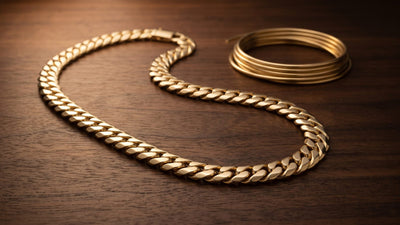
¿Puedes ducharte con joyas de oro? Consejos de expertos
Es la pregunta que todo propietario de joyas de oro se hace al menos una vez: ¿puedo usar mi cadena de oro en la ducha? La respuesta corta es que el oro macizo resistirá una ducha sin sufrir daños, pero ducharse regularmente con tus joyas no es lo ideal. La respuesta más larga depende de los quilates, el tipo de agua, los productos que uses y si tu pieza contiene piedras preciosas. El oro vermeil es particularmente sensible al agua; consulta nuestra guía completa de oro vermeil para más detalles.
En GOLDZENN, fabricamos cadenas de oro macizo y pulseras diseñadas para la vida real, no para una vitrina. Nuestro taller en Miami cuenta con más de 50 años de experiencia combinada en la elaboración de joyas que resisten el uso diario. Aquí te ofrecemos nuestra guía experta sobre la exposición del oro al agua, basada en décadas de trabajar con este metal y en los comentarios de miles de clientes.
La respuesta rápida: oro macizo vs. chapado
Antes de entrar en detalles, aquí está la distinción más importante:

- Oro macizo (10K-24K): No se dañará con el agua de la ducha. El oro en sí no reacciona con el agua. Sin embargo, los residuos de jabón, los depósitos minerales de agua dura y la acumulación de productos pueden opacar su apariencia con el tiempo.
- Chapado en oro, vermeil de oro o relleno de oro: No te duches con estas piezas. El agua, el jabón y el vapor aceleran la descomposición de la fina capa de oro, exponiendo el metal base que se encuentra debajo. La exposición repetida al agua puede desprender el chapado de oro en cuestión de semanas. Obtén más información sobre cómo funciona el chapado en oro y por qué no puede soportar el contacto regular con el agua.
Si no estás seguro de si tu pieza es de oro macizo o chapada, nuestra guía sobre cómo identificar el oro auténtico te explica los métodos de verificación.
Ducharse con oro según los quilates
Cada nivel de quilates responde de forma ligeramente diferente a la exposición al agua debido a los metales de aleación mezclados con el oro:

Oro de 10K (41,7% puro)
Ducharse con oro de 10K es generalmente seguro. La aleación es duradera y resistente al agua. La principal preocupación es la acumulación de residuos de jabón y champú en los eslabones de la cadena y alrededor de los cierres. Después de semanas de ducharse a diario, este residuo crea una película que opaca el brillo del metal. La solución es sencilla: la limpieza periódica con agua tibia y jabón y un cepillo suave restaura el brillo original. Para más información sobre las características del oro de 10K, consulta nuestra guía de comparación de quilates.
Oro de 14K (58,3% puro)
El oro de 14K tolera bien el agua de la ducha. El mayor contenido de oro significa una menor reactividad con los químicos del jabón en comparación con el 10K. Se aplica la misma acumulación de residuos, pero el 14K recupera su brillo más fácilmente con una limpieza básica. El 14K es el quilate más popular para la joyería de uso diario en los Estados Unidos, y la exposición ocasional a la ducha no es una preocupación para el metal en sí.
Oro de 18K (75% puro)
Con un 75% de oro, el 18K es altamente resistente a cualquier efecto del agua de la ducha. La reducción del contenido de aleación significa aún menos reactividad química. El oro de 18K mantiene su color cálido y rico incluso con una exposición regular al agua. Si estás eligiendo un quilate para una cadena que planeas usar 24/7, incluyendo las duchas, el 18K es una excelente opción. Compara los beneficios del oro de 14K vs 18K para encontrar tu equilibrio ideal entre pureza y durabilidad.
Oro de 24K (99,9% puro)
El oro puro no se ve afectado en absoluto por el agua a nivel químico. Sin embargo, el oro de 24K es significativamente más blando que los quilates inferiores. El riesgo al ducharse no es el daño químico, sino el daño físico: golpear una cadena de 24K contra los accesorios de la ducha, dejarla caer sobre los azulejos o engancharla en una toalla podría causar abolladuras o arañazos que son más visibles en metales más blandos. Si posees una pieza de 24K, quítatela antes de ducharte para protegerla de impactos accidentales.
Tipos de agua y sus efectos en el oro
No toda el agua es igual cuando se trata de tus joyas:
Agua del grifo
El agua del grifo estándar es segura para el oro macizo. La mayoría del agua municipal contiene oligominerales y cloro de bajo nivel para la desinfección, pero estas concentraciones son demasiado bajas para afectar las aleaciones de oro. El agua dura (alto contenido de minerales) puede dejar depósitos de calcio y cal en las joyas con el tiempo, creando una película blanca opaca. Esto es solo estético y se elimina fácilmente con la limpieza.
Agua de piscina clorada
El cloro de la piscina es significativamente más concentrado que el cloro del agua del grifo. El cloro ataca los metales de aleación en el oro, particularmente el cobre, lo que puede debilitar la estructura del metal con el tiempo. Una sola sesión de piscina no causará daños visibles al oro macizo, pero la exposición repetida y prolongada puede provocar decoloración y, en casos extremos, grietas por tensión en aleaciones de menor quilate. Si nadas regularmente, quítate tus joyas de oro antes de entrar a la piscina. Si lo olvidas, enjuágalas bien con agua fresca después. Las joyas chapadas nunca deben usarse en una piscina.
Agua salada (océano)
El agua salada del océano es ligeramente corrosiva para los metales de aleación. La sal acelera la oxidación del cobre y la plata en las aleaciones de oro. El oro macizo (14K y superior) puede soportar la exposición ocasional al océano sin problemas, pero siempre debes enjuagar tus joyas con agua dulce lo antes posible después de salir del océano. La combinación de sal, arena y sol también puede causar abrasión física en quilates más blandos. Para quienes van a la playa a diario, se recomienda una limpieza profesional periódica.
Agua de bañera de hidromasaje
Evita usar oro en bañeras de hidromasaje. Las bañeras de hidromasaje contienen un cóctel químico concentrado: cloro o bromo, equilibradores de pH, alguicidas y varios desinfectantes. La combinación de alta temperatura y productos químicos concentrados crea el ambiente más agresivo para las aleaciones de oro fuera de los entornos industriales. Incluso el oro de 18K puede mostrar decoloración después de una exposición repetida a la bañera de hidromasaje. El calor también abre los poros de la piel, aumentando la interacción química entre el sudor, los productos químicos y el metal.
Vapor y Sauna
Las salas de vapor y las saunas exponen las joyas a un calor y una humedad elevados y sostenidos. Para el oro macizo, esto es químicamente seguro: el vapor es solo vapor de agua, y el oro no reacciona con él. La preocupación surge con las piezas que tienen engastes de piedras preciosas (discutido a continuación) o con la expansión y contracción del metal debido a los cambios rápidos de temperatura. Las cadenas de oro macizo sin piedras pueden soportar la exposición al vapor y la sauna sin sufrir daños.
Efectos del jabón, champú y otros productos
El agua en sí rara vez es el problema. El verdadero problema es lo que pones en el agua:

Jabón y Gel de Baño
El jabón crea un residuo fino que se acumula en los eslabones de la cadena, alrededor de los mecanismos de cierre y en las superficies texturizadas. En una cadena de eslabones cubanos, el residuo de jabón se acumula en los eslabones entrelazados, opacando gradualmente la superficie reflectante. Esta acumulación no es dañina para el metal, pero afecta la apariencia. Cuanto más apretado sea el tejido o más intrincado el diseño, más residuos se acumulan. La limpieza regular cada 2-4 semanas contrarresta este efecto.
Champú y Acondicionador
Los champús, especialmente los clarificantes y anticaspa, contienen sulfatos, ácido salicílico y otros químicos activos. Estos pueden dejar residuos en las joyas y, en algunas formulaciones, reaccionar ligeramente con los metales de aleación. Los acondicionadores contienen siliconas y aceites que cubren los eslabones de la cadena y crean una película pegajosa que atrae la suciedad. Si te duchas con tu cadena, permanecer bajo el agua de enjuague después de lavarte el cabello ayuda a eliminar los residuos de las joyas.
Exfoliantes
Los exfoliantes físicos (exfoliantes con microesferas o gránulos) pueden rayar la superficie del oro, especialmente en quilates más altos donde el metal es más blando. Los arañazos son microscópicos pero acumulativos: con el paso de los meses, pueden opacar un acabado pulido. Mantén los productos exfoliantes alejados de tus joyas de oro.
Tinte para el cabello y tratamientos químicos
Los tintes para el cabello, la decoloración, las soluciones para permanentes y los tratamientos de queratina contienen químicos fuertes (amoniaco, peróxido, formaldehído) que nunca deben entrar en contacto con las joyas de oro. Estos pueden causar decoloración inmediata en el oro de menor quilataje y dañar los engastes de las piedras preciosas. Quítate siempre todas las joyas antes de cualquier tratamiento químico capilar.
Consideraciones sobre las piedras preciosas
Si tu pieza de oro contiene piedras, las reglas cambian significativamente. El oro puede soportar el agua, pero muchas piedras preciosas no:
Seguro para la ducha
- Diamantes: Extremadamente duros e inertes químicamente. El agua de la ducha, el jabón y el vapor no representan ningún riesgo para los diamantes. Sin embargo, los residuos de jabón pueden opacar temporalmente su brillo hasta que se limpien.
- Moissanita: Casi tan dura como el diamante (9,25 en la escala de Mohs) y químicamente estable. Segura para la exposición al agua. Obtén más información sobre la moissanita en las cadenas de eslabones cubanos.
- Zafiros y Rubíes: Piedras de la familia del corindón (9 de dureza Mohs) que son seguras para el agua y el vapor.
Evitar la exposición al agua
- Perlas: Gemas orgánicas que absorben agua y productos químicos. El agua de la ducha, el jabón y el vapor dañan el nácar (capa superficial), causando opacidad y eventual deterioro. Nunca te duches con perlas.
- Ópalos: Contienen hasta un 20% de agua en peso. Los cambios rápidos de temperatura y los químicos del jabón pueden causar agrietamiento (craquelado superficial). Mantén los ópalos secos.
- Turquesa: Piedra porosa que absorbe agua, jabón y aceites, causando cambios permanentes de color. Quítate siempre las joyas de turquesa antes de ducharte.
- Esmeraldas: A menudo tratadas con aceites o resinas para rellenar inclusiones naturales. El agua caliente y el jabón pueden disolver estos tratamientos, haciendo las inclusiones más visibles y debilitando la piedra.
- Tanzanita: Sensible al choque térmico. El cambio de temperatura de una ducha caliente a aire frío puede causar fracturas.
Engastes de garras
Independientemente del tipo de piedra, revisa regularmente los engastes de garras si usas tus joyas en la ducha. El jabón y el agua pueden penetrar debajo de las piedras, y la repetida expansión y contracción térmica del agua caliente puede aflojar las garras con el tiempo. Una rápida revisión visual cada pocas semanas asegura que las piedras estén seguras.
Guía de uso diario: Cuándo quitarte el oro
El oro macizo está diseñado para el uso diario, pero ciertas actividades justifican quitarlo para maximizar la vida útil de tu pieza:
Seguro para usar durante:
- Actividades diarias normales y trabajo de oficina
- Ejercicio ligero y caminatas
- Cocina (quitar si se manipulan productos químicos fuertes como la lejía)
- Lavado rápido de manos
- Eventos sociales y salidas
Quítate el oro antes de:
- Nadar en piscinas o jacuzzis (daños por cloro/bromo)
- Levantamiento de pesas intenso (riesgo de doblarse, rayarse o romperse la cadena bajo presión extrema)
- Deportes de contacto (el impacto físico puede dañar los eslabones y los engastes)
- Aplicar protector solar, lociones o perfumes (ponte las joyas al final)
- Limpiar con productos químicos domésticos (lejía, amoníaco, limpiadores de horno)
- Dormir (opcional, pero reduce el enredo de la cadena y el estrés del cierre)
- Tratamientos químicos para el cabello
Para obtener orientación sobre qué estilos de cadena se adaptan mejor a tu estilo de vida diario, nuestra guía de estilos de cadenas para hombres y la guía de capas cubren desde el uso casual hasta el formal.
Cuidado después de la exposición al agua
Si te duchas, nadas o mojas tus joyas de oro de alguna otra manera, una rutina rápida post-exposición mantendrá tus piezas en óptimas condiciones:

- Enjuaga con agua dulce: Si estuviste en una piscina, el océano o un jacuzzi, enjuaga la pieza bajo agua corriente limpia para eliminar el cloro, la sal o los productos químicos.
- Seca completamente: Usa un paño suave y sin pelusas para secar la pieza por completo. Presta especial atención a los eslabones de la cadena y los mecanismos de cierre donde el agua puede permanecer. La humedad atrapada acelera la oxidación de la aleación.
- Secado al aire si es necesario: Para piezas intrincadas como cadenas Figaro o cadenas bizantinas con patrones de eslabones complejos, coloca la pieza plana sobre un paño seco durante 30 minutos para permitir que la humedad en las grietas estrechas se evapore.
- Limpieza semanal: Si usas regularmente tu oro en la ducha, límpialo una vez a la semana con agua tibia, jabón lavavajillas suave y un cepillo de cerdas suaves. Esto evita que los residuos se acumulen hasta el punto de opacar el acabado. Nuestra guía completa de limpieza cubre técnicas para cada tipo de cadena.
En resumen: Reglas prácticas para el oro y el agua
Aquí tienes el consejo práctico destilado de décadas de artesanía joyera:
- Ducha ocasional con oro macizo: No hay problema. Enjuagar y secar después.
- Ducha diaria con oro macizo: El oro estará bien, pero espera acumulación de residuos. Limpiar cada 1-2 semanas.
- Piscina o jacuzzi: Quítate todas las joyas de oro. El cloro y el bromo son enemigos de los metales de aleación.
- Océano: El oro macizo de 14K+ está bien para nadar ocasionalmente. Enjuagar con agua dulce inmediatamente después.
- Chapado, vermeil o relleno de oro: Mantenerlos completamente secos. La exposición al agua acorta drásticamente su vida útil.
- Piedras preciosas: Los diamantes y la moissanita están bien. Las perlas, los ópalos, la turquesa y las esmeraldas no.
La mejor inversión que puedes hacer es comprar oro macizo en primer lugar. Una cadena de oro macizo de GOLDZENN no se deteriorará por la exposición al agua como lo hacen las alternativas chapadas. Fabricamos cada pieza en nuestro taller de Miami con oro macizo y auténtico porque creemos que tus joyas deben seguir el ritmo de tu vida, y no al revés.
Explora nuestras cadenas de eslabones cubanos, cadenas de cuerda, cadenas de tenis y pulseras para encontrar una pieza hecha para la vida real. ¿Preguntas sobre el cuidado o la durabilidad? Llama al 321-521-4651 o envía un correo electrónico a contact@goldzenn.com. Mira la artesanía real en YouTube en @GOLDZENNJWL.
Preguntas frecuentes sobre ducharse con oro
¿Puedo ducharme con una cadena de oro de 14K todos los días?
Sí, el oro macizo de 14K no se dañará con las duchas diarias. Sin embargo, los residuos de jabón y champú se acumulan en los eslabones de la cadena con el tiempo, opacando su apariencia. Limpia tu cadena cada 1 o 2 semanas con agua tibia y jabón y un cepillo suave para mantener su brillo.
¿Ducharse con oro hará que pierda su color?
El agua de la ducha por sí sola no cambiará el color del oro macizo. Los cambios de color provienen de reacciones químicas entre los metales de aleación y productos químicos concentrados como el cloro o el tinte para el cabello, no del agua del grifo normal. Cualquier ligera opacidad por residuos de jabón es temporal y se limpia fácilmente.
¿Puedo llevar mi cadena de oro en la piscina?
Recomendamos quitarse las joyas de oro antes de nadar en piscinas cloradas. El cloro ataca el cobre y la plata de las aleaciones de oro, lo que puede causar decoloración y, con el tiempo, debilitar la estructura del metal. Una sola inmersión no causará daños permanentes, pero la exposición regular a la piscina sin enjuagar acelera el desgaste del oro de menor quilate.
¿Es seguro usar oro en el océano?
El oro macizo (14K y superior) puede soportar la exposición ocasional al océano. Enjuaga tus joyas con agua dulce inmediatamente después de salir del océano para eliminar la sal. La combinación de sal, arena y sol puede causar una abrasión superficial menor, especialmente en oro de mayor quilate (más blando). No uses joyas chapadas en el océano.
¿Puedo usar oro en un jacuzzi?
Evita usar joyas de oro en jacuzzis. La combinación de cloro o bromo concentrado, alta temperatura y aditivos químicos crea un ambiente agresivo que puede decolorar incluso el oro de 18K con una exposición repetida. El calor también acelera las reacciones químicas entre tu piel y los metales de aleación.
¿El vapor daña las joyas de oro?
El vapor no daña el oro macizo. Las saunas y los baños de vapor son seguros para las cadenas y pulseras de oro liso. Sin embargo, las piezas con piedras preciosas como perlas, ópalos o esmeraldas deben retirarse, ya que el vapor y el calor pueden dañar estas piedras. Los cambios bruscos de temperatura también pueden aflojar los engastes con el tiempo.
¿Puedo ducharme con joyas chapadas en oro?
No. Las joyas chapadas en oro tienen una capa de oro microscópicamente delgada que el agua, el jabón y el vapor descomponen rápidamente. La exposición regular a la ducha puede desprender el chapado de oro en cuestión de semanas, exponiendo el metal base que se encuentra debajo. Mantén las piezas chapadas secas para maximizar su vida útil.
¿Cómo limpio mi cadena de oro después de ducharme?
Enjuágala bajo agua corriente limpia, sécala con un paño suave que no suelte pelusa y asegúrate de que el cierre y los eslabones estén completamente secos. Para una limpieza más profunda, sumérgela en agua tibia con jabón lavavajillas suave durante 15 minutos, cepíllala suavemente con un cepillo de dientes suave, enjuaga y seca completamente.
¿El agua dura manchará mi oro?
El agua dura puede dejar depósitos minerales blancos (calcio, cal) en las joyas de oro con el tiempo. Esto es solo cosmético y no daña el metal. Elimina los depósitos minerales sumergiéndolas en una mezcla de agua tibia y vinagre blanco durante 10 minutos, luego cepilla suavemente y enjuaga.
¿Debo dormir con mi cadena de oro puesta?
Dormir con oro macizo es seguro para el metal en sí. Las preocupaciones son la comodidad y el desgaste: las cadenas pueden enredarse durante el sueño, los broches pueden sufrir tensión y el contacto con las fundas de almohada puede causar micro-arañazos con el tiempo. Si prefiere usar su cadena 24/7, una cadena de oro macizo bien hecha con un broche seguro soporta el uso nocturno sin problemas.