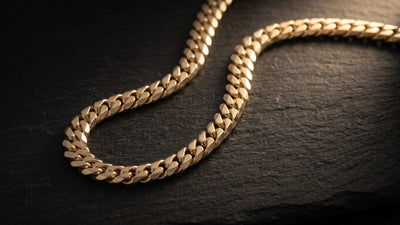
Guía de tallas de pulseras de oro: Encuentra tu ajuste perfecto
Una pulsera de oro que se ajusta perfectamente se asienta cómodamente en tu muñeca sin deslizarse sobre tu mano ni clavarse en tu piel. Demasiado apretada restringe el movimiento y la circulación. Demasiado suelta se engancha en todo, corre el riesgo de caerse y se ve descuidada. Conseguir la talla correcta no es complicado, pero requiere saber cómo medir y comprender cómo se ajustan de manera diferente los distintos estilos de pulseras.
En GOLDZENN, fabricamos a mano pulseras de oro macizo en nuestro taller de Miami, incluyendo pulseras de eslabones cubanos de 10K a 22K. Nuestro equipo de maestros joyeros con más de 50 años de experiencia combinada ha ajustado miles de muñecas. Esta guía comparte todo lo que sabemos sobre el tamaño de las pulseras para que puedas realizar tu pedido con confianza, ya sea para ti o como regalo, cubriendo eslabones cubanos de oro macizo, pulseras de tenis y nuestras pulseras de eslabones cubanos de plata a precios más accesibles. Si también estás buscando anillos, consulta nuestra guía complementaria sobre cómo medir la talla de tu anillo en casa.
Cómo medir tu muñeca
Una medición precisa de la muñeca es la base para elegir el tamaño adecuado de la pulsera. Aquí tienes tres métodos, clasificados por precisión:

Método 1: Cinta métrica flexible (más preciso)
- Envuelve una cinta métrica flexible cómodamente alrededor de tu muñeca, justo debajo del hueso de la muñeca (el bulto óseo en la parte exterior de tu muñeca).
- La cinta debe estar firme contra tu piel, pero sin comprimirla. Debes poder deslizar un dedo por debajo de la cinta.
- Lee la medida donde la cinta se une. Esta es la medida de tu muñeca.
- Mide al final del día, cuando tu muñeca está más grande (las muñecas se hinchan ligeramente a lo largo del día debido a la actividad y el calor).
Método 2: Hilo o tira de papel
- Corta un trozo de hilo, cinta o una tira de papel no elástico de unos 30 cm de largo.
- Envuelve la tira alrededor de tu muñeca justo debajo del hueso de la muñeca, en la misma posición que en el Método 1.
- Marca el punto donde la tira se superpone (usa un bolígrafo o pellizca el punto).
- Coloca la tira plana sobre una regla rígida o una cinta métrica y lee la longitud en pulgadas.
- Esto te da la medida de tu muñeca.
Método 3: Pulsera existente
- Si ya tienes una pulsera que te queda bien, extiéndela sobre una mesa.
- Mide la longitud interior de extremo a extremo (con el broche completamente cerrado).
- Esto te da directamente el tamaño de tu pulsera, sin necesidad de conversión.
Importante: La talla de la muñeca y la talla de la pulsera no son el mismo número. Una pulsera debe ser más larga que la circunferencia de tu muñeca para tener en cuenta el grosor de la pulsera misma y permitir un movimiento cómodo. La siguiente sección explica la conversión.
Conversión del tamaño de la muñeca al tamaño de la pulsera
Una vez que tengas la medida de tu muñeca, añade longitud según tu ajuste preferido:
| Tamaño de muñeca (pulgadas) | Ajuste ceñido | Ajuste cómodo | Ajuste holgado |
|---|---|---|---|
| 6.0" | 6.25" | 6.5" - 6.75" | 7.0" |
| 6.5" | 6.75" | 7.0" - 7.25" | 7.5" |
| 7.0" | 7.25" | 7.5" - 7.75" | 8.0" |
| 7.5" | 7.75" | 8.0" - 8.25" | 8.5" |
| 8.0" | 8.25" | 8.5" - 8.75" | 9.0" |
| 8.5" | 8.75" | 9.0" - 9.25" | 9.5" |
La regla general es: añade de 0.5 a 1 pulgada a la medida de tu muñeca para un ajuste cómodo de la pulsera. Menos de 0.5" añadido es demasiado apretado. Más de 1.25" añadido es demasiado holgado para la mayoría de los estilos.
Entendiendo los tipos de ajuste
El ajuste adecuado depende de tus preferencias personales, el estilo de la pulsera y cómo planeas usarla:

Ajuste ceñido (muñeca + 0.25")
La pulsera se ajusta a la piel con un movimiento mínimo. Ideal para: pulseras de cadena delgada, pulseras de tenis y situaciones en las que no quieres que la pulsera se deslice (deportes, trabajo manual). No se recomienda para pulseras de eslabones cubanos anchos, ya que los eslabones rígidos necesitan espacio para quedar planos contra la muñeca.
Ajuste cómodo (muñeca + 0.5" a 0.75")
El ajuste más popular. La pulsera se mueve libremente en la muñeca pero no se desliza sobre la mano. Se asienta naturalmente en el hueso de la muñeca sin subirse por el antebrazo. Esto es lo que la mayoría de la gente quiere decir cuando dice que una pulsera le queda bien. Recomendado para: pulseras de eslabones cubanos, pulseras de cadena de cuerda y la mayoría de las piezas de uso diario.
Ajuste holgado (muñeca + 1")
La pulsera cuelga holgadamente y se desliza libremente a lo largo de la parte inferior del antebrazo. Esto crea un aspecto relajado e informal. Ideal para: cadenas más ligeras, pulseras de dijes y pilas de pulseras en capas donde varias piezas necesitan espacio para moverse sin enredarse. No recomendado para pulseras pesadas de oro macizo, ya que la holgura adicional ejerce más tensión en el broche y aumenta el riesgo de engancharse en objetos.
Tamaños estándar de pulseras
Si no puedes medir tu muñeca o vas a comprar un regalo, estas tallas estándar funcionan para la mayoría de las personas:
Tallas estándar para hombres
- Pequeña: 7.5" (circunferencia de la muñeca aproximadamente 6.5" - 7")
- Mediana: 8.0" (circunferencia de la muñeca aproximadamente 7" - 7.5") — talla más común para hombres
- Grande: 8.5" (circunferencia de la muñeca aproximadamente 7.5" - 8")
- Extragrande: 9.0" (circunferencia de la muñeca aproximadamente 8" - 8.5")
La muñeca promedio de un hombre estadounidense mide aproximadamente 7.25 pulgadas, lo que hace que una pulsera de 8" a 8.5" sea la talla más comúnmente solicitada para hombres.
Tallas estándar para mujeres
- Pequeña: 6.5" (circunferencia de la muñeca aproximadamente 5.5" - 6")
- Mediana: 7.0" (circunferencia de la muñeca aproximadamente 6" - 6.5") — talla más común para mujeres
- Grande: 7.5" (circunferencia de la muñeca aproximadamente 6.5" - 7")
- Extragrande: 8.0" (circunferencia de la muñeca aproximadamente 7" - 7.5")
La muñeca promedio de una mujer estadounidense mide aproximadamente 6.5 pulgadas, lo que hace que una pulsera de 7" a 7.5" sea la talla más comúnmente solicitada para mujeres.
Medidas de pulseras de eslabones cubanos: Consideraciones especiales
Las pulseras de eslabones cubanos tienen características de tamaño únicas que difieren de las pulseras de cadena estándar:
El ancho afecta la longitud requerida
Las pulseras de eslabones cubanos más anchas necesitan un poco más de longitud que las más delgadas para lograr el mismo ajuste en la misma muñeca. Una pulsera de eslabones cubanos de 14 mm de ancho se "acorta" efectivamente en aproximadamente 0.25" en comparación con una pulsera de 6 mm de la misma longitud medida, porque los eslabones más anchos se envuelven alrededor de la muñeca curva con un radio mayor. Si usas una pulsera de 8" en una cadena delgada, es posible que necesites 8.25" a 8.5" en un eslabón cubano ancho.
El peso tira de la pulsera hacia abajo
Las pulseras de eslabones cubanos de oro macizo tienen un peso considerable. Una pulsera cubana de oro macizo de 14K de 14 mm puede pesar más de 80 gramos. Este peso hace que la pulsera se asiente más abajo en la muñeca que una cadena ligera de la misma longitud. Ten esto en cuenta al elegir tu ajuste: si quieres que la pulsera se mantenga en el hueso de la muñeca, elige una talla ligeramente más ajustada. Si te sientes cómodo con que se asiente más abajo en la muñeca, un ajuste cómodo estándar funciona bien.
El cierre de caja añade longitud
La mayoría de las pulseras de eslabones cubanos usan cierres de caja, que añaden de 0.5" a 0.75" a la longitud total de la pulsera. Al medir una pulsera de eslabones cubanos existente, incluye la longitud del cierre en tu medida total. Al pedir una pieza nueva, la talla indicada ya debe incluir el cierre. Siempre confirma con el joyero si la talla listada es solo la longitud de los eslabones o la longitud total, incluido el cierre.
Para más detalles sobre cómo seleccionar el ancho adecuado, nuestra guía de anchos de cadena de eslabones cubanos cubre las proporciones tanto para collares como para pulseras.
Guía de proporción de ancho a muñeca
Elegir el ancho correcto de la pulsera es tan importante como acertar con la longitud. Una pulsera demasiado ancha para tu muñeca puede resultar abrumadora; demasiado estrecha, desproporcionada.

Muñecas delgadas (circunferencia inferior a 6.5")
- Anchos recomendados: 3mm - 6mm
- Mejores estilos: Eslabones cubanos finos, cadenas Figaro, cadenas de cuerda, pulseras de tenis
- Evitar: Cualquier cosa de más de 8 mm puede parecer desproporcionada y sentirse pesada en una muñeca más pequeña
Muñecas medianas (6.5" - 7.5" de circunferencia)
- Anchos recomendados: 6mm - 10mm
- Mejores estilos: Eslabones cubanos medianos, cadenas curb, cadenas de cuerda, pulseras de tenis
- Rango versátil: 7mm - 8mm es el punto ideal para muñecas medianas; sustancial sin ser abrumador
Muñecas grandes (circunferencia superior a 7.5")
- Anchos recomendados: 8mm - 14mm
- Mejores estilos: Eslabones cubanos anchos, cadenas de eslabones pesadas, cadenas bizantinas atrevidas
- Piezas llamativas: Las pulseras de eslabones cubanos de 12 mm a 14 mm tienen un impacto visual poderoso en muñecas más grandes y combinan bien con relojes
Al superponer pulseras, mezcla anchos para un interés visual. Una pulsera de eslabones cubanos de 10 mm combinada con una cadena de cuerda de 4 mm crea contraste y profundidad. Consulta nuestra guía de capas para más estrategias de apilamiento.
Tipos de cierres y cómo afectan al ajuste
El cierre no es solo un elemento funcional. Afecta la comodidad, la seguridad, la facilidad de uso y la longitud total de la pulsera:

Cierre de caja (más común para eslabones cubanos)
Una lengüeta plegable encaja en una caja rectangular. Proporciona un aspecto limpio y sin costuras y una seguridad sólida. La mayoría de los cierres de caja incluyen un pestillo de seguridad (en forma de 8 o de cierre lateral) para una protección adicional. El cierre queda al ras de la muñeca y añade un volumen mínimo. Ideal para pulseras de eslabones cubanos donde un perfil aerodinámico es importante.
Cierre de langosta
Una garra accionada por resorte que se engancha en una anilla o eslabón. Ofrece ajustabilidad si la pulsera tiene una cadena de extensión. Fácil de operar con una mano (importante para pulseras). Ligeramente menos seguro que un cierre de caja con pestillo de seguridad, pero el mecanismo de resorte es fiable. Común en pulseras de cadena más ligeras y pulseras de cadena de cuerda.
Cierre de palanca
Una barra pasa a través de un anillo para cerrar. El broche más fácil de operar con una sola mano, lo que lo hace popular para personas con destreza limitada. La barra de palanca se asienta perpendicular a la pulsera cuando está cerrada, añadiendo un elemento decorativo. Menos seguro que los broches de caja o langosta: si la barra se alinea con el anillo accidentalmente, la pulsera puede abrirse. Mejor para pulseras más ligeras donde el peso no hará que la palanca se abra.
Cierre de anilla de resorte
Un pequeño broche circular con una compuerta accionada por resorte. Compacto y ligero, pero puede ser difícil de operar en pulseras (necesitas ambas manos). Se usa con mayor frecuencia en pulseras delicadas para mujer y estilos de cadena fina. No se recomienda para pulseras pesadas de oro macizo.
Cierre de barrilete
Dos cilindros roscados se atornillan entre sí. Proporciona un cierre muy seguro y un aspecto sin costuras, pero requiere dos manos y puede llevar mucho tiempo conectarlo. Popular en pulseras de perlas y joyas formales. Para el uso diario, otros tipos de cierres son más prácticos.
Errores comunes en la talla de pulseras
Estos son los errores que vemos con mayor frecuencia en clientes que piden pulseras en línea:
Medir sobre el hueso de la muñeca
El hueso de la muñeca sobresale más que la muñeca misma. Medir sobre el hueso en lugar de justo debajo de él agrega de 0.25" a 0.5" a tu medida, lo que resulta en una pulsera demasiado holgada. Siempre mide justo debajo del hueso de la muñeca, en el lado del brazo.
Medir por la mañana
Las muñecas se hinchan a lo largo del día debido a la actividad, el calor y la retención de líquidos. Una pulsera ajustada a la muñeca por la mañana puede sentirse apretada por la noche. Mide al final del día para un ajuste más preciso.
Ignorar el ancho y el peso
Un cliente que usa una pulsera cómoda de 8" en una cadena delgada de 3 mm podría encontrar que una pulsera de 8" en un eslabón cubano de 12 mm se siente ajustada. El ancho ocupa espacio en la muñeca y el peso tira de la pulsera hacia abajo. Siempre ten en cuenta el ancho y el peso al seleccionar tu talla.
Talla demasiado ajustada
Una pulsera demasiado apretada restringe el flujo sanguíneo y deja marcas en la piel. También ejerce una tensión constante sobre el cierre y los eslabones, lo que aumenta el riesgo de rotura. Si una pulsera deja una hendidura en la muñeca, está demasiado apretada. Debes poder meter un dedo entre la pulsera y la piel.
Talla demasiado suelta
Una pulsera demasiado suelta se engancha en los picaportes, los bordes de los escritorios y la ropa. Cada enganche provoca un tirón brusco en el cierre, lo que puede hacer que falle con el tiempo. Las pulseras sueltas también se deslizan por la mano durante las actividades, lo que aumenta el riesgo de pérdida. Para pulseras caras de oro macizo, un ajuste cómodo que se mantenga en la muñeca es la opción más segura.
No tener en cuenta el cierre
Algunas medidas de pulseras incluyen el cierre; otras no. Un cierre de caja de 0.75" puede marcar la diferencia entre un ajuste perfecto y una pulsera incómodamente ajustada o demasiado suelta. Siempre aclara con el vendedor si el tamaño indicado incluye el cierre.
Tallas de pulseras para regalos
Comprar una pulsera como regalo sin que el destinatario lo sepa requiere algo de creatividad:
- Toma prestada una pulsera existente: Si el destinatario ya tiene una pulsera que usa, mide su longitud interior cuando no la esté usando. Este es el método más preciso.
- Mide mientras duermen: Envuelve suavemente un hilo alrededor de su muñeca y márcalo. No es el método más romántico, pero es efectivo.
- Usa su reloj: Mide la circunferencia interior de la correa de su reloj en la muesca que utilizan. Añade de 0.25" a 0.5" (los relojes se ajustan más que las pulseras).
- Pregunta a un amigo o familiar: Alguien cercano al destinatario puede conocer su talla de pulsera o poder averiguarlo discretamente.
- Opta por tallas estándar: Para hombres, de 8" a 8.5" le queda a la mayoría. Para mujeres, de 7" a 7.5" cubre la mayoría de las tallas de muñeca. Estas son apuestas seguras si no puedes obtener una medida exacta.
- Elige un estilo con ajuste: Las pulseras con cierres de langosta y cadenas de extensión ofrecen un rango de ajuste de 0.5" a 1", lo que te da un margen de seguridad si tu estimación de talla es ligeramente incorrecta.
Si vas a comprar una pulsera GOLDZENN como regalo y no estás seguro de la talla, contáctanos al 321-521-4651 o contact@goldzenn.com. Podemos guiarte a través del proceso de tallado y, para piezas artesanales personalizadas, ajustar la longitud a tus especificaciones exactas.
Colección de pulseras GOLDZENN
Cada pulsera de la colección GOLDZENN está hecha a mano con oro macizo en nuestro taller de Miami. Nuestra colección de pulseras incluye:
- Pulseras de eslabones cubanos: Disponibles en 10K, 14K y 18K hasta 22K, anchos de 5mm a 14mm. Nuestro estilo característico, hecho a mano con eslabones entrelazados que quedan planos en la muñeca. Cada pieza viene con un cierre de caja seguro y pestillo de seguridad.
- Pulseras de cadena de cuerda: Eslabones trenzados que captan la luz desde todos los ángulos. Disponibles en múltiples quilates y anchos. Un estilo clásico que combina bien con collares de eslabones cubanos para una combinación de cadenas.
- Pulseras de tenis: Filas continuas de moissanita o diamantes engastados en oro macizo, incluyendo nuestra pulsera de tenis de moissanita de oro de 14K. La pulsera formal definitiva que se adapta sin problemas desde el uso diario hasta ocasiones especiales.
Todas las pulseras GOLDZENN están respaldadas por una garantía de por vida contra defectos de fabricación. Con más de 334 reseñas de Google con 4.9 estrellas y más de 3,907 reseñas de productos en Judge.me, nuestros clientes confían en la calidad de lo que construimos. Explora la colección completa de pulseras o visita nuestra sala de exposición de Miami en 1056 SW 67th Ave para probar las piezas en persona.
Para obtener ayuda con el tamaño o los pedidos personalizados, llame al 321-521-4651 o envíe un correo electrónico a contact@goldzenn.com. Vea nuestro proceso de fabricación en YouTube en @GOLDZENNJWL.
Preguntas frecuentes sobre el tamaño de pulseras
¿Qué tamaño de pulsera debo elegir para una muñeca de 7 pulgadas?
Para una muñeca de 7 pulgadas, pide una pulsera de 7.5" a 8" dependiendo de tu ajuste preferido. 7.5" te dará un ajuste cómodo con un ligero movimiento. 8" proporcionará un ajuste holgado y relajado. Para pulseras de eslabones cubanos anchos, inclínate por 8" para tener en cuenta que el ancho del eslabón ocupa espacio en la muñeca.
¿Cómo mido mi muñeca para una pulsera sin cinta métrica?
Usa un trozo de hilo, cinta o una tira de papel no elástico. Envuelve la tira cómodamente alrededor de tu muñeca justo debajo del hueso de la muñeca, marca donde se superpone y luego extiéndela sobre una regla para leer la medida en pulgadas. Mide al final del día, cuando tu muñeca está más grande.
¿Cuál es el tamaño promedio de una pulsera para hombre?
El tamaño promedio de una pulsera para hombre es de 8 a 8.5 pulgadas. Esto se ajusta a la circunferencia promedio de la muñeca masculina de aproximadamente 7.25 pulgadas con una cantidad cómoda de espacio para el movimiento. Si va a comprar un regalo para un hombre y no puede medir, 8.25" es un punto medio seguro.
¿Cuál es el tamaño promedio de una pulsera para mujer?
El tamaño promedio de una pulsera para mujer es de 7 a 7.5 pulgadas. Esto se ajusta a la circunferencia promedio de la muñeca femenina de aproximadamente 6.5 pulgadas con un movimiento cómodo. Para regalos, 7" es el tamaño de mujer más comúnmente solicitado.
¿Una pulsera debe quedar ajustada o suelta?
Ninguno de los extremos es ideal. Una pulsera que se ajusta correctamente debe permitirle introducir un dedo entre la pulsera y su piel. Debe moverse libremente en su muñeca sin deslizarse sobre su mano. Demasiado ajustada restringe la circulación y ejerce presión sobre el broche. Demasiado suelta se engancha con objetos y corre el riesgo de caerse.
¿Las pulseras de eslabones cubanos deben tener un tamaño diferente?
Sí. Las pulseras de eslabones cubanos, especialmente los estilos más anchos (8 mm+), necesitan un poco más de longitud que las pulseras de cadena delgada para la misma muñeca. Los eslabones rígidos entrelazados se envuelven alrededor de la muñeca con un radio más amplio, y el peso del oro macizo tira ligeramente de la pulsera hacia abajo. Agregue 0.25" adicionales a su tamaño normal de pulsera para los eslabones cubanos anchos.
¿Cuánto agrega un broche de pulsera a la longitud?
La mayoría de los broches agregan de 0.5" a 0.75" a la longitud total de la pulsera. Los broches de caja en los eslabones cubanos suelen agregar aproximadamente 0.5". Los broches de langosta agregan de 0.5" a 0.75". Los broches de palanca agregan lo menos (aproximadamente 0.25"). Siempre confirme si el tamaño indicado por el vendedor incluye el broche.
¿Se puede cambiar el tamaño de una pulsera de oro?
Las pulseras de oro macizo pueden ser redimensionadas por un joyero experto agregando o quitando eslabones. Las pulseras de eslabones cubanos son particularmente fáciles de redimensionar porque la construcción de eslabones entrelazados permite agregar o quitar eslabones individuales sin afectar la integridad de la pieza. Las pulseras chapadas no se pueden redimensionar de forma fiable.
¿Qué ancho de pulsera debo elegir para una muñeca grande?
Para muñecas de más de 7.5 pulgadas, los anchos de 8 mm a 14 mm lucen proporcionales. Un eslabón cubano de 10 mm es el ancho más popular para muñecas más grandes, ofreciendo un aspecto sustancial sin ser abrumador. De 12 mm a 14 mm crea una pieza llamativa que combina bien con un reloj.
¿Cómo sé si mi pulsera está demasiado ajustada?
Una pulsera está demasiado ajustada si deja una marca en su muñeca al retirarla, restringe el movimiento de su muñeca, se siente incómoda al flexionar la mano o no puede introducir un dedo entre la pulsera y su piel. Aumentar el tamaño en 0.25" a 0.5" generalmente resuelve los problemas de ajuste.