Escrito por el equipo de joyería de GOLDZENN — Miami, FL. Fabricamos a mano cadenas cubanas de oro sólido en 10K, 14K y 18K, y hemos obtenido más de 295 reseñas de cinco estrellas en Google de clientes que confían en nuestra artesanía y orientación. Esta guía de cuidado se basa en años de experiencia práctica trabajando con joyería de oro sólido todos los días.
La joyería de oro es notablemente durable, pero no está libre de mantenimiento. Con el tiempo, los aceites naturales de tu piel, el sudor, las lociones, el polvo y la exposición ambiental cotidiana se acumulan en la superficie incluso de las piezas más finas. Esa acumulación opaca el brillo, atenúa el color y hace que tu oro se vea cansado — aunque el metal debajo esté perfectamente bien.
¿Las buenas noticias? Aprender cómo limpiar joyería de oro en casa es simple, seguro y toma menos de quince minutos. Con la técnica correcta, puedes restaurar tu cadena, anillo o pulsera al estado del día que la sacaste de la caja. Esta guía cubre todo — desde hábitos diarios rápidos que previenen la acumulación en primer lugar, hasta instrucciones paso a paso de limpieza profunda para cada tipo de joyería de oro que poseas.
Por Qué la Joyería de Oro Necesita Limpieza Regular
El oro puro no se corroe, no se oxida ni se degrada químicamente. Esa es una de las razones por las que ha sido apreciado durante miles de años. Pero la joyería que usas diariamente no es oro puro — es una aleación de oro (10K, 14K o 18K), lo que significa que está mezclada con metales como cobre, plata y zinc para darle la resistencia necesaria para el uso diario. Entender cómo se comportan los diferentes quilatajes es parte del cuidado de tu joyería, y nuestra comparación de oro 14K vs 18K explica esas diferencias en detalle.
Aunque las aleaciones de oro sólido son altamente resistentes al deslustre y la corrosión, la superficie de tu joyería aún acumula residuos de la vida diaria:
- Aceites corporales y sudor — Tu piel produce constantemente aceites que recubren tu joyería durante el uso. Durante semanas y meses, esto crea una película delgada que opaca la superficie.
- Lociones, perfumes y productos de cuidado personal — Estos productos contienen químicos que se adhieren a las superficies de oro. El protector solar es particularmente pegajoso y difícil de remover sin una limpieza adecuada.
- Residuos de jabón — Irónicamente, el jabón puede dejar una película en el oro si no se enjuaga completamente, especialmente en las grietas ajustadas de los eslabones de cadena.
- Polvo ambiental y contaminantes — Partículas microscópicas se depositan en la joyería expuesta durante todo el día, especialmente en climas húmedos como Miami.
- Células muertas de la piel — Pequeñas partículas de piel se acumulan en los espacios entre eslabones, debajo de los engastes de anillos y detrás de las argollas de los colgantes.
Ninguna de estas sustancias daña el oro sólido permanentemente. Se asientan sobre el metal y pueden removerse completamente con una limpieza adecuada. Pero si las ignoras durante meses, la acumulación se compone y tu joyería se ve notablemente menos vibrante de lo que debería. La limpieza regular mantiene tu oro luciendo su mejor aspecto y asegura que obtengas el impacto visual completo del metal en el que invertiste.
Consejos de Mantenimiento Diario para Joyería de Oro
La forma más fácil de mantener tu joyería de oro luciendo fresca es prevenir la acumulación pesada antes de que ocurra. Estos hábitos diarios toman casi nada de tiempo extra, pero hacen una diferencia real en la frecuencia con la que necesitas hacer una sesión de limpieza completa.
- Ponte la joyería al último. Vístete, aplica tu colonia o perfume, ponte loción, arregla tu cabello, y luego ponte tu joyería. Este simple orden de operaciones previene que la mayoría de la acumulación de productos llegue a tu oro.
- Limpia tu joyería después de usarla. Antes de guardar tu cadena o pulsera por la noche, dale una pasada rápida con un paño suave y sin pelusa. Un paño de microfibra o un paño de pulido para joyería funciona perfectamente. Esto remueve la capa superficial de aceite y sudor antes de que tenga oportunidad de endurecerse y adherirse al metal.
- Quítate la joyería antes de aplicar productos. Si usas crema de manos, quítate los anillos primero. Si aplicas protector solar, quítate la cadena primero. Treinta segundos de prevención te ahorran una limpieza más profunda después.
- Evita usar joyería de oro en piscinas con cloro o jacuzzis. El cloro puede reaccionar con los metales de aleación en la joyería de oro, causando potencialmente decoloración con el tiempo — especialmente con piezas de menor quilataje. Quítate la joyería antes de nadar en agua tratada.
- Guarda tu joyería correctamente cuando no la uses. No tires tu cadena en un cajón donde se enrede con otras piezas y acumule polvo. El almacenamiento adecuado se cubre en detalle más adelante en esta guía.
Si sigues estos cinco hábitos consistentemente, tu joyería de oro se mantendrá notablemente más limpia y requerirá limpieza profunda menos frecuente. La mayoría de las personas que usan sus piezas de oro sólido diariamente encuentran que una limpieza completa cada dos a cuatro semanas — combinada con limpiezas diarias — es más que suficiente para mantener todo luciendo como nuevo.
Cómo Limpiar Joyería de Oro en Casa (Paso a Paso)
Este es el método que los joyeros profesionales recomiendan para limpiar joyería de oro sólido en casa. Es seguro para oro de 10K, 14K y 18K, y funciona en cadenas, anillos, pulseras, aretes y colgantes. Si tu pieza contiene gemas, diamantes o engastes delicados, ten precaución extra alrededor de esas áreas — el oro en sí puede manejar este método sin problema.
Lo Que Necesitarás
- Un recipiente pequeño (de vidrio o cerámica)
- Agua tibia (no caliente — cómodamente tibia al tacto)
- Unas gotas de jabón líquido suave para platos (sin fragancia es mejor; evita cualquiera con humectantes o químicos fuertes)
- Un cepillo de cerdas suaves (un cepillo de dientes limpio y suave funciona perfectamente)
- Un paño sin pelusa o paño de microfibra para secar
- Opcional: un segundo recipiente con agua tibia limpia para enjuagar
Eso es todo. No necesitas soluciones especiales, máquinas ultrasónicas ni kits de limpieza costosos para el mantenimiento rutinario. Agua tibia y jabón suave es el método más seguro y efectivo para joyería de oro sólido en casa.
El Método de Agua Tibia y Jabón Suave
Sigue estos pasos para una limpieza completa y segura que restaura el brillo natural de tu oro:
- Prepara la solución de limpieza. Llena tu recipiente con agua tibia — aproximadamente la temperatura que usarías para lavarte las manos cómodamente. Agrega dos o tres gotas de jabón líquido suave para platos y revuelve suavemente para mezclar. El agua debe estar ligeramente jabonosa pero no espumosa.
- Remoja la joyería. Coloca tu pieza de oro en el agua jabonosa y déjala remojar por 15 a 20 minutos. Esto afloja la acumulación de aceites, lociones y residuos para que se desprendan fácilmente sin frotar. Para piezas muy sucias, puedes remojar hasta 30 minutos.
- Cepilla suavemente la superficie. Retira la pieza del agua y usa tu cepillo de cerdas suaves para limpiar suavemente la superficie. Trabaja las cerdas en las grietas, entre eslabones, alrededor de los cierres y en cualquier área donde la acumulación tienda a concentrarse. Usa presión ligera — el oro es más blando que el acero, y frotar agresivamente con un cepillo duro puede dejar micro-rayones en la superficie. Deja que el agua jabonosa y las cerdas del cepillo hagan el trabajo.
- Presta atención extra a los eslabones de la cadena. Si estás limpiando una cadena cubana de oro sólido, cadena de cuerda o cadena Franco, dedica tiempo extra cepillando entre y detrás de los eslabones individuales. Estos diseños entrelazados atrapan más residuos que las superficies planas, y la acumulación entre eslabones es lo que hace que las cadenas se vean opacas incluso cuando las caras frontales están limpias.
- Enjuaga completamente. Sostén la joyería bajo agua corriente limpia y tibia para enjuagar todo el residuo de jabón. Asegúrate de enjuagar completamente — el jabón sobrante crea una película que anula el propósito de la limpieza. Si estás limpiando sobre un lavabo, coloca un colador o toalla sobre el drenaje como precaución.
- Seca con un paño suave. Seca suavemente la pieza con palmaditas y pasadas con tu paño sin pelusa. No frotes agresivamente — un movimiento suave de palmaditas es suficiente. Asegúrate de que la pieza esté completamente seca antes de guardarla, porque la humedad atrapada en los eslabones de cadena o engastes de anillos puede dejar manchas de agua.
- Déjala secar al aire si es necesario. Para cadenas con muchos eslabones entrelazados, coloca la pieza plana sobre un paño limpio y seco y déjala secar al aire por 15 a 30 minutos para asegurar que no quede humedad atrapada dentro de los eslabones.
Ese es todo el proceso. Tu joyería de oro debería verse notablemente más brillante ahora, con un brillo restaurado que coincide con cómo lucía cuando era nueva. Para la mayoría de las personas que usan oro sólido diariamente, repetir este proceso cada dos a cuatro semanas es la frecuencia ideal.
Limpieza Profunda para Acumulación Persistente
Si tu joyería no ha sido limpiada en varios meses — o si ha estado expuesta a acumulación pesada de productos, protector solar o suciedad ambiental — el método estándar de agua tibia y jabón puede no ser suficiente en la primera pasada. Aquí te explicamos cómo manejar residuos persistentes:
- Extiende el tiempo de remojo. Deja la pieza remojar en el agua tibia jabonosa por 30 a 45 minutos completos. Para acumulación muy pesada, puedes remojar durante la noche — la solución de jabón suave no dañará el oro sólido incluso con contacto prolongado.
- Usa una pasta de bicarbonato de sodio para puntos específicos. Mezcla una pequeña cantidad de bicarbonato de sodio con unas gotas de agua para formar una pasta espesa. Aplica la pasta en áreas persistentes con tu cepillo suave y trabájala suavemente con movimientos circulares pequeños. El bicarbonato de sodio es ligeramente abrasivo — suficiente para descomponer residuos endurecidos, pero lo suficientemente suave como para no rayar el oro sólido cuando se aplica con un cepillo suave y presión ligera.
- Repite el ciclo de cepillado y enjuague. Después del remojo extendido y el frotado específico, enjuaga completamente e inspecciona la pieza. Si queda acumulación, repite el remojo y cepillado. Los residuos persistentes que se han adherido a la superficie durante muchos meses pueden requerir dos o tres pasadas para removerlos completamente.
- Termina con un paño de pulido. Una vez que la pieza esté limpia y seca, dale un pulido final con un paño de pulido para joyería. Estos paños están ligeramente tratados con un compuesto de pulido suave que restaura el alto brillo y remueve las últimas trazas de opacidad superficial. Un paño de pulido es económico y hace una diferencia notable en el resultado final.
Si has intentado estos métodos y la pieza aún no se ve bien, es hora de una limpieza profesional. Algunos tipos de decoloración — particularmente en oro de menor quilataje que ha sido expuesto a químicos fuertes — pueden requerir equipo profesional para resolverse.
Cómo Limpiar Tipos Específicos de Joyería de Oro
Si bien el método de agua tibia y jabón funciona para toda la joyería de oro sólido, diferentes tipos de piezas tienen características únicas que afectan cómo abordas la limpieza. Aquí hay consejos específicos para cada categoría.
Cadenas de Oro (Cubanas, Cadenas de Cuerda, Cadenas Franco)
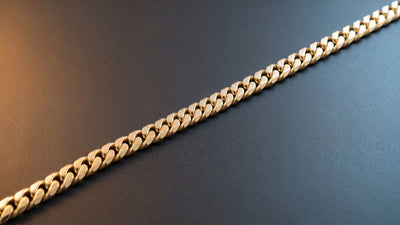
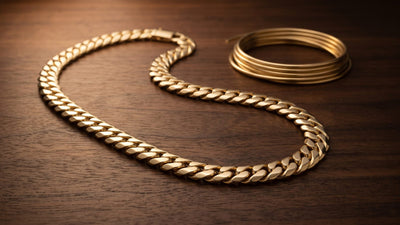
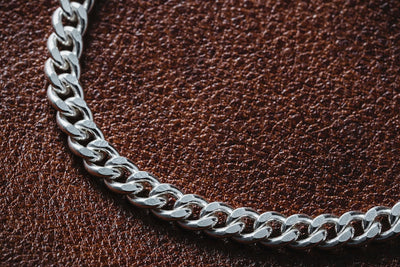
Las cadenas son el tipo más popular de joyería de oro, y también acumulan la mayor cantidad de residuos. La razón es simple: las cadenas tienen docenas o cientos de eslabones entrelazados, y cada unión de eslabón es una pequeña grieta donde se acumula aceite, sudor y residuos. Una cadena cubana de oro sólido con su patrón plano y ajustado de eslabones entrelazados es particularmente propensa a la acumulación entre los eslabones — aunque la cara frontal pueda verse relativamente limpia.
Consejos de limpieza para cadenas de oro:
- Siempre remoja las cadenas por los 15 a 20 minutos completos antes de cepillar. El remojo afloja los residuos del interior de las uniones de eslabones que el cepillado solo no puede alcanzar.
- Al cepillar, sostén la cadena de modo que cuelgue verticalmente y cepilla hacia abajo a lo largo. Esto permite que los residuos sueltos caigan en lugar de ser empujados a eslabones adyacentes.
- Para cadenas cubanas y otros diseños de eslabones planos, cepilla tanto la cara frontal como la parte posterior de cada sección de eslabón. La acumulación en la parte posterior de una cadena cubana es invisible mientras la usas, pero contribuye a la apariencia opaca general.
- Presta atención especial al área del cierre. El cierre de langosta y los anillos de conexión tienden a acumular la mayor cantidad de suciedad porque son los componentes más pequeños e intrincados.
- Para cadenas de cuerda y cadenas Franco, el patrón de eslabones trenzados o tejidos crea aún más grietas. Un remojo ligeramente más largo — 25 a 30 minutos — ayuda a asegurar que la solución llegue a todas las superficies ocultas.
Si usas tu cadena de oro diariamente, una limpieza cada dos a tres semanas la mantendrá en su mejor aspecto. Nuestra guía de cadenas cubanas cubre todo, desde tallas hasta estilo, si estás buscando tu próxima pieza.
Pulseras de Oro y Pulseras de Tenis
Las pulseras descansan en tu muñeca, que es una de las áreas más activas de tu cuerpo. Tus muñecas entran en contacto con superficies constantemente — escritorios, volantes, teclados, manijas de puertas — y el interior de una pulsera está en contacto continuo con la piel de la parte inferior de tu muñeca, que tiende a sudar más que otras áreas.
Consejos de limpieza para pulseras de oro:
- Enfoca tu cepillado en la superficie interior de la pulsera — el lado que toca tu piel. Aquí es donde ocurre la mayor acumulación de aceite y sudor.
- Para cadenas de tenis y pulseras de tenis con engastes individuales de garras o engastes de canal, usa la punta de tu cepillo suave para limpiar alrededor de cada engaste. Sé suave — no quieres aflojar una garra.
- Revisa el mecanismo del cierre cuidadosamente durante la limpieza. Los cierres de pulseras soportan más estrés físico que los cierres de collares debido al movimiento constante de la muñeca, y los residuos en el cierre pueden afectar qué tan seguro se cierra.
- Después de enjuagar, abre y cierra el cierre varias veces bajo agua corriente para eliminar cualquier residuo atrapado.
Anillos de Oro y Alianzas de Boda
Los anillos de oro enfrentan un desafío único de limpieza: se usan en los dedos, que tocan todo. Tus anillos recogen residuos de la preparación de alimentos, el lavado de manos, el desinfectante de manos y los innumerables contactos diarios que otros tipos de joyería nunca experimentan.
Consejos de limpieza para anillos de oro:
- Quítate los anillos antes de lavar platos, preparar comida o aplicar crema de manos. Estas actividades depositan la mayor acumulación en las superficies de los anillos.
- Al cepillar, presta atención especial al interior de la banda. La mayoría de las personas se enfocan en la superficie exterior visible, pero la banda interior — la parte que toca tu piel — acumula la misma cantidad de residuos.
- Para anillos con engastes (diamantes, gemas), limpia suavemente alrededor del engaste y verifica que todas las garras se sientan seguras después de la limpieza. Si una garra se siente suelta, deja de usar el anillo y llévalo a un joyero antes de que la piedra se suelte.
- Las bandas de oro lisas y las alianzas de boda son las piezas más simples de limpiar. No tienen grietas ni engastes de qué preocuparse, así que el método estándar de remojar-cepillar-enjuagar funciona rápida y completamente.
- Si tu anillo se ha vuelto ligeramente apretado debido a la acumulación dentro de la banda, limpiarlo a menudo restaurará el ajuste adecuado.
Colgantes y Aretes de Oro
Los colgantes y aretes tienden a acumular menos residuos que las cadenas, pulseras y anillos porque tienen menos contacto con la piel y menos grietas. Sin embargo, aún se benefician de la limpieza regular.
Consejos de limpieza para colgantes y aretes:
- Para colgantes, presta atención a la argolla — el pequeño aro o tubo en la parte superior por donde pasa la cadena. Esta es el área de mayor contacto y acumula residuos tanto de la cadena como del colgante mismo.
- Limpia el colgante y su cadena por separado cuando sea posible. Esto te permite limpiar la argolla completamente desde todos los ángulos.
- Para aretes, limpia los postes y las tapas tan cuidadosamente como la cara frontal. Los postes de aretes se insertan a través de tu perforación, así que la higiene importa. Un poste de arete limpio reduce el riesgo de irritación.
- Para aretes tipo stud con engastes de garras, usa la punta de tu cepillo para limpiar detrás de la piedra donde los aceites tienden a acumularse y opacar la apariencia de la piedra desde atrás.
- Los aretes de aro deben limpiarse como cadenas pequeñas — remoja, cepilla toda la circunferencia y seca completamente antes de usar.
Qué NO Hacer al Limpiar Oro
Saber qué evitar es tan importante como conocer la técnica correcta. El oro es durable, pero no es indestructible — y ciertos "trucos de limpieza" comunes pueden causar daño real a tu joyería.
Errores Comunes que Dañan el Oro
- Usar agua caliente o hirviendo. El agua extremadamente caliente puede causar choque térmico a las gemas (potencialmente agrietándolas) y puede debilitar las uniones de soldadura en los eslabones de cadena con el tiempo. Siempre usa agua tibia — cómoda al tacto, nunca hirviendo.
- Frotar con cepillos duros o abrasivos. Los cepillos de alambre, cepillos de limpieza de cerdas duras e incluso cepillos de dientes de firmeza media pueden rayar la superficie del oro. Siempre usa el cepillo más suave que puedas encontrar. Si no estás seguro, opta por un cepillo más suave y más tiempo de remojo.
- Usar pastas o polvos abrasivos agresivamente. Si bien una pasta suave de bicarbonato de sodio es aceptable para puntos persistentes específicos, nunca uses limpiadores abrasivos en toda la superficie de tu joyería. Evita polvos de fregar, pastas ásperas o cualquier cosa comercializada para limpiar utensilios de cocina de metal.
- Saltarse el enjuague. El jabón sobrante o la solución de limpieza dejada en la superficie crea una película que atrae nueva acumulación más rápido. Siempre enjuaga completamente bajo agua corriente limpia.
- Secar con toallas de papel o telas ásperas. Las toallas de papel pueden dejar pequeñas fibras en tu joyería, y las telas ásperas pueden micro-rayar las superficies de oro pulido. Siempre usa un paño suave y sin pelusa.
- Usar limpiadores ultrasónicos sin entender tu pieza. Los limpiadores ultrasónicos usan vibraciones de alta frecuencia para limpiar joyería, y aunque funcionan bien en piezas de oro sólido sin piedras, pueden aflojar engastes de garras, dañar ciertas gemas (especialmente esmeraldas, ópalos y perlas) e incluso debilitar juntas soldadas en eslabones de cadena delicados. Si usas un limpiador ultrasónico, asegúrate de que sea apropiado para tu pieza específica.
Químicos y Soluciones a Evitar
Estos productos domésticos comunes nunca deben usarse para limpiar joyería de oro:
- Blanqueador con cloro — El cloro ataca los metales de aleación en la joyería de oro (particularmente cobre y plata), causando decoloración y debilitando la estructura metálica. Esto incluye soluciones diluidas de blanqueador.
- Limpiadores a base de amoníaco — Aunque algunas guías antiguas recomiendan amoníaco para limpiar oro, puede dañar ciertas gemas y causar irritación si no se enjuaga completamente. Quédate con jabón suave para platos como opción más segura.
- Peróxido de hidrógeno — El peróxido puede reaccionar con los metales de aleación en la joyería de oro, particularmente en piezas de menor quilataje, causando potencialmente decoloración superficial.
- Alcohol isopropílico — Aunque se evapora limpiamente, el alcohol puede remover acabados protectores y dañar ciertas gemas. No es necesario cuando el agua tibia y el jabón suave funcionan igual de bien.
- Acetona o removedor de esmalte de uñas — Solventes fuertes que pueden dañar engastes, adhesivos y cualquier acabado decorativo en tu joyería.
- Pasta de dientes — A pesar de ser uno de los "remedios caseros" más comúnmente sugeridos, la pasta de dientes es abrasiva. Los mismos abrasivos suaves que limpian el esmalte de tus dientes pueden rayar las superficies de oro pulido, dejando una red de rayones finos que opacan el acabado con el tiempo.
- Vinagre — Aunque el vinagre blanco es ligeramente ácido y generalmente no dañará el oro sólido, es innecesario y puede potencialmente afectar ciertos engastes de gemas. El agua tibia y jabón es más efectivo y no conlleva ningún riesgo.
La regla más simple: si un método de limpieza es más complicado que agua tibia y jabón suave para platos, probablemente no vale la pena el riesgo para el mantenimiento rutinario de joyería de oro. Deja la limpieza especializada para profesionales que tienen las herramientas y el entrenamiento adecuados.
Cuándo Obtener Limpieza Profesional
La limpieza en casa maneja el mantenimiento rutinario maravillosamente, pero hay situaciones donde la limpieza profesional es la mejor opción:
- Deslustre o decoloración severa que no responde a la limpieza en casa. Esto es más común con oro de menor quilataje (10K) que ha sido expuesto a químicos fuertes. Un joyero profesional tiene las herramientas y soluciones para abordar la decoloración superficial sin dañar la pieza.
- Joyería con engastes intrincados o gemas valiosas. Si tu pieza tiene pavé de diamantes, micro-pavé o engastes delicados de gemas, una limpieza profesional asegura que nada se afloje o dañe durante el proceso.
- Piezas que no han sido limpiadas en un año o más. Los residuos pesadamente acumulados que se han endurecido durante un largo período pueden requerir limpieza a vapor o tratamiento ultrasónico profesional para removerlos completamente.
- Rayones visibles o puntos opacos que no mejoran con la limpieza. Los rayones superficiales no son un problema de limpieza — son un problema de pulido. Un joyero profesional puede pulir y bruñir el oro rayado para restaurar el acabado original. Esto es particularmente relevante para el oro de 18K, que se raya más fácilmente debido a su mayor contenido de oro.
- Antes de una ocasión especial. Si quieres que tu oro luzca absolutamente impecable para una boda, aniversario o evento importante, un pulido y limpieza profesional ofrece un acabado de calidad de exhibición que la limpieza en casa no puede replicar completamente.
- Inspecciones anuales. Incluso si tu joyería se ve bien, una inspección profesional anual es un hábito inteligente. Un joyero puede verificar garras sueltas, cierres desgastados, eslabones adelgazados y otros problemas estructurales que podrías no notar pero que podrían llevar a piedras perdidas o una cadena rota.
La mayoría de los joyeros de buena reputación ofrecen servicios de limpieza, y muchos proporcionan limpieza cortesía para piezas compradas en su tienda. En GOLDZENN, nuestro equipo siempre está disponible para ayudar a nuestros clientes a cuidar sus piezas — esa relación no termina en el punto de venta.
Cómo Almacenar Joyería de Oro Correctamente
Cómo almacenas tu joyería cuando no la estás usando afecta qué tan limpia se mantiene y con qué frecuencia necesitas limpiarla. El almacenamiento adecuado también previene rayones, enredos y daños físicos.
- Guarda cada pieza por separado. El oro puede rayar al oro. Si tiras una cadena cubana, una pulsera de tenis y un anillo en el mismo compartimento, se frotarán entre sí y crearán rayones superficiales con el tiempo. Usa bolsas individuales, compartimentos o la caja original en la que vino tu joyería.
- Usa joyeros forrados o bolsas suaves. Un joyero forrado en tela o bolsas individuales de terciopelo o microfibra protegen tu oro del polvo y los rayones. Evita guardar oro en contenedores duros sin forro — el contacto con superficies de madera, metal o plástico puede causar rayones.
- Mantén la joyería en un lugar fresco y seco. La humedad acelera el deslustre de los metales de aleación en la joyería de oro. Una habitación con clima controlado es ideal. Evita guardar joyería en baños donde la humedad fluctúa con las duchas.
- Coloca las cadenas planas o cuélgalas. No enrolles las cadenas en una bola. Las cadenas enredadas requieren más manipulación para separarse, lo que aumenta la posibilidad de rayones y dobleces. Coloca las cadenas planas en un compartimento largo, o cuélgalas de ganchos individuales en un soporte para joyería.
- Considera tiras anti-deslustre. Pequeñas tiras anti-deslustre colocadas dentro de tu joyero absorben el azufre y la humedad del aire que pueden causar deslustre superficial en oro de menor quilataje. Son económicas y duran varios meses antes de necesitar reemplazo.
- Mantén la joyería alejada de la luz solar directa. Aunque el oro en sí no se afecta por la luz solar, la exposición prolongada a UV puede dañar ciertas gemas y degradar los acabados de algunos joyeros y bolsas.
Piensa en el almacenamiento adecuado como limpieza pasiva — previene la acumulación que crea la necesidad de limpieza activa en primer lugar.
¿Se Deslustra la Joyería de Oro? (10K vs 14K vs 18K)
Esta es una de las preguntas más comunes que escuchamos, y la respuesta depende de lo que quieras decir con "deslustre" y qué quilataje estés usando. Entender esto te ayuda a establecer expectativas realistas de cómo se comportará tu joyería específica con el tiempo. Nuestra comparación de oro 14K vs 18K cubre las diferencias más amplias entre quilatajes en detalle.
El oro puro (24K) no se deslustra — nunca. Es uno de los elementos menos reactivos de la tabla periódica. El oro no se oxida en el aire, no reacciona con el agua y no se corroe bajo condiciones normales. Esta estabilidad química es la razón fundamental por la que el oro ha sido valorado durante milenios.
Las aleaciones de oro sólido (10K, 14K, 18K) pueden desarrollar una decoloración superficial muy menor bajo ciertas condiciones, pero esto no es lo mismo que el deslustre de la manera en que la plata o el cobre se deslustran. Así es como se comporta cada quilataje:
- Oro de 18K (75% de oro puro) — El más resistente a cualquier decoloración superficial. El alto contenido de oro significa que hay relativamente poco metal de aleación disponible para reaccionar con factores ambientales. El oro de 18K mantendrá su color profundo y rico con un mantenimiento mínimo durante décadas. Los cambios superficiales son extremadamente raros bajo condiciones normales de uso.
- Oro de 14K (58.3% de oro puro) — Excelente resistencia al deslustre y decoloración. El contenido de aleación es mayor que el del 18K, pero el oro de 14K está formulado para permanecer estable y atractivo a través de años de uso diario. Cualquier opacidad superficial que notes en el oro de 14K casi siempre es causada por acumulación de productos (aceites, lociones, residuos de jabón) en lugar de deslustre químico real — y se limpia completamente con el método descrito en esta guía.
- Oro de 10K (41.7% de oro puro) — El más rico en aleación de los tres quilatajes estándar, y por lo tanto el más susceptible a reacciones superficiales menores. En algunos casos, el oro de 10K puede desarrollar una decoloración u opacidad muy leve después de exposición prolongada al sudor, humedad o ciertos químicos. Sin embargo, esto es superficial y se aborda fácilmente con limpieza regular. No afecta la integridad estructural de la pieza.
La conclusión: ¿se deslustra la joyería de oro? La joyería de oro sólido no se deslustra de ninguna manera significativa. Lo que la mayoría de las personas perciben como "deslustre" en su oro es en realidad acumulación superficial del uso diario — y se elimina con una simple limpieza.
Esta es una de las diferencias críticas entre el oro sólido y la joyería chapada en oro. Las piezas chapadas en oro tienen una capa microscópica de oro sobre un metal base, y cuando ese chapado se desgasta (lo cual sucede inevitablemente con el uso regular), el metal base debajo absolutamente se deslustra, se decolora y vuelve tu piel verde. El oro sólido no hace nada de eso. Esa durabilidad es por lo que invertir en oro sólido es una decisión que se paga sola durante toda una vida de uso sin preocupaciones.
Preguntas Frecuentes
¿Se puede limpiar joyería de oro con pasta de dientes?
No — la pasta de dientes no se recomienda para limpiar joyería de oro. La pasta de dientes contiene abrasivos suaves (como sílice y carbonato de calcio) que están diseñados para frotar la placa del esmalte dental. Estos mismos abrasivos pueden crear rayones finos en las superficies de oro pulido, opacando gradualmente el acabado con el tiempo. Aunque un solo uso probablemente no cause daño visible, el uso repetido degradará la calidad superficial de tu joyería. El agua tibia con unas gotas de jabón suave para platos es más segura, más efectiva y no cuesta nada extra.
¿Con qué frecuencia se debe limpiar la joyería de oro?
Para joyería de uso diario, una limpieza completa cada dos a cuatro semanas es ideal. Esta frecuencia previene que se acumule residuo pesado mientras mantiene tu oro brillante y fresco. Si limpias tu joyería con un paño suave después de cada uso, puedes extender el intervalo entre limpiezas completas a una vez al mes. Las piezas que se usan solo ocasionalmente — para eventos especiales o rotación — pueden limpiarse una vez cada dos a tres meses o cuando se vean opacas. La clave es la consistencia: el mantenimiento ligero regular es mejor que la limpieza profunda infrecuente.
¿Se deslustra la joyería de oro?
La joyería de oro sólido (10K, 14K, 18K) no se deslustra de la manera en que lo hacen la plata, el latón o el cobre. El oro puro es uno de los metales menos reactivos de la Tierra y no se oxida ni se corroe bajo condiciones normales. Sin embargo, los metales de aleación mezclados con el oro (cobre, plata, zinc) pueden desarrollar reacciones superficiales muy menores en ciertos ambientes — particularmente con exposición prolongada a químicos, cloro o alta humedad. Esto es superficial y se remueve fácilmente con limpieza básica. Lo que la mayoría de las personas confunden con "deslustre" en el oro es en realidad una acumulación de aceites de la piel, loción y residuos cotidianos en la superficie. La joyería de oro sólido mantendrá su belleza por generaciones con cuidado básico.
¿Se puede duchar con joyería de oro sólido?
Puedes ducharte con joyería de oro sólido sin dañar el metal en sí. El oro no se daña con el agua. Sin embargo, ducharte con tu joyería de oro regularmente no es el mejor hábito para mantenerla limpia. El jabón, champú y acondicionador dejan residuos en las superficies de oro — particularmente en las grietas ajustadas de los eslabones de cadena — que se acumulan con el tiempo y opacan la apariencia. El agua dura también puede dejar depósitos minerales. Si prefieres ducharte con tu joyería puesta, planea limpiarla más frecuentemente (cada una a dos semanas) para contrarrestar la acumulación de productos. Quitarte la joyería antes de ducharte es la forma más fácil de mantenerla más limpia por más tiempo.
¿Cuál es el mejor limpiador casero para joyería de oro?
El mejor limpiador casero para joyería de oro es el más simple: agua tibia con dos a tres gotas de jabón líquido suave para platos sin fragancia. Esta combinación es lo suficientemente efectiva para disolver y levantar aceites, lociones y acumulación diaria de las superficies de oro, pero lo suficientemente suave para usar en cada quilataje (10K, 14K, 18K) sin ningún riesgo de daño. Remoja tu pieza por 15 a 20 minutos, cepilla suavemente con un cepillo de dientes de cerdas suaves, enjuaga bajo agua limpia y seca con un paño sin pelusa. Este método es recomendado por joyeros de todo el mundo porque funciona, es seguro y no cuesta prácticamente nada.