

En algún lugar de Miami ahora mismo, una pieza de oro en bruto está a punto de convertirse en algo que no existe en ninguna otra parte del mundo, porque un cliente llegó con una idea y el taller de GOLDZENN dijo que sí. Lo que ocurre entre esa primera conversación y el momento en que la pieza terminada llega a sus manos es un proceso que la mayoría de la gente nunca llega a ver: manos expertas, herramientas especializadas y décadas de experiencia transformando metal y piedra en algo personal, permanente y construido para durar generaciones. Nuestra categoría personalizada más popular son los colgantes: explore todas las opciones de colgantes personalizados, desde placas de identificación hasta águilas.
Esta guía le lleva a través de cada paso, desde el boceto inicial hasta la fundición, el engaste de piedras, el trabajo de esmalte, las pruebas de pureza XRF y la entrega final. Tanto si está considerando su primera pieza personalizada como la décima, así es exactamente como funciona el proceso.
Ir a: Por qué personalizado | Equipo del taller | El proceso | Plazos | Opciones de personalización | Precios | Preguntas frecuentes
¿Listo para dar vida a su visión? Cada proyecto personalizado comienza con una consulta gratuita y sin compromiso. Llame al 321-521-4651, envíe un correo electrónico a contact@goldzenn.com o utilice nuestro formulario de contacto; la mayoría de los clientes reciben un presupuesto detallado en 24 horas.
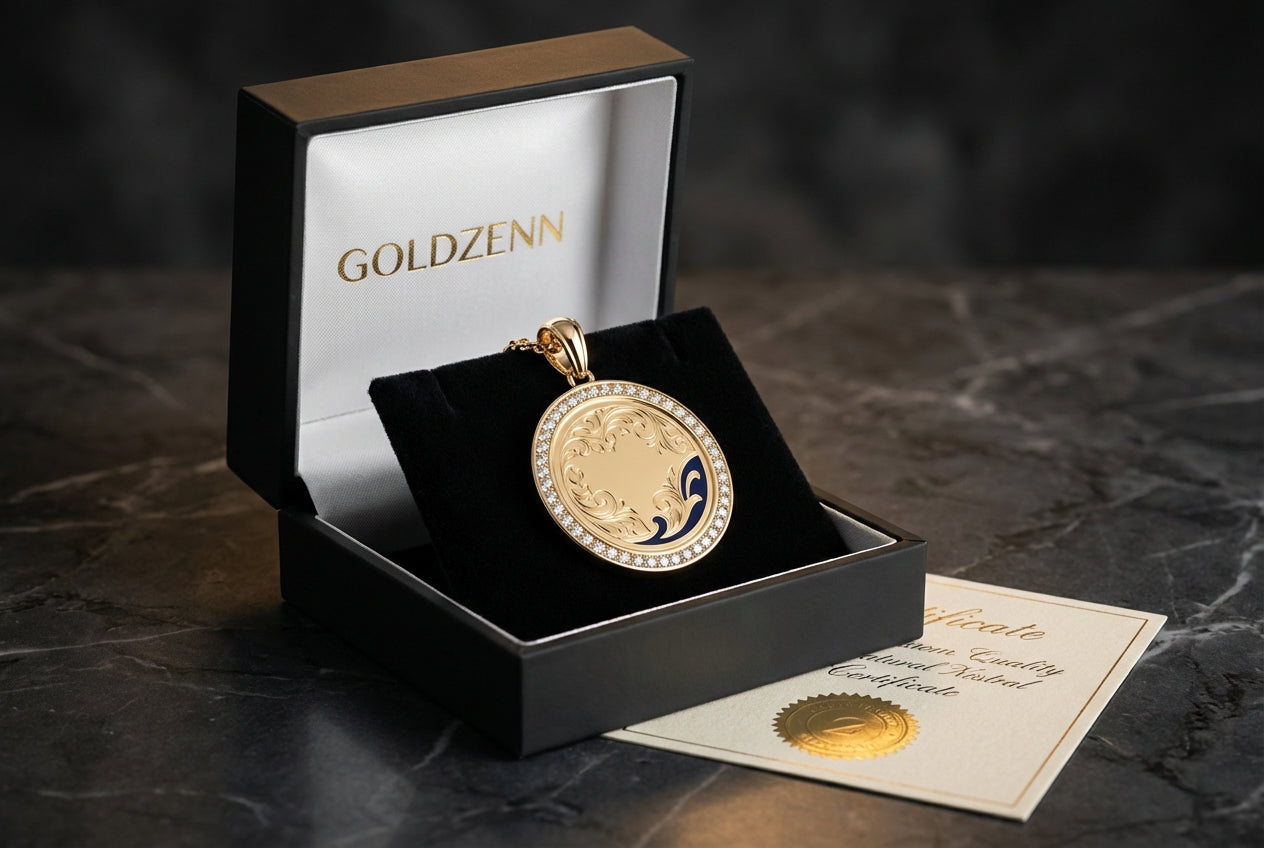
Tanto si encarga un colgante único, un anillo de compromiso, una pulsera personalizada o una cadena construida según sus especificaciones exactas, los principios fundamentales son los mismos: artesanía de precisión, materiales verificados y sin atajos. Para mostrarle cómo funciona el proceso, seguiremos un colgante de oro personalizado con piedras y detalles de esmalte de principio a fin, uno de los tipos de trabajo personalizado más complejos y visualmente impactantes que realizamos.
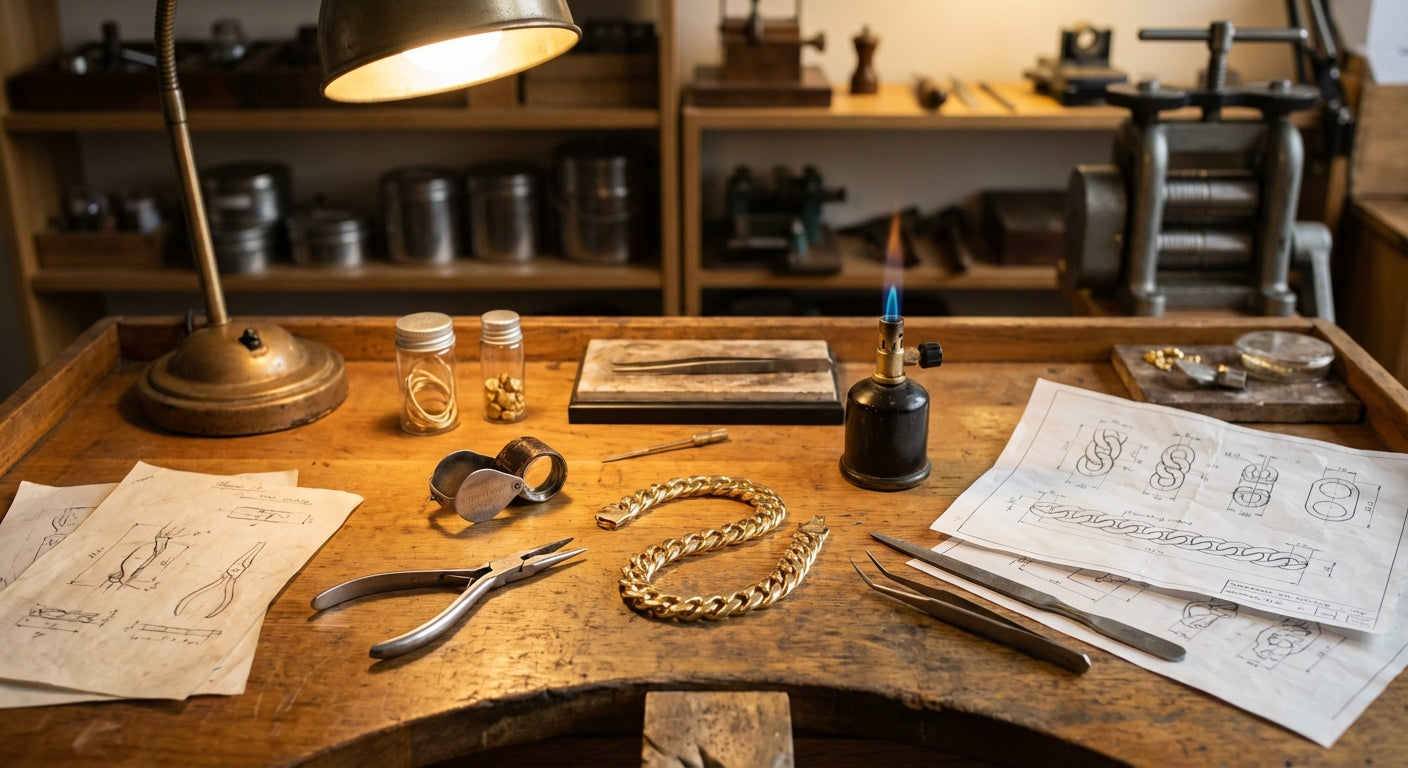
¿Por qué encargar joyas personalizadas?
Las joyas listas para usar cumplen una función, pero tienen sus límites. Usted elige entre los diseños, tamaños y piedras que están en stock. Una pieza personalizada elimina por completo esas restricciones.
Para una descripción completa de las opciones de joyería personalizada, precios y el proceso del comprador, consulte nuestra guía del comprador de joyería personalizada.
Con un pedido personalizado de GOLDZENN, usted define cada detalle: la forma, el metal (oro de 10K, 14K, 18K o 22K en amarillo, blanco o rosa), las piedras (diamantes naturales, zafiros, esmeraldas u otras gemas), los colores del esmalte, el grabado y el acabado. El resultado es una pieza que no existe en ningún otro lugar del mundo, construida según su visión, probada para verificar su pureza y elaborada a mano en nuestro taller de Miami. ¿Está eligiendo sus piedras? Compare las opciones de moissanita vs diamante para su pieza personalizada.
Las piezas personalizadas también son, por definición, de grado de inversión. Usted especifica oro macizo en el quilate que desea, engastado con piedras que ha seleccionado y respaldado por el valor intrínseco de los propios materiales. No hay dudas sobre lo que está obteniendo: cada pieza se envía con resultados de pureza verificados por XRF. ¿No está seguro de qué quilate elegir? Nuestra guía de 10K vs 14K vs 18K cubre la durabilidad, el color y el valor de cada opción.
Conozca al equipo del taller de GOLDZENN
GOLDZENN fue fundada por Julio Cruz, un inmigrante cubano que llegó a Estados Unidos y construyó una carrera en la industria de la joyería desde cero. Antes de lanzar su propia marca, Julio ayudó a otras empresas de joyería a despegar, escalando varias tiendas a 2-3 millones de dólares en ingresos cada una. Viajó a las principales ferias de joyería del mundo, incluida JCK Las Vegas, estableció relaciones con los mejores fabricantes y proveedores, y aprendió lo que separa la calidad real del bombo publicitario.
Después de años de construir el éxito para otros, lanzó GOLDZENN para llenar un vacío que veía en el mercado: joyas de oro real, hechas a mano con cuidado, sin los márgenes inflados de las boutiques de lujo. Hoy, el taller de GOLDZENN en Miami reúne a un equipo con más de 50 años de experiencia combinada en la artesanía de la joyería. Son especialistas, cada uno centrado en una etapa específica del proceso, desde el tallado de cera y la fundición hasta el engaste de piedras, la aplicación de esmalte y el pulido final.
El resultado habla por sí mismo: más de 263 reseñas de Google con 4.9 estrellas y más de 3,900 reseñas verificadas de productos de clientes que han experimentado la calidad de primera mano. También puede ver al equipo en acción en el canal de YouTube de GOLDZENN, que documenta el proceso del taller en más de 335 videos, incluida la serie "Miami Gold Rush" que lleva a los espectadores detrás de escena de proyectos reales. Para ver la gama de estilos que produce el equipo, consulte la guía de estilo completa.
Ver: Un anillo de oro de 24K elaborado completamente a mano en el taller de GOLDZENN.
El proceso de joyería personalizada: Siguiendo un colgante desde el boceto hasta el acabado
Para mostrarle cómo es realmente el proceso personalizado, seguiremos un tipo de proyecto real en cada etapa: un colgante de oro personalizado con piedras naturales y detalles de esmalte aplicados a mano. Esta es una de las piezas más exigentes técnicamente que construimos, porque combina orfebrería, fundición, engaste de piedras y trabajo de color en una sola pieza. Aquí está cada paso. Para más información sobre este tema, explore nuestro engaste de diamantes marquesa.
Paso 1: Consulta y visión
Cada proyecto personalizado comienza con una conversación. Usted nos trae una idea, a veces un boceto detallado, a veces una foto de algo que vio, a veces solo un concepto descrito por teléfono. No hay una forma incorrecta de empezar. Para un colgante personalizado, las decisiones clave en esta etapa son:
- La forma y el tamaño del colgante
- El metal y el quilate (el oro amarillo de 14K es el más popular para colgantes)
- Qué piedras incluir y dónde se colocarán
- Si se desea un detalle de esmalte (y en qué colores)
- Si el colgante colgará de una cadena existente o si también construiremos una cadena a juego
Exponemos todas las opciones y las ventajas y desventajas con honestidad. Un colgante más grande significa más oro y más impacto visual, pero también más peso en el cuello. Ciertas ubicaciones de las piedras son impresionantes, pero requieren un soporte estructural específico. Le guiamos a través de cada decisión para que el diseño final refleje exactamente lo que desea, sin sorpresas ni ambigüedades.
Paso 2: Diseño y plano
Una vez que la visión es clara, creamos el diseño. Para piezas complejas como colgantes con piedras y esmalte, esto a menudo implica CAD (diseño asistido por computadora) para crear un modelo 3D preciso. El modelo CAD le permite ver la pieza desde todos los ángulos antes de tocar cualquier metal. Las dimensiones, la ubicación de las piedras, el tamaño de la anilla y las proporciones generales se fijan en esta etapa.
Para trabajos personalizados más sencillos, los bocetos y las medidas a mano pueden ser suficientes. De cualquier manera, el plano es el contrato entre usted y el taller. Nada avanza sin su aprobación confirmada de las especificaciones. Usted tiene el control en cada paso.
Paso 3: Selección de materiales
La pureza del oro es la decisión material más importante. GOLDZENN trabaja con cuatro opciones de quilates:
- Oro de 10K (41.7% oro puro): La opción más duradera. Altamente resistente a los arañazos y al desgaste diario. Mejor valor por gramo.
- Oro de 14K (58.3% oro puro): La elección más popular para colgantes. Excelente equilibrio entre durabilidad y color intenso. También es de lo que están hechas la mayoría de nuestras cadenas de oro macizo.
- Oro de 18K (75% oro puro): Color amarillo más intenso y profundo. Opción premium para quienes desean el máximo contenido de oro con buena usabilidad. Lea la comparación completa de 14K vs 18K para un desglose detallado.
- Oro de 22K (91.7% oro puro): El color más intenso posible. Más adecuado para piezas especiales donde el máximo contenido de oro es la prioridad.
Para las piedras, obtenemos diamantes naturales y piedras preciosas clasificadas por talla, claridad, color y peso en quilates. Usted selecciona las piedras según su presupuesto y el aspecto que desea, desde un solo diamante central hasta un engaste pavé completo con docenas de piedras de acento.
Paso 4: Modelado en cera
Aquí es donde el colgante empieza a tomar forma. Utilizando el modelo CAD como guía, se crea una versión en cera del colgante, tallada a mano o impresa con una impresora 3D de cera de alta resolución. El modelo de cera es una réplica exacta de la pieza final, capturando cada curva, cada asiento de garra, cada canal donde se asentarán las piedras.
El modelo de cera cumple un propósito crítico: es la última oportunidad para hacer cambios antes de que se use el oro. Puede sostener la versión de cera, verificar el tamaño con su mano o pecho, y solicitar ajustes en las proporciones. Una vez aprobada la cera, pasamos a la fundición.
Paso 5: Fundición a la cera perdida
El modelo de cera aprobado se adhiere a un bebedero de cera (un sistema de canales por donde fluirá el oro) y luego se encapsula en una inversión de yeso (un material refractario especializado mucho más resistente al calor que el yeso común). Todo el conjunto se introduce en un horno de desparafinado para un ciclo térmico graduado cuidadosamente controlado de 12 a 16 horas. Las temperaturas se elevan lentamente, manteniéndose a 300 grados Fahrenheit para eliminar la humedad, luego a 700 grados para derretir y drenar la cera, y finalmente subiendo a 1,350 grados Fahrenheit para el desparafinado final que elimina todo rastro de material orgánico. Este ciclo preciso evita el choque térmico que podría agrietar la inversión. Una vez completado, queda una cavidad negativa perfecta dentro del molde endurecido, una impresión exacta del colgante.
El oro fundido, calentado entre 1,700 y 1,850 grados Fahrenheit dependiendo del quilate y la composición de la aleación, se vierte o se fuerza en el molde bajo vacío o presión centrífuga. El oro líquido llena cada detalle de la cavidad. Una vez enfriado, la inversión se rompe cuidadosamente para revelar la pieza de oro en bruto, tosca pero dimensionalmente fiel al diseño original. Descubra más en nuestra fundición con textura de pepita.
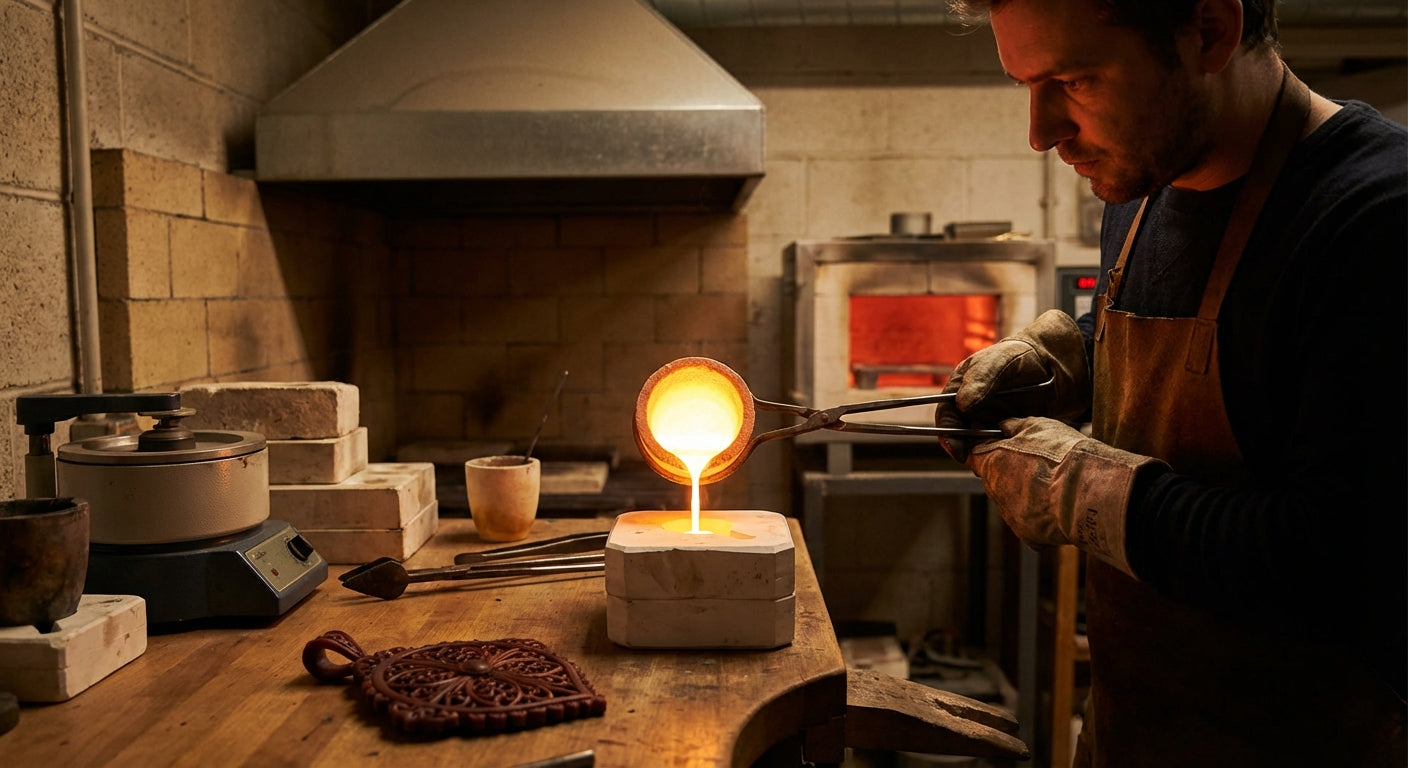
Ver: El proceso de fundición de oro en el taller de GOLDZENN.
Paso 6: Enfriamiento, desmoldeo y limpieza
Una vez que la fundición se ha enfriado lo suficiente para solidificarse, el molde se apaga, sumergiéndolo en un cubo de agua. El choque térmico rompe el molde de inversión, revelando la fundición de oro en bruto en su interior. Luego, la pieza se sumerge en un baño de decapado (una solución tibia de bisulfato de sodio) que disuelve cualquier residuo de inversión restante y elimina las incrustaciones y la oxidación de la superficie del oro. Después del decapado, se corta el bebedero y el joyero comienza a refinar la pieza utilizando limas de joyero, un eje flexible (pieza de mano rotativa) y papeles abrasivos graduados. Cada superficie se alisa, cada borde se limpia y la forma general se alinea con el diseño original.
Para un colgante con engastes de piedras, este paso también incluye la preparación de los asientos de las garras y los biseles, asegurándose de que cada compartimento de la piedra tenga el tamaño preciso y la posición correcta. Un trabajo de preparación descuidado en esta etapa significaría que las piedras se asentarían torcidas o no captarían la luz correctamente. Aquí es donde la experiencia más importa.
Paso 7: Engaste de piedras
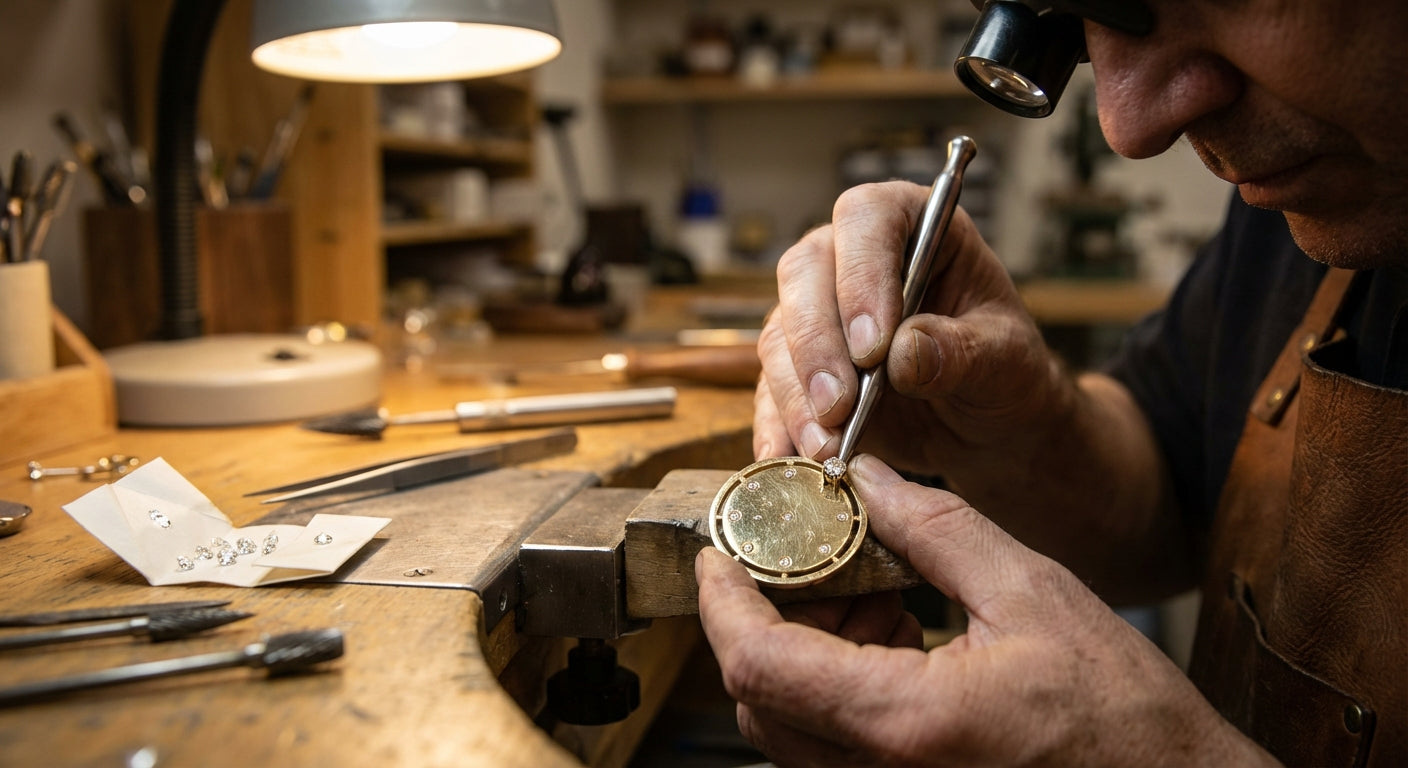
Con el cuerpo de oro refinado y los engastes preparados, el engastador de piedras toma el relevo. Este es uno de los trabajos más especializados del taller. Utilizando herramientas de engaste especializadas (fresas de engaste para cortar asientos precisos, empujadores, brunidores y buriles), el engastador coloca cada piedra en su asiento preparado y la asegura empujando cuidadosamente las garras o biseles de oro a su alrededor.
La técnica depende del estilo de engaste. Los engastes de garra utilizan pequeñas garras de oro para sujetar la piedra, maximizando su visibilidad y exposición a la luz. Los engastes de bisel envuelven una fina banda de oro alrededor del perímetro de la piedra, creando un aspecto más elegante y protegido. Los engastes pavé utilizan pequeñas bolitas de oro levantadas de la superficie para sujetar muchas piedras pequeñas juntas, creando un efecto de brillo continuo.
Para un colgante con múltiples piedras, el engastador trabaja del centro hacia afuera, verificando la alineación y la simetría en cada paso. Cada piedra debe estar a la misma altura, mirar en la misma dirección y estar sujeta con la misma seguridad. Solo esta etapa puede llevar varias horas para una pieza compleja. Para obtener más información sobre los engastes de diamantes y su impacto, consulte nuestra guía dedicada.
Paso 8: Aplicación de esmalte (para piezas esmaltadas)
Si el diseño incluye trabajo de esmalte, la secuencia depende de las piedras involucradas. Cuando solo se usan piedras resistentes al calor (diamantes, zafiros, rubíes), el esmalte se aplica típicamente después del engaste de las piedras. Cuando las piedras sensibles al calor son parte del diseño, el esmalte se cuece primero, y esas piedras se engastan después. El esmalte de joyería es un material a base de vidrio que se muele hasta obtener un polvo fino, se mezcla en una pasta y se aplica cuidadosamente a áreas específicas de la superficie de oro con pinceles finos y aplicadores. Los colores son vivos y permanentes: azules, rojos, verdes, negros y mezclas personalizadas.
Luego, el colgante se cuece en un horno a unos 1,400-1,500 grados Fahrenheit. El polvo de esmalte se derrite y se fusiona con la superficie de oro, creando un acabado liso y similar al vidrio que es extremadamente duradero. Pueden ser necesarias múltiples capas y cocciones para lograr la profundidad de color o para construir diferentes áreas. Una consideración importante: solo las piedras resistentes al calor (diamantes, zafiros y rubíes de la familia del corindón) pueden soportar con seguridad las temperaturas de cocción del esmalte. Las piedras sensibles al calor como las esmeraldas, ópalos y perlas deben engastarse después de la cocción del esmalte, no antes. Cuando el diseño combina esmalte con piedras sensibles al calor, el esmalte se cuece primero, luego las piedras se engastan en la pieza enfriada. El esmalte se aplica cuidadosamente alrededor de cualquier piedra resistente al calor pre-engastada, con la precisión necesaria para evitar que el esmalte invada las caras de las piedras.
El trabajo de esmalte es lo que transforma un colgante de oro y piedras en algo verdaderamente único. Agrega color, contraste y profundidad visual que la orfebrería pura por sí sola no puede lograr, y es uno de los detalles que hace que la gente se detenga y pregunte: "¿Dónde conseguiste eso?"
Paso 9: Pulido previo y trabajo de detalle
Después de la cocción del esmalte (o después del engaste de las piedras para piezas sin esmalte), el joyero realiza una inspección detallada y un paso de refinamiento. Cualquier aspereza del proceso de engaste se lima hasta dejarla lisa. La anilla (el lazo que conecta el colgante a una cadena) se verifica para ver si tiene el tamaño y la suavidad adecuados. Los bordes entre el esmalte y el oro se limpian. La pieza se examina con lupa desde todos los ángulos.
Paso 10: Pulido
El pulido se realiza en varias etapas. El colgante pasa por compuestos abrasivos progresivamente más finos, comenzando con el compuesto de trípoli para eliminar marcas de herramientas y arañazos, luego terminando con el rojo de joyero (óxido de hierro) que le da un acabado de espejo a las superficies de oro. El pulidor debe trabajar con cuidado alrededor de las piedras y el esmalte, utilizando pulidores más pequeños y herramientas manuales en áreas estrechas.
Este es el momento de la transformación: la pieza pasa de parecer orfebrería de taller a parecer una joya terminada. El oro pulido capta la luz, las piedras la refractan en color y brillo, y el esmalte proporciona un rico contraste. Este es el momento en que la pieza que imaginó durante esa primera consulta finalmente existe en el mundo real.
Ver: El proceso de limado, soldadura y pulido en el taller de GOLDZENN.
¿Ha visto algo que le guste? Ya sea un colgante como el descrito aquí, una cadena personalizada o algo completamente diferente, su proyecto comienza con una conversación. Llame al 321-521-4651 o envíe un correo electrónico a contact@goldzenn.com para una consulta y presupuesto gratuitos.
Paso 11: Pruebas de pureza XRF
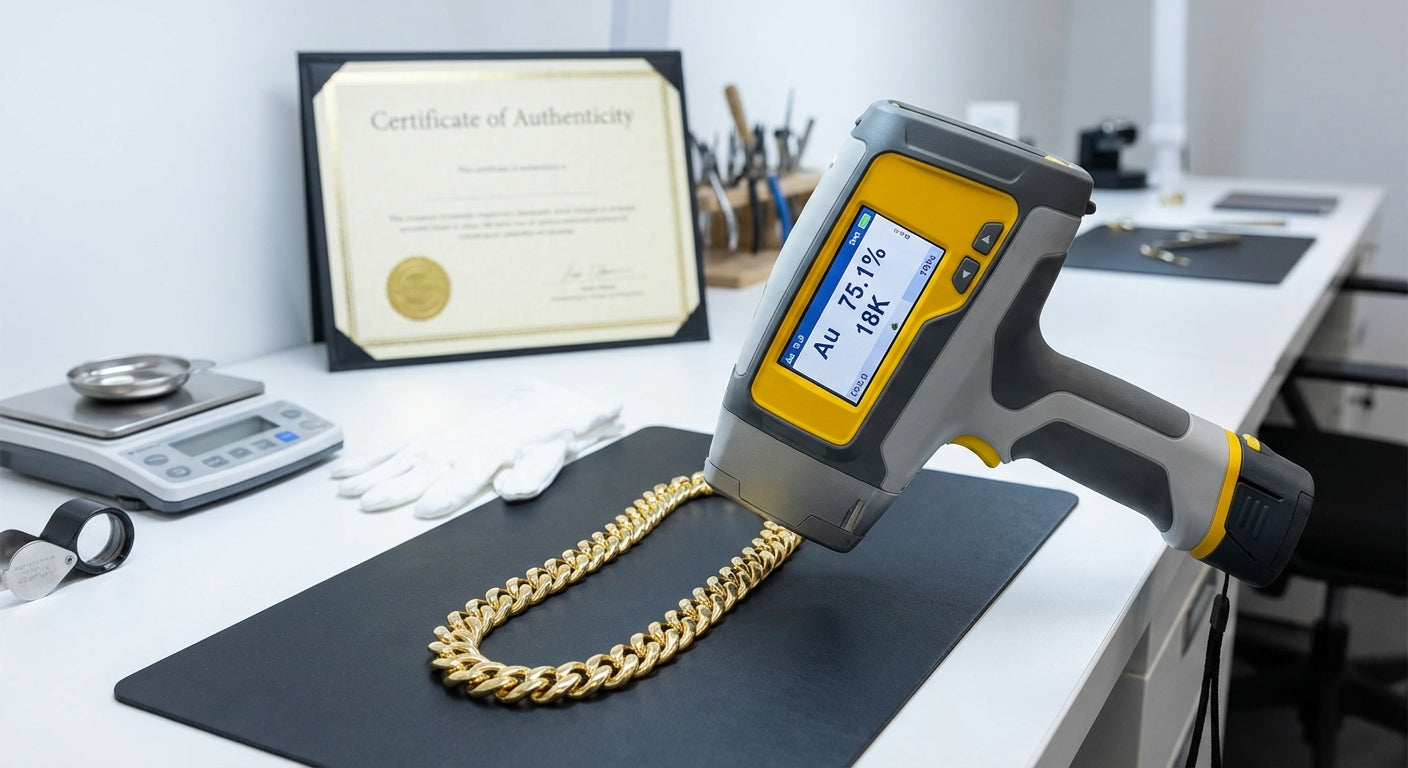
Antes de que cualquier pieza salga del taller, se somete a pruebas con un analizador XRF (fluorescencia de rayos X) Thermo Fisher. Esta prueba no destructiva utiliza rayos X para determinar la composición elemental exacta del oro. Confirma el quilate preciso, no una estimación, no una inspección visual, sino una lectura científica de lo que realmente contiene el metal.
Esta es una de las cosas que distingue a GOLDZENN. En una industria donde los clientes a menudo tienen que confiar en la palabra de un vendedor sobre lo que están comprando, las pruebas XRF proporcionan una prueba verificable de pureza. Cada pieza se envía con una verificación de quilates confirmada. Para obtener más información sobre cómo verificar la autenticidad del oro, consulte nuestra guía de pruebas.
Paso 12: Limpieza final e inspección de calidad
Antes de la inspección, la pieza pasa por una limpieza ultrasónica (vibraciones de alta frecuencia en una solución de limpieza desalojan los residuos de compuesto de pulido y la suciedad de cada grieta) seguida de una limpieza a vapor (un chorro de vapor a presión elimina cualquier partícula restante y lleva el oro a su brillo final). Solo después de esta limpieza exhaustiva se puede inspeccionar la pieza correctamente.
El colgante terminado luego pasa por una inspección final exhaustiva. La pieza se pesa y se compara con el peso objetivo del diseño. Cada piedra se revisa para asegurar que esté bien engastada; el engastador usa una herramienta fina para probar suavemente cada piedra en busca de movimiento. Las superficies de esmalte se inspeccionan en busca de astillas, burbujas o áreas irregulares. El engarce se prueba para determinar su resistencia. La superficie general se examina bajo aumento desde todos los ángulos.
El sello de quilates (10K, 14K, 18K o 22K) se verifica o se aplica en esta etapa, un requisito legal según las pautas de la FTC para la joyería de oro vendida en los Estados Unidos, y un marcador de calidad que los clientes buscan activamente. Si algo no cumple con el estándar, la pieza vuelve al banco de trabajo. Nada se envía hasta que pasa todas las comprobaciones. Este es el estándar detrás de esas más de 3,900 reseñas de productos verificadas, sin excepciones.
Paso 13: Embalaje y entrega
El colgante terminado se coloca en un embalaje premium, acompañado de su certificado de autenticidad con los resultados de las pruebas XRF y las especificaciones de las piedras. El envío está totalmente asegurado con seguimiento. Para los clientes locales de Miami, la recogida en persona está disponible en la ubicación de GOLDZENN, y muchos clientes nos dicen que ese momento de desempaquetado es su parte favorita.
¿Qué pasa con las cadenas personalizadas?
Aunque este recorrido siguió a un colgante, GOLDZENN también fabrica cadenas personalizadas, y el proceso es diferente. Cadenas como las Cubanas, las cadenas de cuerda y las cadenas Franco no se funden. Se fabrican: el alambre de oro se estira al calibre correcto, se corta, se forma en eslabones individuales, se ensambla a mano y cada unión se suelda individualmente. Una cadena hecha a mano puede llevar días de trabajo cualificado, dependiendo del ancho y la longitud. Se aplican los mismos pasos de consulta, selección de materiales, pruebas XRF y control de calidad.
Las opciones de cadenas personalizadas incluyen su elección de estilo de cadena, ancho (de 3 mm a 20 mm o más), longitud (de 16 a 30 pulgadas y más), quilates, color del metal y tipo de cierre. También están disponibles conjuntos a juego de cadena y pulsera.
Cronograma personalizado: qué esperar
El cronograma para una pieza personalizada depende de la complejidad:
- Cadenas personalizadas (estilos estándar en quilates estándar): 2-3 semanas
- Colgantes y anillos personalizados (fundición, engaste de piedras): 3-4 semanas
- Piezas personalizadas complejas (varias piedras, esmalte, diseños únicos desde cero): 4-6 semanas
Proporcionamos actualizaciones durante todo el proceso con fotos en hitos clave. Sabrá cuándo se finaliza el diseño, cuándo se completa la fundición, cuándo se engastan las piedras y cuándo la pieza entra en el control de calidad final. Los pedidos urgentes están disponibles por una tarifa adicional; contáctenos para discutir los plazos de proyectos urgentes como aniversarios, propuestas o regalos de hitos.
Nota: Debido a que cada pieza se fabrica a mano en nuestro taller de Miami, asumimos un número limitado de proyectos personalizados a la vez para mantener la calidad. Empezar temprano le brinda la mejor selección de horarios.
¿Qué puedes personalizar?
Casi todos los aspectos de una pieza GOLDZENN pueden adaptarse a tus especificaciones:
- Tipo de pieza: Colgantes, anillos, pulseras, cadenas, pendientes y más.
- Forma y diseño: Desde iniciales y logotipos hasta diseños figurativos, símbolos religiosos o arte abstracto; si se puede modelar en oro, podemos construirlo.
- Quilates: Oro macizo de 10K, 14K, 18K o 22K.
- Color del metal: Oro amarillo, oro blanco u oro rosa. Son posibles combinaciones de dos tonos.
- Piedras: Diamantes naturales, zafiros, esmeraldas, rubíes y otras piedras preciosas. Elige el número, tamaño, corte y ubicación.
- Esmalte: Esmalte de joyería aplicado a mano en colores personalizados para acentos de color vívidos y permanentes.
- Grabado: Texto, fechas o símbolos grabados en la parte posterior o interior de una pieza.
- Combinación de cadenas: Encarga una cadena de oro macizo a juego con tu colgante, construida con los mismos quilates y estilo.
Si tiene algo en mente que no está aquí, contáctenos. Si se puede construir en oro, el equipo de GOLDZENN probablemente pueda hacerlo realidad.
Factores de precios para piezas personalizadas
El precio de una pieza personalizada está determinado por varios factores, y la transparencia es fundamental para el funcionamiento de GOLDZENN:
- Peso del oro: Este es el factor más importante. Las piezas más grandes, más gruesas o de mayor quilate utilizan más oro. El oro se valora por peso según el precio spot actual.
- Pureza en quilates: El oro de 18 quilates cuesta más por gramo que el de 14 quilates, que a su vez cuesta más que el de 10 quilates. La guía de joyería de oro incluye un contexto detallado de precios por quilates.
- Piedras: El costo de los diamantes y las piedras preciosas depende de la calidad (corte, claridad, color, quilates), el origen y la cantidad. Un solo diamante de acento es muy diferente de un engaste completo de pavé.
- Complejidad de la artesanía: Un anillo de sello simple es menos laborioso que un colgante con 50 diamantes de pavé y esmalte aplicado a mano en tres colores.
- Trabajo de diseño: El modelado CAD para formas únicas aumenta el costo inicial, pero garantiza la precisión y permite su aprobación antes de que se use cualquier oro.
Una cosa importante a entender: personalizado no significa automáticamente más caro. Debido a que usted está haciendo un pedido directamente al taller sin intermediarios minoristas, una pieza GOLDZENN personalizada a menudo tiene un precio competitivo con las opciones estándar de las joyerías tradicionales. La diferencia es que usted obtiene exactamente lo que desea, diseñado, construido y probado por el equipo que lo hizo.
Le proporcionamos un presupuesto detallado antes de que comience cualquier trabajo. No hay tarifas ocultas ni sorpresas. El precio que apruebe es el precio que pagará.
¿Quiere saber cuánto costaría su pieza? Obtener un presupuesto es gratis y toma menos de 24 horas. Llame al 321-521-4651, envíe un correo electrónico a contact@goldzenn.com, o complete nuestro formulario de contacto con su idea. No se requiere compromiso, solo un número claro y honesto para que pueda tomar la decisión correcta.
Otros proyectos personalizados que construimos
El recorrido por el colgante anterior representa un tipo de trabajo personalizado. Aquí hay otros proyectos personalizados populares:
¿Está considerando una cadena de tenis personalizada? Consulte nuestra guía de compra de cadenas de tenis para inspirarse en el estilo.
- Anillos de compromiso personalizados: Diseñe el anillo perfecto con su elección de piedra central, estilo de engaste, ancho de banda y quilates. Desde solitarios clásicos hasta elaborados engastes halo con diamantes de acento.
- Cadenas personalizadas: Cadenas cubanas, de cuerda, Franco, Figaro y otros estilos construidos a su ancho, largo y quilates exactos. Hechas a mano eslabón por eslabón.
- Pulseras personalizadas: Combine una cadena que ya posea, o diseñe una pieza independiente con acentos de diamantes o un cierre personalizado.
- Placas con nombre e iniciales: Placas con nombre de oro personalizadas, colgantes con iniciales o piezas con monograma con acentos de diamantes opcionales.
- Piezas religiosas y simbólicas: Cruces, santos, símbolos culturales y otros diseños significativos elaborados en oro macizo.
Comienza tu proyecto personalizado
Ha visto cada paso del proceso, desde el oro en bruto hasta la joya terminada y probada con XRF. Ahora imagine la pieza en la que ha estado pensando. El colgante con su diseño. La cadena en su ancho y quilate exactos. El anillo que aún no existe, pero existirá.
Cada pieza GOLDZENN personalizada comienza de la misma manera: con una conversación entre usted y el equipo que la construirá. No hay obligación, ni presión, ni pedido mínimo. Simplemente díganos qué tiene en mente y le diremos exactamente cómo podemos hacerlo realidad.
Tres maneras de iniciar su proyecto personalizado:
Llamar: 321-521-4651 (Lun-Sáb, 10 a.m. - 7 p.m. EST)
Correo electrónico: contact@goldzenn.com
En línea: Formulario de contacto
La mayoría de los presupuestos se entregan en 24 horas. Incluya cualquier imagen de referencia, quilates preferidos y tamaño aproximado para obtener la estimación más precisa.
Preguntas frecuentes
¿Cuánto tiempo tarda GOLDZENN en entregar una pieza personalizada?
Las cadenas personalizadas sencillas tardan de 2 a 3 semanas. Los colgantes y anillos con engaste de piedras tardan de 3 a 4 semanas. Las piezas complejas con esmalte, varias piedras o diseños únicos pueden tardar de 4 a 6 semanas. Ofrecemos actualizaciones de progreso durante todo el proceso y opciones urgentes para pedidos sensibles al tiempo.
¿Qué quilates ofrece GOLDZENN para piezas personalizadas?
Trabajamos con oro macizo de 10K, 14K, 18K y 22K en amarillo, blanco o rosa. Cada quilate tiene diferentes características en términos de color, durabilidad y precio. El 14K es nuestra opción más popular para piezas de uso diario, mientras que el 18K y el 22K son preferidos por su color más intenso.
¿Puedo añadir detalles de esmalte a cualquier pieza personalizada?
El esmalte funciona mejor en superficies planas o ligeramente curvadas con suficiente área para que el vidrio se fusione correctamente. Los colgantes, las caras de los anillos y los elementos de diseño más grandes son candidatos ideales. Le aconsejaremos durante la fase de diseño sobre dónde funcionará bien el esmalte y dónde otras técnicas de color podrían ser mejores.
¿Cómo verifica GOLDZENN la pureza del oro?
Cada pieza se prueba con un analizador XRF Thermo Fisher antes de su envío. Esta prueba no destructiva utiliza fluorescencia de rayos X para determinar la composición elemental exacta del oro, confirmando los quilates con precisión científica. Su pieza se envía con resultados de pureza verificados.
¿Cuál es el pedido mínimo para una pieza personalizada?
No hay un mínimo fijo. Ya sea que desee un pequeño colgante inicial o una elaborada pieza llamativa con varias piedras, construimos según sus especificaciones. Contáctenos con su visión y le proporcionaremos un presupuesto.
¿Puedo suministrar mis propias piedras u oro?
Podemos discutir esto caso por caso. Generalmente, obtenemos los materiales directamente para garantizar una calidad constante, pero si tiene piedras u oro específicos que le gustaría incorporar, contáctenos para analizar las opciones y cualquier prueba adicional que pueda ser necesaria.
¿Las piezas personalizadas vienen con garantía?
Sí. Cada pieza de GOLDZENN, personalizada o de catálogo, está respaldada por nuestra garantía de calidad. Si hay un defecto de fabricación, la repararemos o reemplazaremos. Nuestras más de 3.900 reseñas de productos verificadas reflejan la durabilidad y calidad que experimentan los clientes durante años de uso.
¿Cómo inicio el proceso de joyería personalizada?
Contáctenos a través de la página web, por teléfono al 321-521-4651, o por correo electrónico a contact@goldzenn.com. Cuéntenos lo que está imaginando: el tipo de pieza, los metales y las piedras, cualquier imagen de referencia. Le proporcionaremos un presupuesto detallado y un plazo en un plazo de 24 horas. A partir de ahí, confirmaremos el diseño y comenzaremos a elaborar su pieza.
